×

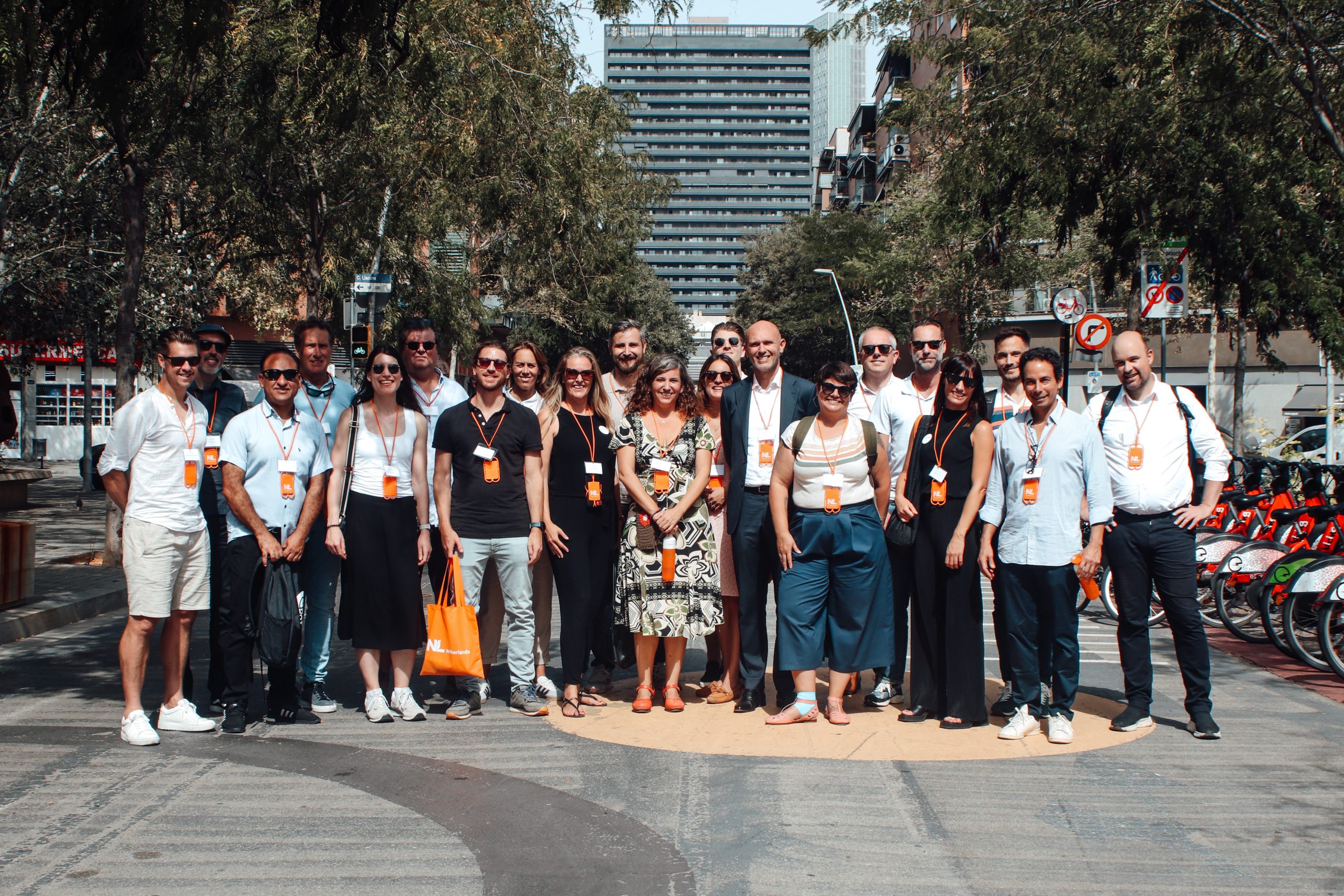
From September 5th to 7th, 2023, the Dutch Cycling Embassy visited Catalonia as a part of a Fact-Finding Visit to Spain organized by the NBSO (Netherlands Business Support Office) focused on the topic of bike mobility.

The delegation consisted of 19 experts from 15 public and private organizations working in fields such as bike planning, parking, production, and sharing. They were joined by the Netherlands Ambassador to Spain Roel Nieuwenkamp.

Participants from the DCE network included the City of Amsterdam, Bike.Box, BYCS, Fietshangar, Fietsvlonders, Humankind, Mobycon, Mobian, Swapfiets, and STREET-STUFF!

Taking place the week after the famed Vuelta España race passed through Barcelona, program highlights included exchanges with the Municipality of Barcelona, a walking tour of local Superblocks, a day trip to Girona via high-speed train, and a cycling tour of the Barcelona Gothic Quarter and Waterfront.

With several follow-up activities with Barcelona already planned later this year, we’re excited to help that region on their journey towards becoming more bike-friendly.

Related posts

AUTONOMY World Mobility Expo in Paris

On the 22nd until the 23rd of March, the AUTONOMY Mobility World Expo event took place at the Portes des…

Read More

Civil servants from Switzerland visiting The Hague

On the 18th of October a group from Switzerland consisting of civil servants of different cities got a presentation and…

Read More

Netherlands-Korea EcoMobility Conference

On June 3rd the Dutch Cycling Embassy was invited to the “Netherlands-Korea EcoMobility Conference: Carbon Neutral, Bicycles are the answer”,…

Read More

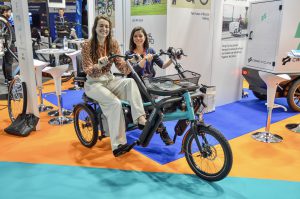
Together with 10 partners the Dutch Cycling Embassy was present at IAA Mobility 2023 in Munich last week. At the Dutch Cycling Pavilion, a wide range of bicycle related organisations presented the latest innovations and trends in mobility. The Dutch delegation included 4Wieler, Cargo Cycling, Possehl, Lopifit, Mobian, Toogether, Fulpra, Abel Sensors, iMoto and Multisensors.

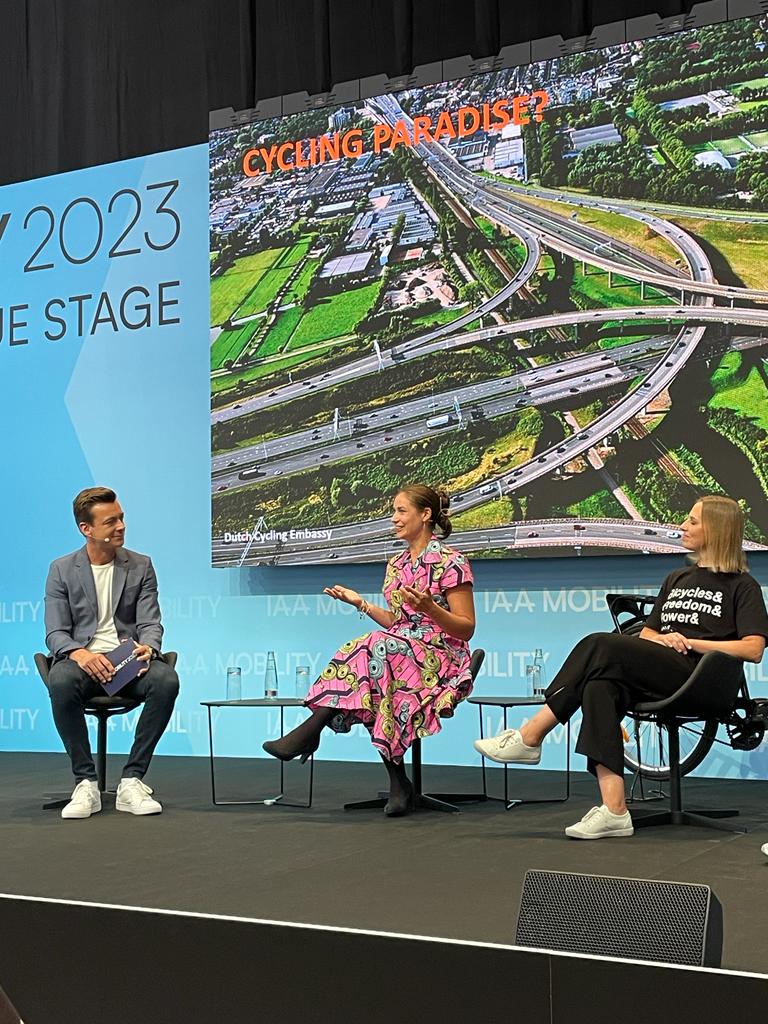
We were pleased by the various interactions with visitors of the Dutch Cycling Pavilion, including a visit of Sophia Kianni and Sophia Floersch. Additionally, Dutch Cycling Embassy’s project manager Shelley Bontje had the pleasure to share the stage with Stefanie Burkert (World Bicycle Relief) and Petra Husemann-Roew (ADFC) and discuss Mobility as Human Right – Empowering People with Bicycles.

The Dutch Cycling Pavilion was powered by the Dutch Enterprise Agency, ROM Region Utrecht, Netherlands Embassy in Berlin and Dutch Consulate in Munich.

Related posts

AUTONOMY World Mobility Expo in Paris

On the 22nd until the 23rd of March, the AUTONOMY Mobility World Expo event took place at the Portes des…

Read More

Civil servants from Switzerland visiting The Hague

On the 18th of October a group from Switzerland consisting of civil servants of different cities got a presentation and…

Read More

Netherlands-Korea EcoMobility Conference

On June 3rd the Dutch Cycling Embassy was invited to the “Netherlands-Korea EcoMobility Conference: Carbon Neutral, Bicycles are the answer”,…

Read More

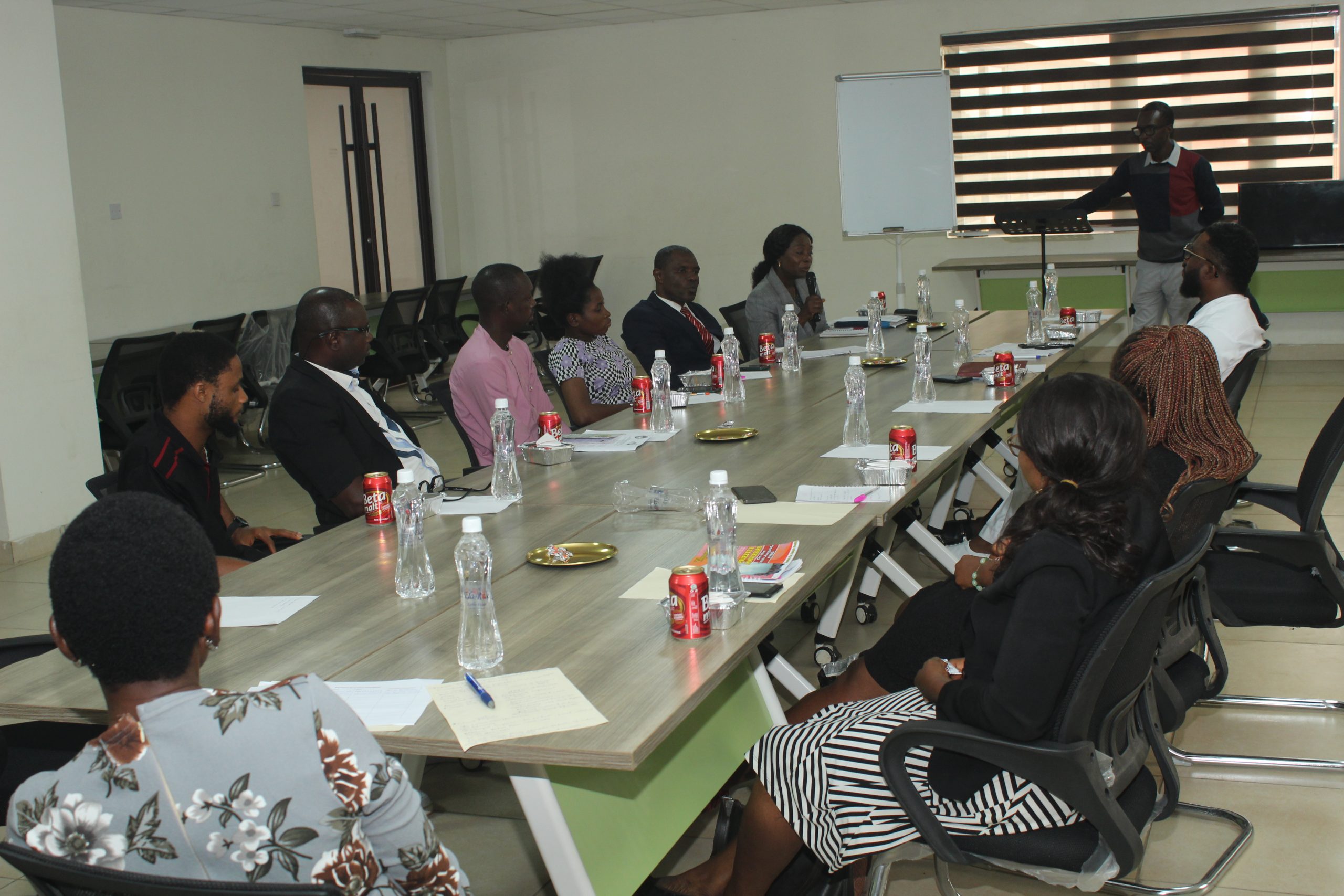
In commemoration of the 2023 International Clean Air Day themed “Together for Clean Air” Mega Impact Foundation in collaboration with Coalition of Clean Air Thinkers CCAT Africa, the Delta State Ministry of Environment and other key stakeholders organized a one day High Level Roundtable Conversation On Achieving Low Carbon And Climate Resilient Development in Niger-Delta Nigeria; The 3rd edition of CCAT-Africa and Mega Impact Foundation International Clean Air Day commemorative event brought stakeholders together to develop an approach, solutions and a roadmap to integrate climate change actions to complement the Government’s effort at improving its plans at implementing emission reduction, structural and systemic human behavioural changes in the hope of achieving its Sustainable Development Goal of building a State Beyond Oil.

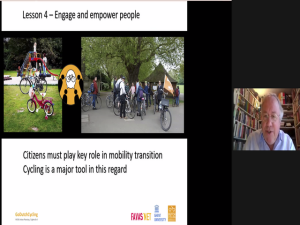
Chris Bruntlett, Marketing and Communications Manager at the Dutch Cycling Embassy through a virtual presentation spoke extensively on “Embracing Inclusive Mobility for Climate Resilient Development”; the presentation by DCE highlighted the impact of networks on our physical, social and mental well-being, provision of child- friendly cities, the prosperity of cities with special focus on Nigeria where the cost of owning a car in terms of maintenance, parking and depreciation is staggering especially as it relates to the average income. The presentation also covered transport and climate resilience which gives people choices to move round the city without solely depending on cars whilst improving greening our city and improving our air quality.

The roundtable provided a unique window of opportunity for participants to discuss (1) The impact of climate change on the economy of the State (2) Economic growth agendas to generate inclusive economic growth in the short and medium terms (3) Initiating and fostering collaboration between stakeholders while ensuring that the State implements its climate action projections in the longer term; Infrastructure investments made over the next 10-15 years will determine whether the 2015 Paris Agreement’s objective to stabilize the global climate can be achieved.

Keynote Address by the Commissioner, Ministry of Environment as well as Contributions by representatives of other Ministries, Civil Society Organizations, Corporate organizations and the Media were focused on proffering solutions to mitigate climate change in Delta State, as well as develop a transitioning plan that promotes Economic growth and Policy Reform to achieve a Zero-Carbon ecosystem in the State whilst incorporating evidenced based solutions for climate interventions.

The Initiator, Ms. Florence Ogonegbu during her closing remark emphasized on the multi-faced benefits of a strong synergy amongst major players in climateaction in the state which she explains can lead to stronger collaborations and greater opportunities to secure funding from international and local donor agencies and developmental partners towards achieving clean air , she also used the opportunity to welcome participating organization who had shown interest in joining the Coalition of Clean Air Thinkers (CCAT-Africa).

Related posts

AUTONOMY World Mobility Expo in Paris

On the 22nd until the 23rd of March, the AUTONOMY Mobility World Expo event took place at the Portes des…

Read More

Civil servants from Switzerland visiting The Hague

On the 18th of October a group from Switzerland consisting of civil servants of different cities got a presentation and…

Read More

Netherlands-Korea EcoMobility Conference

On June 3rd the Dutch Cycling Embassy was invited to the “Netherlands-Korea EcoMobility Conference: Carbon Neutral, Bicycles are the answer”,…

Read More

The following article was originally published in Dutch on the CROW-Fietsberaad website.

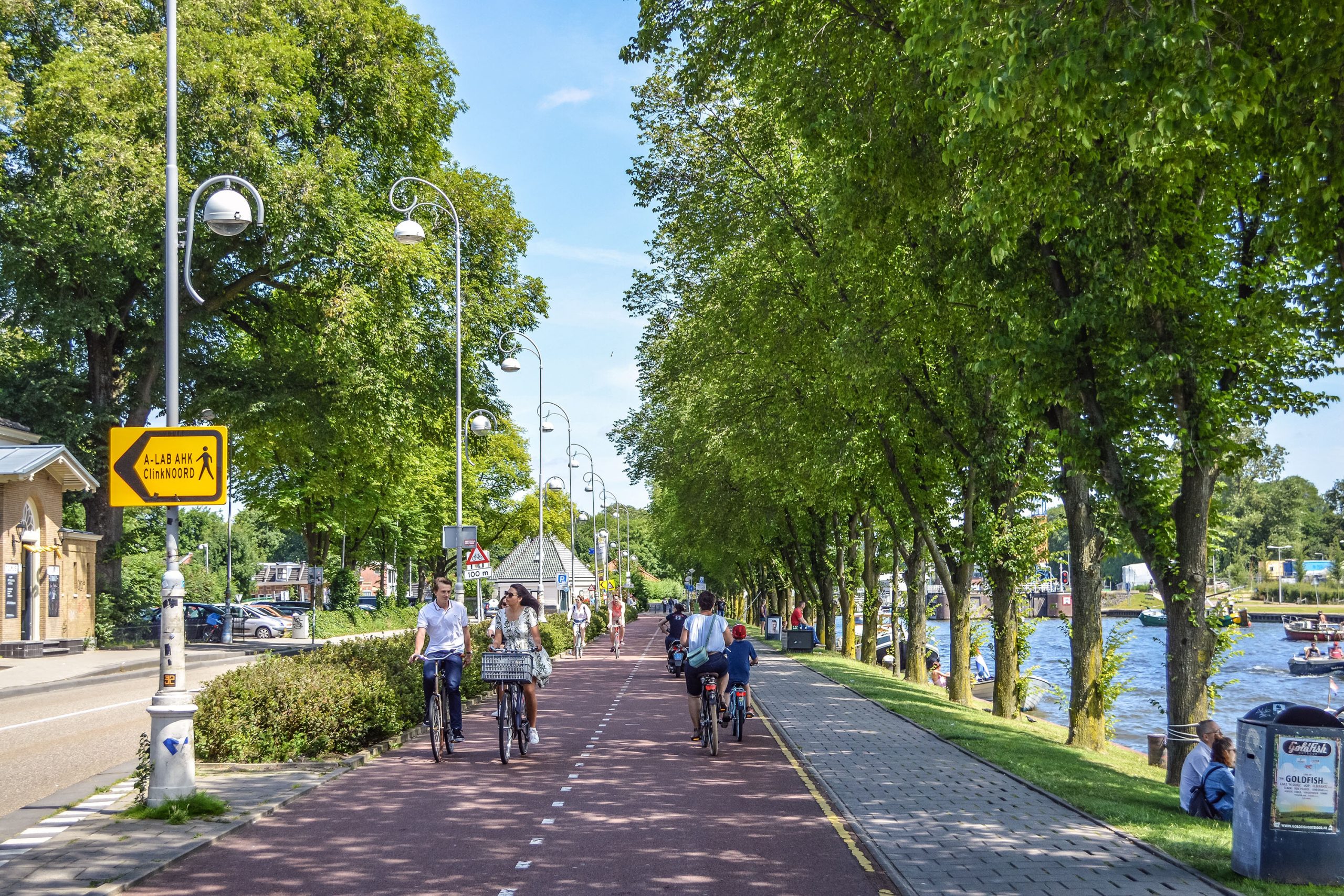
In Spring 2022, CROW-Fietsberaad updated the national recommendations for bike lane width. There were several reasons for the update. The “old” recommendations were based on studies from the 1980s and ‘90s. The use of bike lanes has since changed dramatically. Moped riders have been relegated to the carriageway. All kinds of new vehicles have appeared on the bike lanes, such as cargo bikes, electric bikes, and speed pedelecs.

At the same time, the number of users on many bike lanes increased significantly over the past few decades. In many ways, the growth in bicycle use is a positive development. However, the additional crowding combined with an increase in the average age has also led to a sharp increase in serious casualties.

The Importance of Bike Lane Width

Pavement width is one of the most important design aspects of bike lanes, according to the studies listed in Chapter 3. Width is a major determinant of road safety and bicycle enjoyment. On wider bike lanes, cyclists have more room to avoid other road users and are less likely to hit the shoulder. The common thread in the studies consulted is clear: the narrower the bike path, the higher the safety risks. The effect is especially large for one-way bike lanes. Globally, for one-way bike paths, 10 percent more width decreases the number of collisions by 13 percent.

Surveys also show that bike path width can have a major influence on the opinion of cyclists about the bike path. This is especially true for busy bicycle paths with many speed differences (mopeds, sport cyclists) and many oncoming traffic. In the near future, width is likely to become even more important. The growth of bicycle use and the greater diversity of new (electric) vehicles places higher demands on bicycle paths.

More Than Width

Although in this article we limit ourselves to bike lane width, this is by no means the only aspect that determines the quality of a bike lane. Other design aspects include the type of surfacing and the attractiveness of the surroundings. A narrow unpaved path through the woods will be rated higher by many recreational cyclists than a wide asphalt bike path along a busy county road. But even for that unpaved path, the fun is soon gone for many cyclists if they have to frequently enter the verge because of the many oncoming vehicles.

Update of Recommendations

In Chapter 2, we present tables of updated recommendations. The differences from the “old” recommendations are limited. The most important change is that the minimum width has been increased from 200 to 230 centimetres. This is because various studies show that the greatest safety gains can be made on the narrowest bicycle paths.

Despite the limited changes, the percentage of bicycle paths in urban areas that do not comply with the recommendations increases considerably. From over 40 percent with the “old” recommendations to almost 60 percent with the new ones. However, these figures also show that the application of “old” recommendations already left much to be desired. Thus, consistent application of the recommendations, whether old or new, can already contribute significantly to safety and comfort.

We realize that not all bike lanes can be addressed at the same time. This is why we have developed the “Width Tool for Bike Paths,” which can help the road manager with prioritization. The tool can also be used for deviating situations, such as the presence of many sport cyclists or cargo bikes. In fact, the tables with recommendations apply to average situations.

Substantiation of the Recommendations

Chapter 3 describes how the various studies have been translated into a coherent system to determine the desired width of a bike path. The systematics has two pillars:

  • The minimum width needed by two cyclists to cycle side by side safely and comfortably, regardless of intensity. This minimum width is set at 230 centimetres.
  • The maximum number of annoying and dangerous “encounters” with other users of the bike path. This does correlate strongly with intensities, but also with vehicle width and differences in direction and speed. Research shows that there is a strong relationship between the number of “encounters” and the rating cyclists give for width. Therefore, the criterion chosen for the recommendation was that the average report grade be higher than 7.4.

When determining the desired width, it is always necessary to consider which of the two criteria is the strictest. As an aid, we have developed a labelling system for the width of bike lanes. This is similar to the energy labels for electrical appliances. Width label A is perfect, width label F is far too narrow. For recommendations, width label B is the starting point. The width label of a bicycle path can be determined relatively easily with the “Width Tool for Bicycle Paths.”

Factors for the Number of Dangerous Encounters

In Chapter 4, we discuss the various factors that determine the number of nuisance and hazardous encounters (the second pillar in the systematics behind the recommendations). They are the “knobs” a road manager can turn to reduce the likelihood of conflicts and increase bicycle comfort. This chapter shows that in addition to widening, other measures are possible to ensure that a bike path that is too narrow meets the recommendations. Consider moving moped and sport cyclists to the carriageway, for example in combination with a 30 km/h limit. Or reducing intensities on the bike path by providing alternative routes.

For the entire month of September 2023, the Dutch Cycling Embassy and CROW-Fietsberaad are partnering to offer the ‘Design Manual for Bicycle Traffic’ for just €75 (plus VAT and shipping). Purchase your copy online today.

Related posts

AUTONOMY World Mobility Expo in Paris

On the 22nd until the 23rd of March, the AUTONOMY Mobility World Expo event took place at the Portes des…

Read More

Civil servants from Switzerland visiting The Hague

On the 18th of October a group from Switzerland consisting of civil servants of different cities got a presentation and…

Read More

Netherlands-Korea EcoMobility Conference

On June 3rd the Dutch Cycling Embassy was invited to the “Netherlands-Korea EcoMobility Conference: Carbon Neutral, Bicycles are the answer”,…

Read More

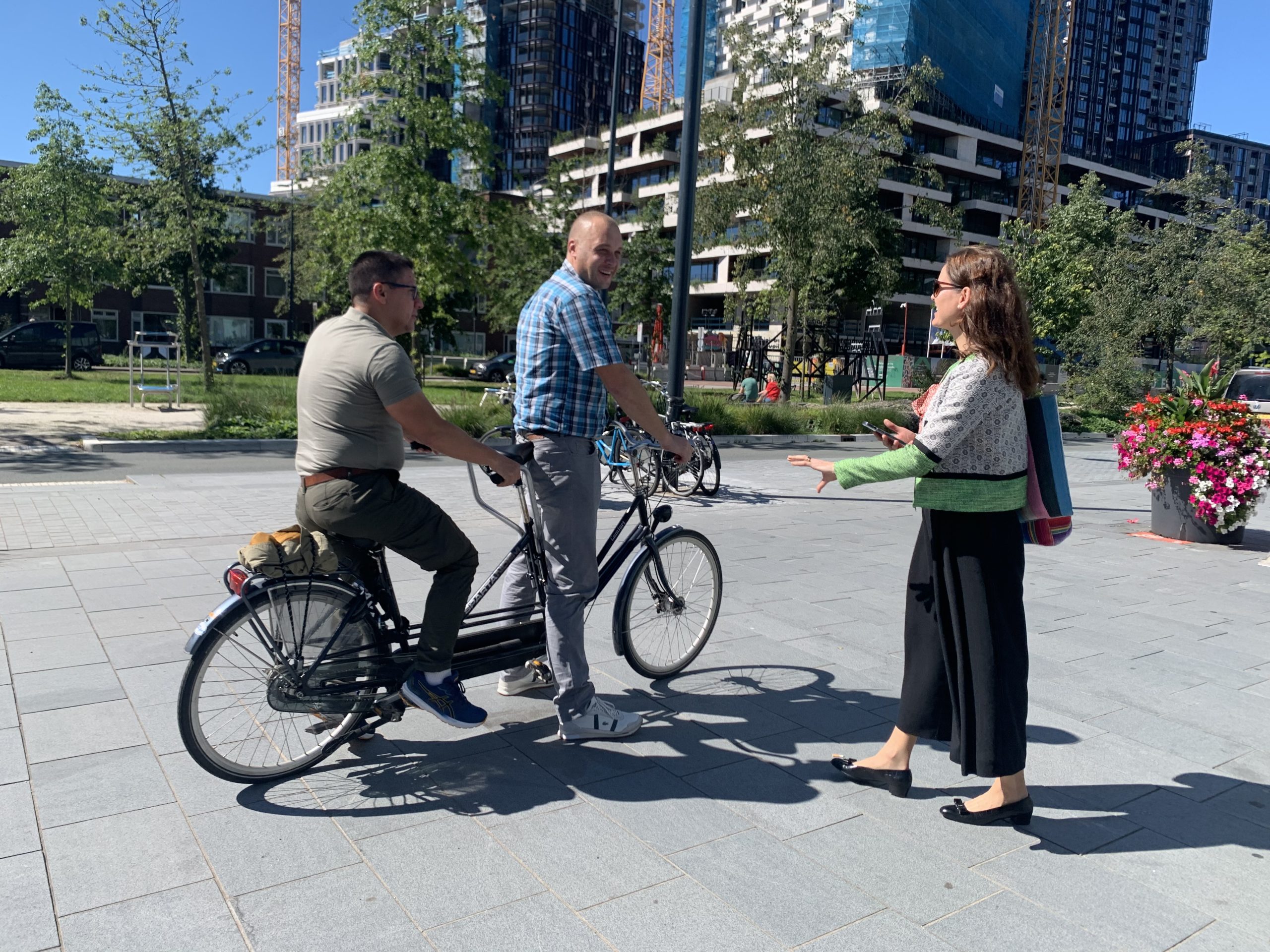
On Tuesday, 5th September 2023, a group of “Influentials” from Chile, Costa Rica, Argentina and Peru visited Utrecht with the Dutch Cycling Embassy as part of a week-long sustainable mobility-themed study visit to The Netherlands with RVO, the Netherlands Enterprise agency.

Participants included, amongst others, Carlos Ávila Arquín, Vice Minister of Transportation and Road Safety of Costa Rica, Tomás Echiburu, Chief of Active Mobility at the Ministry of Transport and Telecommunications of Chile, and Paola Tapia Salas, Director of Metropolitan Public Transport of Chile.

The morning started with an introduction to Dutch Cycling, followed by a range of informative presentations from DCE network partners, which covered all topics from hardware through software to orgware, with examples from and applications to the Dutch as well as Latin American contexts. Presentation titles included, for example, “SUM in LA America: policy implications” by Geert Koops of Panteia, “Planning & design using open data” by Martijn Akkerman of Witteveen + Bos, and “Centering the Needs of Families in the Active Travel Conversation” by Daniela Gutierrez of BYCS, as well as “Combining powerful incentives and technology to change commuting behaviour” by Jose Diaz of Motion.

Discussion about the various topics, challenges and sources of inspiration continued during a walking tour of key city centre infrastructure, and a sustainable lunch. This was followed by a cycling tour, led by Mark Wagenbuur of Bicycle Dutch. During this tour, participants were able to experience cycling in a Dutch city, and learn about the continued development of (cycling) infrastructure, and associated challenges and success, in Utrecht.

We would also like to thank Constanza Gutiérrez Torres of Goudappel, Lotte Rijsman and Stuart Clapham of RHDHV, and Luisina Perassi of Humankind for the expertise they contributed to make this study visit a success!

Related posts

AUTONOMY World Mobility Expo in Paris

On the 22nd until the 23rd of March, the AUTONOMY Mobility World Expo event took place at the Portes des…

Read More

Civil servants from Switzerland visiting The Hague

On the 18th of October a group from Switzerland consisting of civil servants of different cities got a presentation and…

Read More

Netherlands-Korea EcoMobility Conference

On June 3rd the Dutch Cycling Embassy was invited to the “Netherlands-Korea EcoMobility Conference: Carbon Neutral, Bicycles are the answer”,…

Read More

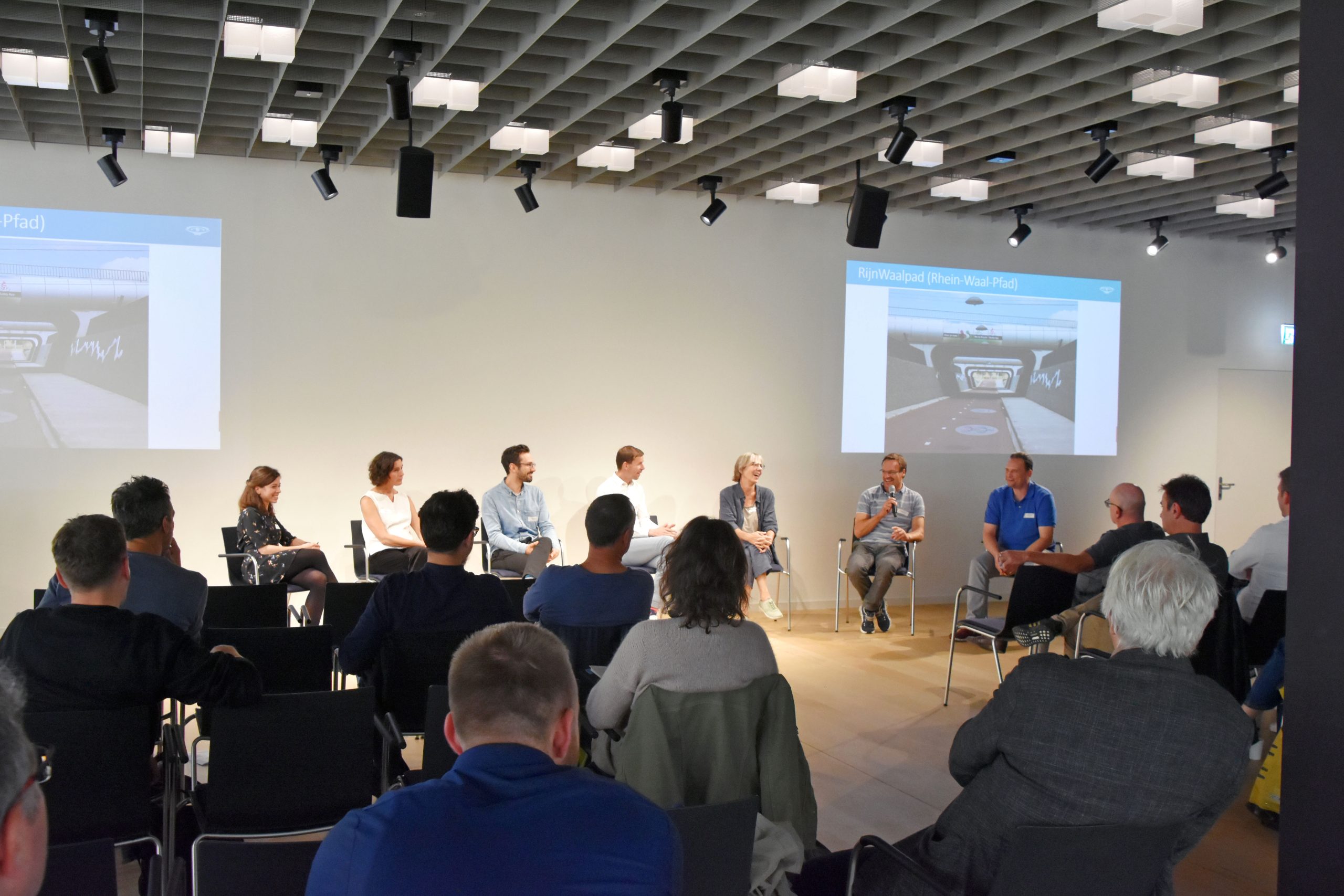
On 30th August 2023, the DCE, together with its network member Mobycon, presented at Velopa AG’s most recent “Creator’s Circle” event in Zurich. At this edition of the event series, around 70 people gathered to hear about and discuss the topic of the implementation of Switzerland’s cycle path law.

DCE Project Coordinator Emma Stubbe presented The Netherlands’ transition from car-focused spatial and traffic planning towards becoming a bicycle-friendly country. Various case studies illustrated how other countries can benefit from examples of success in the Netherlands as well as from mistakes made there.

Elke Schimmel from Mobycon then provided details on how to successfully promote cycling based on the Dutch model. She focussed on five important design principles and provided information and a case study on cycle routes in the Netherlands.

An active exchange with the expert audience was facilitated by the subsequent panel discussion, followed by discussions over a networking reception.

Related posts

AUTONOMY World Mobility Expo in Paris

On the 22nd until the 23rd of March, the AUTONOMY Mobility World Expo event took place at the Portes des…

Read More

Civil servants from Switzerland visiting The Hague

On the 18th of October a group from Switzerland consisting of civil servants of different cities got a presentation and…

Read More

Netherlands-Korea EcoMobility Conference

On June 3rd the Dutch Cycling Embassy was invited to the “Netherlands-Korea EcoMobility Conference: Carbon Neutral, Bicycles are the answer”,…

Read More