×

The Dutch Cycling Embassy recently led a three-day fietsmissie to North Rhine-Westphalia (NRW), bringing together Dutch mobility experts, consultants, public authorities and companies to exchange knowledge with German partners on cycling policy, infrastructure and active mobility. The programme included visits to Münster, Düsseldorf and Bocholt, as well as participation in the AGFS Congress, creating valuable opportunities to strengthen cross-border cooperation and explore future collaborations.

Representatives from organisations including Mobycon, Arcadis, Goudappel, vanRaam, Fietshangar, Roelofs, VConsyst, Abelleisure, Loendersloot Mobility Consultancy and Cooperatie Centroide joined the delegation, alongside colleagues from the Netherlands Enterprise Agency (RVO), the Consulate General in Düsseldorf and the Dutch Cycling Embassy.

Münster: learning from Germany’s cycling capital

The mission started in Münster, widely recognised as Germany’s cycling capital. During an exchange with the city’s Bicycle Office, mobility planners presented the ambitious Masterplan Mobility Münster 2035+, which aims to create a climate-neutral, safe and liveable city while further strengthening cycling throughout the municipality. One of the most impressive ambitions is the continued expansion of the city’s Cycling Network 2.0, including approximately 100 kilometres of upgraded cycling infrastructure and around 60 kilometres of new bicycle streets.

During the cycling tour through Münster, participants experienced these developments first-hand. Besides the extensive network of bicycle streets, discussions also focused on the German regulatory framework surrounding cycling infrastructure. Topics such as the Pollererlass NRW, which provides guidance on the placement of bollards, illustrated how German regulations can differ significantly from the more pragmatic Dutch approach while pursuing similar safety objectives.

The evening concluded with a networking dinner in Düsseldorf, where the delegation met representatives from municipalities across NRW, the state ministry, AGFS NRW, JobRad and other organisations involved in cycling policy and implementation. Alongside productive discussions about future cooperation, participants were also introduced to some typical Düsseldorf cuisine.

|

Düsseldorf: exchanging policy and practical experience

The second day focused on cycling policy at both municipal and state level. Despite persistent rain, the walking tour through Düsseldorf highlighted how the city has transformed many of its streets to prioritise pedestrians and cyclists. One particularly interesting example was the redesign of Schadowstraße, where public space has shifted away from cars towards walking, cycling and urban quality.

The delegation then visited the Ministry for Environment, Nature Conservation and Transport of North Rhine-Westphalia before participating in the AGFS Congress. Discussions with ministry officials and Members of the State Parliament provided valuable insight into NRW’s current cycling ambitions and funding programmes. During this meeting, Sonja Munnix (RVO) presented the Dutch approach to cycling policy and development, which sparked lively discussions between the Ministry for Environment, Nature Conservation and Transport, political representatives from North Rhine-Westphalia and our delegation participants.

One recurring theme throughout the exchanges was that NRW has made substantial financial resources available for cycling, but faces challenges in delivering projects due to a shortage of qualified professionals (Fachkräfte). In addition, the German administrative landscape—with many different authorities responsible for approving projects—can make implementation more complex. Comparing experiences highlighted one notable difference between both countries: while the Netherlands often adopts a pragmatic approach to implementation, German processes generally involve more institutional layers and regulations.

The AGFS Congress provided an excellent platform for expanding professional networks and exchanging practical experiences as representatives from most cities and towns in North Rhine-Westphalia were gathered in one location.

|

Bocholt: connecting cities, industry and cycling

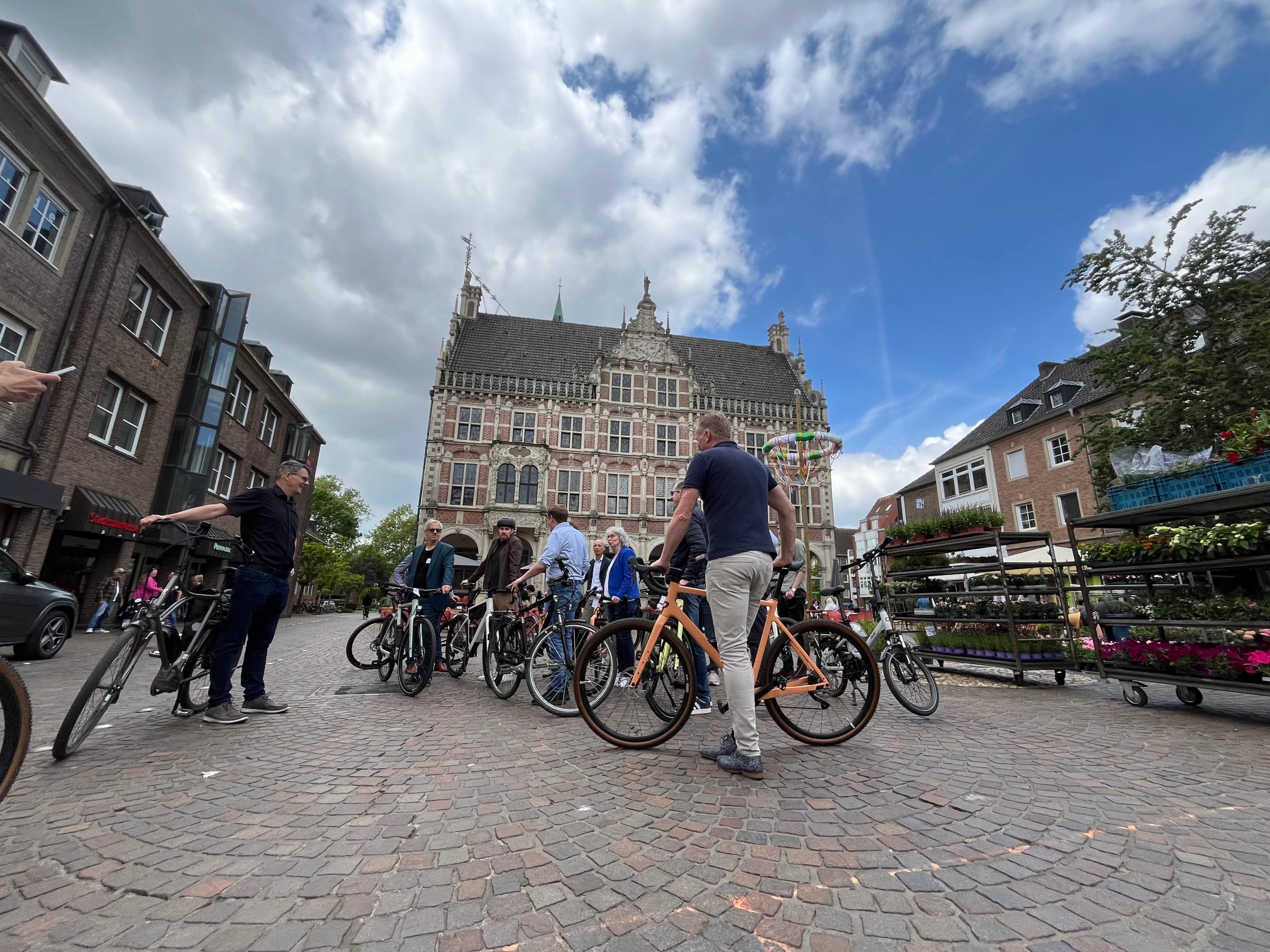
The final day brought the delegation to Bocholt, Germany’s most bicycle-friendly medium-sized city, located close to the Dutch border. The visit clearly demonstrated how closely connected Dutch and German cycling ambitions have become.

The visit concluded at ROSE Bikes’ BIKE TOWN headquarters in Bocholt, where the company generously hosted the delegation and provided the perfect setting for an exchange between the Dutch delegation, ROSE and the City of Bocholt. Participants also had the opportunity to explore the city by bicycle using ROSE bikes, experiencing Bocholt’s cycling infrastructure first-hand.

What made the visit particularly interesting was seeing how one of Germany’s largest bicycle manufacturers works hand in hand with their city. Rather than operating independently, ROSE actively collaborates with the municipality to strengthen Bocholt’s cycling culture and improve the local cycling environment. The discussions highlighted how the bicycle industry can contribute far beyond manufacturing bikes—by supporting local cycling initiatives, sharing expertise and helping create a city where cycling is part of everyday life.

During the joint discussions, the City of Bocholt also presented several ambitious projects currently under development, including the redevelopment of the central station, improvements to public transport frequencies and plans to create more intuitive connections between the station and the city centre for pedestrians and cyclists. Similar to discussions earlier in the week, city officials explained that while funding is available, a shortage of specialised staff (Fachkräfte) remains one of the biggest challenges to delivering these projects. Along the cycling tour, the delegation also discovered innovative interventions, such as modular playgrounds replacing former parking spaces, demonstrating how public space can be reimagined to create more attractive neighbourhoods.

|

Looking ahead

The fietsmissie once again demonstrated the value of cross-border knowledge exchange. While the Netherlands and North Rhine-Westphalia each face their own challenges, both regions share the ambition to create safer, healthier and more attractive cities through cycling.

For me personally, one of the most valuable outcomes was seeing how these exchanges continue to strengthen the relationships between Dutch and German partners. By bringing together governments, municipalities, knowledge institutes and businesses, the mission created new opportunities for future collaboration and reinforced our shared commitment to accelerating the transition towards more sustainable mobility.

Related posts

Velo-City 2021 Conference in Lisbon

The Dutch Cycling Embassy leads delegation of Dutch experts to the 2021 Velo-City Conference in Lisbon. From September 6th to…

Read More

TH Wildau visits DCE

On the afternoon of Monday, 10 November 2025, the Dutch Cycling Embassy welcomed a group of students from TH Wildau,…

Read More

Dutch Cycling Embassy Sponsorship for Velo-city 2025 

The Velo-city Conference draws over 1.600 advocates, cities, decision- and policymakers, researchers, and industry leaders from over 60+ countries. As…

Read More

The following article, written by Pinar Pinzuti, was originally published in Italian by BikeItalia. It has been translated into English and republished with their permission.

When it comes to widening roads or building highways , no one questions the billions allocated; when it comes to building a cycle path, every single euro must be justified down to the last cent.

Why?

Because in Italy we are still trapped in an old misunderstanding: considering cycling as an “emotional” or political investment.

The Dutch Public Sector Approach

|The Netherlands has outgrown this approach for decades. Thanks to the analysis and dissemination work of the Dutch Cycling Embassy , ​​a network that brings together public institutions and private companies, we now know that cycling is not a “poor” form of transport, but an infrastructure with extremely high economic returns.

From June 16th to 19th, Velo-city 2026, the global cycling summit, took place in Rimini. It brought together administrators, politicians, technicians, representatives of public and private companies, industry professionals, and associations from around the world.

“Cities must learn to equip themselves with real business plans: they need an entrepreneurial vision applied to the public sector, capable of translating ideas and objectives into concrete, fundable projects. Everyone knows that European funding is available every seven years. Instead of starting with funding and then creating a project to finance, we need to do the opposite: start with a long-term plan and find the right call for proposals to finance the works. This way, we will be able to justify good ideas with data, clear strategies, and a long-term vision for managing available resources,” explains Paolo Ruffino, consultant at Haskoning, one of Europe’s oldest and most prestigious consulting and engineering firms.

The Great Mistake of the Mobility Economy

“The main problem lies in the way ministries calculate the return on investment. Traditional valuation systems are excellent at calculating the costs of building car infrastructure, but fail miserably at quantifying the long-term social benefits and avoided costs,” explained Chris Bruntlett, International Relations Manager at the Dutch Cycling Embassy.|When investing in cycling, the benefits aren’t confined to the transportation sector, but cascade across healthcare, the environment, the economy, and urban planning. The Dutch Social Cost-Benefit Analysis maps what politicians often overlook, such as a reduction in sedentary-related diseases (such as diabetes) and savings for the healthcare system, as well as a reduction in the need for car parking and costly road expansions (bridges, overpasses), which would cost billions.

When Bike Parking Saves Public Transport

To understand the impact of bikenomics, one need only look at the infrastructure projects that have defied critics’ initial skepticism.|When Utrecht spent €30 million to build an underground parking lot for 12,500 bicycles at its central station, many called it madness. A subsequent cost-benefit analysis reversed the narrative: maintaining the facility costs “only” about 1 euro per day per user.

If those same users had to reach the station by bus or tram, the cost to the public coffers (in subsidies for local transport) would have been 3 euros per day per user.

Promoting bike-train intermodality saves millions of euros in public money every year.

What Happens if We Bet on Active Mobility?

To visualise the economic potential of the transition, the city of Rotterdam simulated a 2024 scenario based on highly ambitious mobility policies. The numerical results should give pause to any public policymaker in Italy:

+1 km/h speed . If the fluidity of the network allowed cyclists to pedal just one kilometer per hour faster on average, the city would gain €26 million a year in productivity.

Less diabetes, more savings . Increased physical activity through active mobility would save local healthcare systems €13 million a year on diabetes treatment alone.|Furthermore, the data demolishes the myth that retailers need cars in front of their windows: in Rotterdam, customers who go shopping on foot or by bicycle spend a total of 818 million euros a year in the city’s shops.

Bikenomics therefore requires a long-term vision, similar to that of a real urban business plan: clear objectives, data to support choices and a strategy capable of intercepting available resources.

The Three Rules of Change

The Dutch model shows that change starts from some fundamental rules.

The first is to measure the real benefits of cycling, moving beyond a focus on road traffic alone and including the effects on public health, the local economy, and quality of life in decision-making processes.

The second is to stop thinking in terms of isolated interventions: a bike lane alone has limited value, while a continuous, safe, and interconnected network is what allows cycling to become a true mobility system.

The third is to focus on the missing links: often a single strategic intervention, a bridge, a crossing, a connection between two existing routes because it can change the habits of thousands of people.

Related posts

Velo-City 2021 Conference in Lisbon

The Dutch Cycling Embassy leads delegation of Dutch experts to the 2021 Velo-City Conference in Lisbon. From September 6th to…

Read More

TH Wildau visits DCE

On the afternoon of Monday, 10 November 2025, the Dutch Cycling Embassy welcomed a group of students from TH Wildau,…

Read More

Dutch Cycling Embassy Sponsorship for Velo-city 2025 

The Velo-city Conference draws over 1.600 advocates, cities, decision- and policymakers, researchers, and industry leaders from over 60+ countries. As…

Read More

A guest blog post by John Snelsire from Charlotte, North Carolina, USA.

From the moment I arrived in the Netherlands, I was greeted with a calmness and peace I didn’t realize I needed. This feeling resonated throughout my five-day experience and left me wanting more. Everywhere I went, I noticed how intentionally the Dutch design around the human scale. The meticulous attention to detail and the engineering required to pull it off are truly astounding.

My name is John Snelsire, and I am from Charlotte, North Carolina, in the United States. I have a degree in Geography and Urban Planning from UNC Charlotte, though my professional career primarily wound through the financial services sector. After retiring last summer, I wanted to reconnect with my Geography and Urban Planning roots through the Geography of Cities class at UNC Charlotte. This class required a comprehensive research paper, and I chose to write about cycling infrastructure.

My passion for cycling reignited during the pandemic, and I now ride approximately 2,000 –3,000 kilometers per year.
My Dutch cycling experience began in Amsterdam. After arriving at Amsterdam Central Station, I immediately went to the Stationsplein Bicycle Parking facility. It was amazing to see such a large and carefully designed bike parking area while watching a constant stream of people move in and out of the station. I was awestruck by the engineering required to build this facility, but even more by how normal it seemed in daily life.

That became a recurring theme throughout my visit. The cycling infrastructure was impressive, yet it did not feel like a special feature. It felt like part of the everyday rhythm of the city.

To say that I felt like a kid on Christmas morning would be an understatement. I experienced pure joy riding the protected bike network. Often, I had no set itinerary. I would simply ride for several kilometers to find a place for lunch.

On one casual ride, I suddenly found myself pedaling through the iconic Rijksmuseum bicycle passage, admiring the museum’s architecture before exiting directly into a large park. On another adventure, I rode a single-speed bike through the countryside to Monnickendam for lunch. From there, I went to Marken and enjoyed seeing the sun sparkle off the water while I rode. When my smartphone navigation suggested a repetitive return path, I put it away and intuitively navigated a different route back to the ferry at Central Station.

My journey continued to Utrecht for a meeting with Skadi Tirpak, Director of the Dutch Cycling Embassy. Skadi provided invaluable perspectives for my research paper, sharing insights into how the Dutch Cycling Embassy works with cities and partners around the world to exchange expertise and support cycling infrastructure projects.

The experience deeply inspired me to walk and cycle for errands much more now that I am back in Charlotte. My meeting in Utrecht felt especially relevant considering the ThinkBike Workshop held in Charlotte in May 2025, which focused on Central Avenue and South Boulevard. Although I did not take part in the workshop myself, my visit to the Netherlands gave me a clearer sense of what safe and connected cycling infrastructure can mean in everyday life.

Following our meeting, it was time for another bike adventure. I rode to Houten and arrived as school was letting out. It was beautiful to see students of all ages riding home in groups or individually, completely free of parental supervision.
As an urban planning enthusiast, I concluded my trip by visiting the Dafne Schippersbrug project in Utrecht. This project exemplifies the highest standards of integrated urban planning. It is amazing how the bridge, school, and bike path seamlessly merge to connect two sections of Utrecht. I felt so much satisfaction seeing that project, and I had a huge smile on my face riding back to Utrecht Central Station.

The Netherlands provided the most seamless cycling and transportation experience I have ever witnessed. Extensive care is taken to design an environment where people can experience daily life in a healthy and enjoyable manner. The cohesive mobility network of trains, trams, ferries, bike paths, and walking paths proves how easy and fulfilling life can be without a car.

In fact, the infrastructure left such an impression on me that I cancelled an upcoming two-week cycling vacation in two American cities. Instead, I am returning to the Netherlands for the EuroVelo Conference, with five additional days for cycling exploration. The comprehensive transportation network and human-centered design made this decision effortless.

See you this fall.

Related posts

Velo-City 2021 Conference in Lisbon

The Dutch Cycling Embassy leads delegation of Dutch experts to the 2021 Velo-City Conference in Lisbon. From September 6th to…

Read More

TH Wildau visits DCE

On the afternoon of Monday, 10 November 2025, the Dutch Cycling Embassy welcomed a group of students from TH Wildau,…

Read More

Dutch Cycling Embassy Sponsorship for Velo-city 2025 

The Velo-city Conference draws over 1.600 advocates, cities, decision- and policymakers, researchers, and industry leaders from over 60+ countries. As…

Read More

In a three-year European study into citizen participation in local mobility policy, assessments by cyclists prove to be just as reliable as those by professional inspectors. This is one of the key conclusions of the GREENGAGE project, a Horizon Europe study in which a Citizen Observatory was established in North Brabant focusing on bicycle infrastructure. Breda University of Applied Sciences coordinated the Dutch pilot, the Fietsersbond mobilized participants and conducted reference inspections, and technology company Argaleo brought all collected data together in a digital twin platform that layers various data sources on top of each other so that patterns and connections become visible.

Subjective Data Fills Blind Spot

In the Heusden region, 150 participants assessed cycling paths on aspects such as road surface, lighting, and safety. On average, their scores corresponded with those of the Fietsersbond inspectors. However, the research shows that the real added value lies elsewhere: cyclists identify bottlenecks that do not appear in any technical measurement. Root heaves, poorly visible obstacles, feelings of insecurity due to mixed traffic. In the data visualization platform, these subjective observations were combined with inspection data and GPS measurements, making bottlenecks visible that remained hidden with separate data sources.

80% Drive a Car, But the Province Wants a Changed

The urgency is great. More than 80% of all journeys over six kilometers in Brabant are made by car. The province wants to increase bicycle use by 20% in 2027 and 40% in 2040. Traditional cycling policy relies on road surface measurements and traffic counts, but lacks the perspective of the cyclist themselves.

Concrete Implementation of the Environment and Planning Act

The Environment and Planning Act obliges municipalities to involve residents in spatial plans, but does not prescribe a method. The researchers see the Citizen Observatory model as a concrete implementation: a combination of digital tools, independent intermediaries, and a data platform that combines subjective and objective information into a usable policy picture. Incidentally, the pilot showed that the involvement of the Cyclists’ Union as an independent intermediary was essential: municipalities were initially reluctant to participate for fear that direct participation would create expectations. The complete approach is documented in a public White Book. In addition to North Brabant, pilots were conducted in Bristol, Copenhagen, and two Italian regions.

To download images and whitebook, click here.

Related posts

Velo-City 2021 Conference in Lisbon

The Dutch Cycling Embassy leads delegation of Dutch experts to the 2021 Velo-City Conference in Lisbon. From September 6th to…

Read More

TH Wildau visits DCE

On the afternoon of Monday, 10 November 2025, the Dutch Cycling Embassy welcomed a group of students from TH Wildau,…

Read More

Dutch Cycling Embassy Sponsorship for Velo-city 2025 

The Velo-city Conference draws over 1.600 advocates, cities, decision- and policymakers, researchers, and industry leaders from over 60+ countries. As…

Read More

The Netherlands is world-renowned for its seamless integration of bicycle and train travel. It is the golden formula of Dutch mobility: the bicycle conquers the “first mile” from home to the station, and the train covers the long distance. However, this multimodal success story relies heavily on one crucial factor that often goes unnoticed: trust.

Travelers need to trust that they can park their bicycle quickly to catch their train, and crucially, they need to trust that their bike will still be there—dry and intact—when they return.

For over 20 years, Armada Mobility, based in Nieuwegein (NL), has been the silent force building this trust. As a dedicated partner to Dutch Railways (NS) and ProRail, they have produced, and installed the parking infrastructure found at nearly every train station in the Netherlands.

A Tale of Two Cyclists

To make the bicycle-train combination successful, infrastructure cannot be “one size fits all.” Modern stations must cater to two very different types of user needs:

1. The “Speed & Convenience” Commuter For the vast majority of travelers, speed is of the essence. These commuters often use sturdy city bikes and need to park within seconds to make their connection. For this group, Armada produces high-capacity mass shelters. These structures are designed not just for weather protection, but for spatial efficiency and social safety. By utilizing transparent materials, integrated lighting, and smart layouts, these shelters turn often chaotic station squares into organized, safe, and accessible transit hubs.

2. The “High-Value” E-Bike Commuter The cycling landscape has changed dramatically in the last decade. With the explosive rise of e-bikes and speed pedelecs, the bicycle has become a significant investment. For these owners, a standard open rack is often considered too risky. Authorities have responded to this shift by rolling out secure individual bicycle lockers across the national network. These individual, lockable boxes offer the highest level of security against theft and vandalism. They are the missing link that convinces car owners to switch to a bike-train commute, knowing their valuable e-bike is safely stored behind a steel door.Innovating for a Greener Future: The ‘Solar Tulip’

A commitment to sustainability goes beyond promoting cycling; it is also reflected in the infrastructure itself. A prime example is a pilot project at Maastricht North station. Here, the traditional shelter has been transformed into a local energy hub through the introduction of the “Solar Tulip” (Zonnetulp).

In this pilot, commissioned by ProRail, the shelter is equipped with integrated solar panels on its roof. This innovative design allows the station’s infrastructure to generate its own green electricity, which can be used to power station lighting or digital information displays. The “Solar Tulip” represents the next step in Dutch transit design: infrastructure that not only protects the cyclist but also actively contributes to the energy transition.|

Two-tier bicycle parking racks supplied by Velopa and a bicycle detection system including dynamic displays by Lumiguide. All companies are part of the Crowd Group, based in Hilversum.

|Beyond the Product: The Art of Installation and maintenance

Installing infrastructure at busy train stations is a complex logistical puzzle. It requires working within strict safety regulations, often during tight time windows, to avoid disrupting passenger flows.

Over two decades, working within operational railway environments has become essential. From the initial design phase to the final anchoring on the platform and following maintenance, coordinated lifecycle management helps ensure that facilities remain durable and functional under intensive daily use. This “end-to-end” approach ensures that the infrastructure is not only aesthetically pleasing but also durable enough to withstand the intensive daily use typical of Dutch stations.|A Dutch Standard

The seamless availability of both open shelters and secure lockers is a key reason why the Netherlands remains a global leader in multimodal transport. By making parking straightforward and reliable, infrastructure supports everyday cycling as a normal part of public transport use. These facilities form an essential layer of the Dutch multimodal transport network, helping to make the “first mile” predictable, accessible, and sustainable.

Related posts

Velo-City 2021 Conference in Lisbon

The Dutch Cycling Embassy leads delegation of Dutch experts to the 2021 Velo-City Conference in Lisbon. From September 6th to…

Read More

TH Wildau visits DCE

On the afternoon of Monday, 10 November 2025, the Dutch Cycling Embassy welcomed a group of students from TH Wildau,…

Read More

Dutch Cycling Embassy Sponsorship for Velo-city 2025 

The Velo-city Conference draws over 1.600 advocates, cities, decision- and policymakers, researchers, and industry leaders from over 60+ countries. As…

Read More

Indoor bicycle parking is an important part of a cycling-friendly city. Apartment garages, workplace storage rooms and underground facilities are meant to help people cycle more, not worry more. Yet BIKEBAZE data shows that a notable share of thefts in the Netherlands still happens in these controlled environments. 

This guest blog summarises the main insights from BIKEBAZE’s findings. The full investigation is available on their website.  As a community-driven platform against bicycle theft, BIKEBAZE connects cyclists, cities, and organisations to make cycling safer together, locally and internationally.

What the data shows

From weekly incoming reports, BIKEBAZE consistently see one remark:
“I kept it in a locked storage room. I thought it would be safe.” 

Across the country, similar patterns appear. 
Quotes may be translated or lightly edited for clarity and specific locations have been removed. 

Common situations include: 

  • Indoor storage rooms in apartment complexes
  • “My bicycle was stored in my building’s indoor garage with a frame lock, but it was gone the next morning.”
  • Facilities with cameras that are installed but not active
  • “My bike was parked in a secured storage room. Cameras were visible at every entrance, but later turned out to be inactive. The cut chain was still on the floor.”
  • Underground parking garages with tag-based access
  • “The storage areas on the lower levels require an access tag. I locked my bike with a chain and removed the battery, yet it still disappeared overnight.”
  • Bicycle storage rooms in schools or workplaces
  • “My bicycle was stolen from the locked bicycle room on campus.”
  • Municipal parking garages with controlled entry
  • “Parked in an underground garage with controlled entry, but the bike still vanished.” 

These reports appear nationwide and are not isolated events. 

Why enclosed spaces can be vulnerable

Shared access
Tag or badge systems are convenient but easy to misuse. Offenders can follow someone inside or enter through a door that remains briefly open. 

Limited natural surveillance
Unlike public streets, indoor parking often lacks movement and visibility. Quiet spaces give offenders time to remove locks unnoticed. 

Inactive or unmonitored cameras
Cameras provide reassurance, but only when they function and record. Many reported cases show gaps in monitoring. 

Lighter locks due to perceived safety
Because the environment feels secure, many cyclists rely on basic frame locks. Experienced thieves take advantage of this. 

Impact on riders

Theft inside a building affects more than the cost of a replacement. People report: 

  • reduced mobility for work or study;
  • stress about safety in their own residence;
  • additional insurance or replacement costs;
  • longer and less flexible journeys.

Bicycle mobility depends on trust. Maintaining that trust is crucial for cycling culture. 

Practical steps that make a difference

For cyclists

  • Use at least one ART certified lock, ideally a hardened twelve-millimetre chain.
  • Attach the bike to a fixed object, even indoors.
  • Choose a visible location instead of dark or isolated corners.
  • Confirm that cameras in the facility are active.
  • Register the bike and make this visible, e.g. by applying a SafeTag through BIKEBAZE. 

For building managers, housing associations and companies

  • Test cameras monthly and ensure recordings are stored, in compliance with local laws.
  • Install fast closing doors and motion activated lighting.
  • Number bicycle spaces for easier oversight.
  • Provide a simple way to report suspicious activity.
  • Offer group bicycle registration for residents or staff. 

Small improvements can significantly reduce risk while supporting a cycling friendly environment. 

Why we share these insights

BIKEBAZE maps bicycle theft across the Netherlands to support prevention, transparency and safer cycling conditions. Their goal is to strengthen cycling, not discourage it. Sharing real world data helps cities and organisations build facilities that match the trust people place in them. 

If you are a researcher, facility manager or cycling expert and would like to contribute insights to BIKEBAZE’s ongoing analysis, we welcome your input. 

You can find the full deep dive and contact details on their website. 

Related posts

Velo-City 2021 Conference in Lisbon

The Dutch Cycling Embassy leads delegation of Dutch experts to the 2021 Velo-City Conference in Lisbon. From September 6th to…

Read More

TH Wildau visits DCE

On the afternoon of Monday, 10 November 2025, the Dutch Cycling Embassy welcomed a group of students from TH Wildau,…

Read More

Dutch Cycling Embassy Sponsorship for Velo-city 2025 

The Velo-city Conference draws over 1.600 advocates, cities, decision- and policymakers, researchers, and industry leaders from over 60+ countries. As…

Read More

Many people in the mobility world focus only on how fast we can travel from A to B. But speed is not everything. We also need to make sure everyone has the chance to use transport at all. When combined with public transit, the bicycle becomes a powerful tool to improve access for everyone.

Hans Voerknecht is the founder of Een Nieuwe Kijk (A New Perspective), an organisation that develops new ways to look at accessibility. He has developed a method for assessing if all groups in society have equitable transport access to reach work, education, care and social contacts. This method is developed together with a group of expert scientists. The method is called IKOB (Integrale Kijk Op Bereikbaarheid or Integrated Perspective on Accessibility). One of the experts on this topic, Karel Martens, has named this transport justice. It takes into account time and costs of traveling, spatial planning and the difference between different groups in accessibility. The method is now owned by CROW and is available as an Open Source Tool.

The method can be used also the enormous value of a cycle inclusive policy in terms of equitable accessibility and preventing transport poverty.

How did you get involved with the Dutch Cycling Embassy?

I’m actually one of the founding fathers. Around 2007, I worked at CROW. They needed an international ambassador on cycling policy, and I took on that role. At the time, there was already a Danish Cycling Embassy, and I organized a large meeting with many stakeholders to discuss establishing a Dutch version. From there, the Dutch Cycling Embassy was created.

Over the years, I stayed connected while also working on other projects, mainly focusing on equitable accessibility. I realized many people lack access to society because of poor transport options, especially those with lower incomes.

To address this, I developed a method and software, together with other experts. This approach has been applied in over 20 projects, across different cities and contexts. It provides insights into issues like transport poverty.|Can you explain what equitable access means to you?

Traditionally, we look at mobility in a utilitarian way: if a measure benefits society overall, it’s considered good, even if it disadvantages some groups. But I noticed these policies often improve accessibility for people who already have it, while neglecting those who don’t.

Many lower-income people don’t own a car, yet most measures are car-oriented. An alternative approach, sufficiency-oriented thinking, asks: Does everyone have enough accessibility to participate in society? Equitable access means everyone has fair chances to reach essential places such as work, education, healthcare, shops, and social contacts. Making sure that everyone has this should come before improving transport for people who already have ample access.

For example, in many rural areas, people are very car-dependent. We tend to assume everyone there owns a car. But in every municipality, at least 30% of low-income households don’t. This puts these people at a bigger disadvantage. Areas where many destinations can be reached by bike show far less inequality.

How can we map these inequalities?

We look at the daily urban system: where people live, where jobs and services are, and how long and costly it is to reach them. We also consider income, car ownership, and preferences for each transport mode.
For each neighbourhood, we calculate how many jobs are realistically accessible, factoring in time and cost. For low-income people, €1 in travel costs weighs more heavily than for higher-income people. For example, €1 equals 12 minutes of perceived travel time for low-income households, compared to 4 minutes for high-income ones.

I created a method to estimate the risk of transport poverty. This is where people struggle to reach essential services. For example, in Eindhoven, we analysed what would happen if no one cycled. The model clearly showed a rise in transport poverty.

In other countries, this reality is even clearer because cycling is a less viable option. During a workshop, I spoke with people from Toronto. They mentioned that there were neighbourhoods where more than 80–90% of households had no car access. To make a big impact with sustainable mobility plans, municipalities should focus on these communities. Transport poverty should always be addressed.|What trends did you notice?

Preferences vary by area. In rural areas, 90–95% of people prefer cars because other options are limited or non-existent. This is especially true for public transport. In urban areas, fewer people prefer cars. More often, they choose the bike or public transport because these are good alternatives, and cars are less practical in cities.

We also need to remember that the bicycle has a smaller radius than the car. This matters for distance and time. For people who prefer the car, if the destination is more than a 20-minute cycle away, they will mostly choose the car. This increases to 45 minutes for people with a strong preference for the bike. Further, using an electric bike the radius enlarges very much. With IKOB we can show the extra value of using a bike in providing better accessibility for people with a low income.

How could this data inform policy?

To address transport poverty, we look at what holds people back from choosing certain modes. Public transport can cover a large area well, but if it is too expensive, people will make other choices. In Amsterdam, a monthly subscription from North Amsterdam to Schiphol costs over €150. This is unaffordable for many. A capped monthly rate of €40–€50 would make jobs at Schiphol accessible to more people.

In other cases, lowering prices and speeding up transport only solves part of the issue. In some cities, people walk 20–25 minutes during the last leg of their journey. This makes fewer people willing to commute. The first step is to improve accessibility there and for instance offer a bike for the last leg of the journey. When the combination of public transport and the bike offers reasonable door-to-door-travel times, comes the second step, making public transportation cheaper.|What’s your advice for cities looking to invest in cycling infrastructure?

Investing in cycling infrastructure and affordable bikes doesn’t just improve mobility. It reduces inequality. Car infrastructure mainly benefits the well-off. Cycling and public transport can benefit everyone, as well as improve existing systems.

Furthermore, there is a big focus on sustainable transport, which is of course valuable. But most measures that are taken to improve sustainable transport turn out to be quite unfair for a lot of lower income people, especially in rural areas. A lot of people observe that if measures are not fair than there will be no support for these measures. So, in my opinion, fair and equitable accessibility comes first, creating support for measures. And, surprisingly, all fair and equitable measures turn out to be very sustainable, which is not true the other way around.

Now I am involved in a POLIS-initiative to have alle the SUMPs (Sustainable Urban Mobility Plans) include also an assessment on fair and equitable accessibility. POLIS has found out that IKOB fills an essential gap in the set of instruments, so it is advisable to:
1. Assess the distributional effects of measures for various group and if this is fair and equitable;
2. Use IKOB to do the calculations.

It’s also important to provide bikes in places where people don’t cycle because they can’t afford one. Other schemes, such as kilometre-based reimbursements, also help to expand access to jobs.
Cycling helps people take part in society and access opportunities. Unfortunately, current policies often deepen inequality by focusing too much on cars.

Interested in learning more?

Contact Hans at hans@eennieuwekijk.nl
www.eennieuwekijk.nl

Related posts

Velo-City 2021 Conference in Lisbon

The Dutch Cycling Embassy leads delegation of Dutch experts to the 2021 Velo-City Conference in Lisbon. From September 6th to…

Read More

TH Wildau visits DCE

On the afternoon of Monday, 10 November 2025, the Dutch Cycling Embassy welcomed a group of students from TH Wildau,…

Read More

Westminster Energy, Environment & Transport Forum 2025

On Tuesday, February 25th, 2025, Dutch Cycling Embassy International Relations Manager Chris Bruntlett participated (virtually) in the one-day event “Next…

Read More

Understanding patterns of walking and cycling is a key challenge in planning sustainable urban mobility. Without adequate data, infrastructure investments risk missing local needs or being underutilized.

DQ Flows is a simulation tool designed to estimate and visualize bicycle and pedestrian flows across entire street networks. It was developed by mobility expert Roxy Tacq in collaboration with Arjan Knol of DOK Data & Road Safety. The model aims to support cities, regions and mobility professionals in making evidence-based decisions for active travel infrastructure.

The name “DQ Flows” refers to Don Quixote, reflecting a broader intention to challenge conventional practices in mobility planning, particularly the limited visibility of walking and cycling in traditional transport models.

Functionality and Approach

DQ Flows uses micro-simulation techniques informed by demographic data, household profiles, and geographic datasets, including OpenStreetMap and satellite imagery to model typical weekday travel behavior. Notably, it does not require locally collected input data to function. When available, existing count data can be integrated to enhance the accuracy of estimates.

The tool is designed to deliver flow predictions in a short timeframe and is scalable due to its use of open data sources. It has been applied in urban contexts as varied as Rotterdam, Barcelona, and São Paulo.

DQ Flows can be used in a range of contexts, including:

  • Estimating walking and cycling volumes in areas without existing count data
  • Identifying locations where design interventions could reduce conflict or risk
  • Exploring different planning or policy scenarios
  • Supporting the development of Sustainable Urban Mobility Plans (SUMPs)

By providing insight into expected movement patterns, the tool can inform infrastructure design, investment prioritization, and policy development, particularly in settings where data is scarce or unavailable.

A publicly accessible DQ Flows Story Map and LinkedIn page illustrate the tool’s functionality and provides examples of its application.

For more information or inquiries about use in specific projects, contact Roxy Tacq at roxytacq@icloud.com.

Related posts

Velo-City 2021 Conference in Lisbon

The Dutch Cycling Embassy leads delegation of Dutch experts to the 2021 Velo-City Conference in Lisbon. From September 6th to…

Read More

TH Wildau visits DCE

On the afternoon of Monday, 10 November 2025, the Dutch Cycling Embassy welcomed a group of students from TH Wildau,…

Read More

Westminster Energy, Environment & Transport Forum 2025

On Tuesday, February 25th, 2025, Dutch Cycling Embassy International Relations Manager Chris Bruntlett participated (virtually) in the one-day event “Next…

Read More

We have passed the discussion on the ‘why’ cycling is important for liveable, vital, and sustainable cities. Now the main question is: ‘how do we implement an effective cycling policy? Often it is a struggle for the space needed to realize cycling projects. Especially at intersections. How to relate to the main car corridors? How to integrate the cycling policy with the public transport system? An integrated mobility strategy is needed. The principle of ABC zoning can be helpful to realize effective cycling policies. The ABC zoning was introduced in the Sustainable Urban Mobility Plan (SUMP) for Utrecht (Goudappel, 2016) and since applied in many other mobility plans in The Netherlands and internationally.

What is an integrated mobility strategy?

The mobility strategy is the step between public goals and concrete measures. It shows us the way the different networks from car, public transport, and cycling interact. Where are the relevant mobility hubs where the networks of public transport and cycling come together? How do we avoid forcing cyclists to cross major urban boulevards for cars? How are new developments served by each network? Knowing how your your city will look, say 25 years from now is crucial.

“The best cycle plan is a car plan”

Since safety is a key issue for the cycling plan, the logical question is: how do you manage important conflicts with cars? This is all about the intensities of cars and managing their speeds; it is by making a clear plan for the routing of cars in your network that you can free up space for more green, pedestrians, and cyclists. In the Netherlands, there is a decades-long tradition of steering the cars to the highways in order to create more safety and more room for other users on the subordinated networks. In the Utrecht SUMP, the strategy aimed strongly for cars to use the ring road around the city in order to free up space for cyclists in the heart of the city. And the mobility strategy is not only about the routing of cars, but also about the strategic planning of parking places and traffic management. This all can help to create more space for other modes in the heart of the city.The urban environment communicates

We might not always notice it, but the urban environment communicates a message to the user: are you only tolerated as a cyclist? On a footpath? Or in between cars? With only a few stripes of paint? Or are you invited? Is the space designed for your presence? You know what happens at a party if you are only tolerated: you don’t stay too long and you don’t come back. Actually, the behaviour of cyclists is exactly the same. So creating an inviting environment for pedestrians and cyclists provokes the kind of behaviour we are looking for. A place where they feel welcome. Where they are the most important user of the public space. And only by doing so we can have amazing effects on the behaviour, like in this example in Utrecht: more than 50% more cyclists, 30% fewer cars, and a 30% reduction of speeds only by creating a different environment.|ABC zoning: three levels of environment

So talking about creating different environments, we can make a separation in three levels of the city. The A zone is where cyclists and pedestrians are the most important users of the public space, in the urbanized B zone there is an attractive balance and mix between the modes, and in the C zone the different structures for cars, bicycles, and public transport are separated.

A zone: an inviting environment for cyclists

It all starts with the A zone: Every city has an A zone or can create this zone. In European cities, this is often the historical district. In American cities, this can be the people-oriented environments of your city. In this zone, we can apply some main principles. The quality of the public space is important. Therefore street parking can be reduced. Pedestrians and cyclists are the most important users of the public space. Their facilities should be well-designed. Cars are guests, and only destination traffic to the nearest parking facilities is allowed. Public transit is concentrated on certain corridors and limited in speed. The intensity of car traffic is lower than 5,000 vehicles per day. Speed is lower than 20 miles per hour or 30 kilometres per hour. With these intensities, no traffic lights are needed and no cycle paths are needed too!

B zone: creating inviting corridors

The B zone is the more dense urban area. In European cities this is often the pre-war-city within cycling distance of the historic centre. In American cities, this can be the more highly urbanized zones. In the B zone it is important to create inviting cycling corridors, with spatial continuity, following historic routes, water, or green: pleasant environments with low traffic. The principle of the cycling street makes cyclists the most important user of the space and cars are only guests. There is no crossing of roads with higher intensity than 15,000 motor vehicles per day, and crossing in two steps with an island in between and single lane per direction. Often these corridors can be combined with public transport corridors, and on these corridors pleasant places can be created where the public transport stops are located, and that adds to the experience of cyclists too.

C zone: separated cycling infrastructure

The C zone is the less dense suburban area. In these environments, we can only create inviting cycling corridors by separating the cycling infrastructure from the road infrastructure. Cycling roads are mainly two-directional and intersections with main roads and railways are uneven. The cycle roads can make use of water, green historic corridors, or parks to make them more attractive.

Attractiveness is most important for cyclists!

We found out in an extensive research (Goudappel, 2019) that the shortest route in time is not an important factor in the choice of route for cyclists. But attractiveness of the route is! Nearly 10 times more important. So when you create an inviting environment for bicycles following the ABC principles, you will not only target a larger group of users in the mobility market: from 8 to 80. You will also take care that your users are using the bicycle for longer journeys. Cause when they feel pleasant, time is running faster and they will automatically cycle over longer distances. In this way the effectiveness of your policy is growing quadratically, as is the share of cycling in urban mobility. Levels up to 40% can be reached.

Lessons Learned

• An integrated multimodal mobility strategy is needed

• Planning for the routing of cars in your network might be the most effective way to create more space for cyclists and pedestrians

• The environment sends a message that influences behaviour

• Create attractive environments for bicycles, meaning an attractive A zone, attractive corridors in the B zone, separated cycling routes in the C zone

• Cyclists will choose the most attractive routes, even if they are longer

• With an ‘invite to cycle’ network, you can influence not only the number of cyclist but also the distance they are cycling

Related posts

Velo-City 2021 Conference in Lisbon

The Dutch Cycling Embassy leads delegation of Dutch experts to the 2021 Velo-City Conference in Lisbon. From September 6th to…

Read More

TH Wildau visits DCE

On the afternoon of Monday, 10 November 2025, the Dutch Cycling Embassy welcomed a group of students from TH Wildau,…

Read More

Dutch Cycling Embassy Sponsorship for Velo-city 2025 

The Velo-city Conference draws over 1.600 advocates, cities, decision- and policymakers, researchers, and industry leaders from over 60+ countries. As…

Read More

Setting a Standard for Light Electric Vehicle Charging

In today’s push for sustainable urban transport, seamless and efficient charging solutions are essential for scaling shared mobility. In partnership with Evhcle, a leading shared mobility provider in Germany, TILER is proud to present a case study on our third collaborative project. In this latest project, Evhcle deployed 20 e-cargo bikes from Dolly across 10 mobility hubs in Fürstenfeldbruck, Germering, and Puchheim, that are charging at TILERs wireless charging solution. A significant step towards creating a standard for charging light electric vehicles (LEVs).

The Challenge: Manual Battery Swaps and Inefficiency

Shared mobility operators like Evhcle often face high operational costs and logistical complexities due to manual battery swapping. Batteries need frequent charging, which not only requires labor-intensive processes but also leads to downtime and additional trips for recharging. These inefficiencies create barriers to growth and impact user experience.

TILER’s Solution: Wireless Charging for Seamless Operations

TILER’s wireless charging technology solves this challenge by automatically charging bikes as soon as they are parked on the charging tiles. Since the launch of the project in July, the 20 e-cargo bikes in Fürstenfeldbruck have been consistently ready for use without manual intervention. This has resulted in the following key benefits:

  • Cost Efficiency:
    • Evhcle already saved approximately €1,250 per month in labor costs by eliminating manual battery swaps in this project.
    • The need for backup batteries is reduced, saving an additional €5,000 in initial investment costs for 20 bikes.
  • Improved Remote Operations:
    • TILER’s charging tiles enable uninterrupted fleet availability, with hundreds of trips completed since the project began.
    • Battery damage has decreased by 20%, extending battery lifespan and reducing replacement costs.
  • Environmental Impact:
    • Fewer vehicle trips for battery maintenance contribute to lower emissions, supporting cleaner urban environments.

Data-Driven Insights: The First Results

Here are some insights based on the performance of the first 20 e-cargo bikes:

  • Average Distance per Ride: 10 kilometers.
  • Usage Frequency: 15 rides per bike per month in winter, with double expected during summer.
  • Annual Charging Requirements: Approximately 50,000 kilometers.

    These data points illustrate the operational benefits of wireless charging and its potential scalability for other regions.

A Reliable User Experience

Beyond operational benefits, the project improves the end-user experience. Residents of Fürstenfeldbruck, Germering, and Puchheim now have easy access to reliable e-cargo bikes for errands, shopping, or commuting. The ability to start every trip with a fully charged battery enhances user confidence, especially in suburban areas with limited public transport options.

Richard Kemmerzehl and Christoph Ulusoy, founders of Evhcle, reflect on the impact:
“TILER’s innovative charging solutions have transformed our cargo bike operations. Wireless charging allows us to focus on service quality and user satisfaction while reducing operational complexities.”

Next Steps: Towards a Charging Standard

This project is a first step in establishing a standard for LEV charging that ensures convenience, scalability, and sustainability. By integrating wireless charging into shared mobility networks, we aim to make charging accessible and effortless for everyone, everywhere.

Moving forward, TILER and Evhcle will continue to monitor the system’s performance, gathering data on usage patterns, operational savings, and user satisfaction. These insights will inform future deployments and support the broader adoption of wireless charging in shared mobility.

We invite municipalities and shared mobility operators to join us in adopting universal charging facilities that make sustainable and shared transport easier for everyone. By introducing wireless charging infrastructure, cities can unlock cost-efficient, scalable, and eco-friendly mobility solutions. 

👉 Let’s connect to discuss how we can bring wireless charging to your region. Contact us at olivier@tilercharge.com | richard.kemmerzehl@evhcle.com. Olivier Coops Richard Kemmerzehl Christoph Ulusoy

#WirelessCharging #SharedMobility #SustainableTransport #MunichRegion #LightElectricVehicles #TILER #Evhcle #Innovation #UrbanMobility #SmartCities

Related posts

Velo-City 2021 Conference in Lisbon

The Dutch Cycling Embassy leads delegation of Dutch experts to the 2021 Velo-City Conference in Lisbon. From September 6th to…

Read More

TH Wildau visits DCE

On the afternoon of Monday, 10 November 2025, the Dutch Cycling Embassy welcomed a group of students from TH Wildau,…

Read More

Dutch Cycling Embassy Sponsorship for Velo-city 2025 

The Velo-city Conference draws over 1.600 advocates, cities, decision- and policymakers, researchers, and industry leaders from over 60+ countries. As…

Read More