×

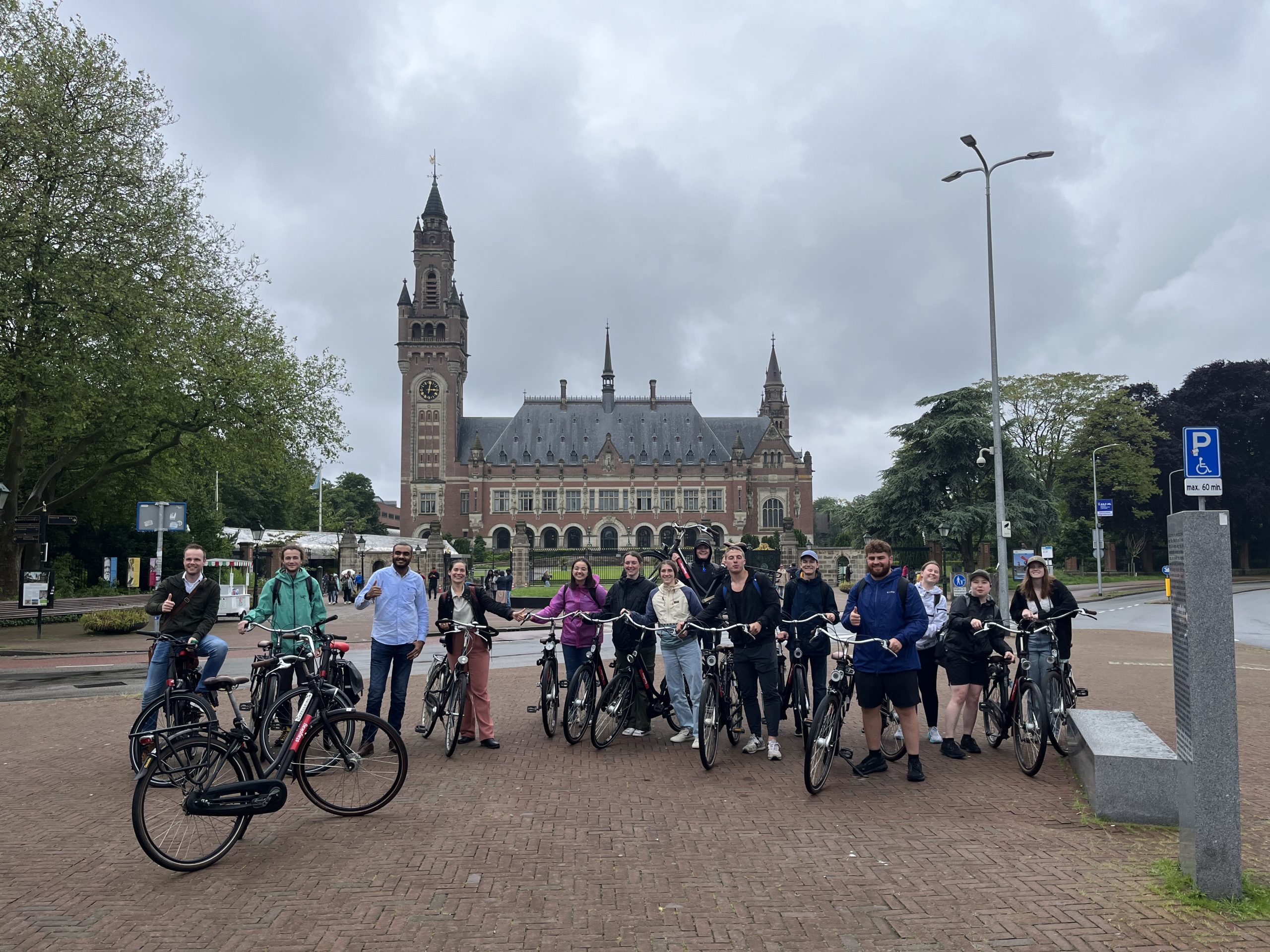
On the 30th of May, a group of Civil and Environmental Engineering students from the University of Wisconsin-Platteville, led by Professor Kristina Fields, embarked on an educational journey in the Netherlands. Over the course of two weeks, the students are delving into the principles of Sustainable Safety and Active Mobility, with visits to several key locations including Zwolle, Windesheim, and the City of The Hague.

The study visit kicked off with an interactive exercise led by the Dutch Cycling Embassy (DCE). Students were invited to identify differences and similarities between their experiences in the Netherlands and those back home. This engaging activity set the stage for an informative and insightful day.

Next was a presentation from the City of The Hague, where Wouter Schijns, Senior Traffic Engineer, and Alawi Farea, Traffic Engineer, discussed the city’s broad focus on mobility. They covered aspects such as traffic management, the optimization of traffic lights, and the intricacies of managing junctions. The students showed high levels of engagement, actively asking questions throughout the presentation.

Following a well-organized lunch, the group visited the city hall and the control room of The Hague. Here, they were given a sneak preview of the city’s mobility data and surveillance systems, with a particular focus on traffic management. Due to the sensitive nature of the information, photography was not permitted in the control room.

The visit continued with a short cycling tour around The Hague. Despite encountering a rainy Grote Marktstraat, the group visited notable sites such as the indoor car parking garage, the complex junction in front of the Westeinde Hospital—where various modes of transportation intersect, including emergency vehicles, bicycle routes, public transport, trams, and car traffic—the Veenkade, and the Peace Palace.

The guided study visit concluded with a lively game of “bike bingo.” Students were challenged to spot various types of cyclists and cycling scenarios, such as cargo bikes, cargo bikes with children or dogs, cyclists in suits, and passengers riding on the back of bikes. The students enthusiastically filled their imaginative bingo cards, adding a fun and interactive element to their learning experience.

As the day’s activities wrapped up, the students and their professors were eager to continue their exploration, pedaling towards the beach to conclude their visit. This educational trip not only provided the students with a deeper understanding of sustainable mobility but also offered practical insights into the innovative traffic management strategies employed in the Netherlands.

Related posts

German Exchange Students Discover Utrecht by Bike

The Dutch Cycling Embassy welcomed a group of German exchange students visiting St. Bonifatiuscollege in Utrecht today for an introduction to…

Read More

Montreuil now has a Dutch-inspired cycle path, the result of a ThinkBike Workshop in 2019

In 2022, the Dutch Cycling Embassy’s Margot Daris and experts Lennart Nout (Mobycon) and Roel Lenoir (3PM) travelled to Tirana,…

Read More

Three-Day Study Visit by Hungarian Delegation

From 11 to 13 November 2025, the Dutch Cycling Embassy welcomed a delegation from across Hungary for an intensive three-day…

Read More

Last week, from May 22nd – 24th, a Dutch delegation went to North Rhine-Westphalia to learn more about the potentials and challenges of cycling. In Düsseldorf, Ronald Faller took us on a bike tour starting at the bike station and stopping at the Bachplätzchen mobility station. There, Dr. David Rüdiger from Connected Mobility Düsseldorf introduced us to the complexity and well thought-out concept of the award-winning mobility hub with its high quality of stay and many integrated functions. The tour ended at the Consulate General of the Kingdom of the Netherlands in Düsseldorf, where we were welcomed by Consul General Hannah Tijmes. Afterwards, Ronald Faller gave us an insight into the strategic mobility planning of the state capital and the plans for the coming years. Thank you very much for the reflective view and realistic assessments! Afterwards, the participants from several cities in the region exchanged views with the Dutch experts on various issues in a workshop which ended in a joint Borrel. A big thank you to Lucie Gerresheim and her colleagues for supporting the whole event!

We spent the next day at polisMOBILITY and the AGFS Congress in Cologne. An exciting programme of inputs and networking organized by the AGFS NRW, where pragmatic approaches were used to promote the transport transition in rural areas with practical and realistic examples. Afterwards, the best projects in Germany were honored at the German Bicycle Award. The day ended on the roof terrace of Messe Köln with a sundowner and very good discussions with all participants in a great atmosphere and a good exchange. 

On the last day, we visited Bonn to discuss current projects and exchange ideas with the transportation planners there. Due to the weather, we were unable to go on the planned walk but look forward to seeing you again. 

It was an eventful trip during which we learned a lot about Germany, the challenges of the mobility transition and also the successful projects.

Related posts

Atlanta delegation explores Dutch cycling expertise in Utrecht and Delft

A diverse delegation from Atlanta, Georgia (USA) visited the Netherlands last week for a Sustainable Urban Development tour, focused on…

Read More

Montreuil now has a Dutch-inspired cycle path, the result of a ThinkBike Workshop in 2019

In 2022, the Dutch Cycling Embassy’s Margot Daris and experts Lennart Nout (Mobycon) and Roel Lenoir (3PM) travelled to Tirana,…

Read More

Palm Beach MPO Webinar: The Dutch Cycling Transformation

On Thursday, November 20th, 2025, the Dutch Cycling Embassy joined the Palm Beach Metropolitan Planning Organization (MPO) for a webinar…

Read More

On 25th May 2024, a group of members of the Bern city parliament, experts on spatial planning, biodiversity and the mobility transition, representatives of environmental civil society organisations, consultants, academics, and journalists from the city of Bern, Switzerland visited the Dutch Cycling Embassy’s offices for an afternoon of presentations and discussion. 

Emma Stubbe, project coordinator at the DCE, welcomed the group and introduced the topic of the day with a presentation on how cycling developed in the Netherlands over the last five decades.Ruben Loendersloot of Loendersloot International presented on how to build a liveable city via cycling. Bernhard Ensink of Mobycon, a former politician himself, presented on the topic of project planning, including success factors and effective stakeholder management.

The lively discussion that developed revolved around political challenges, the pace of change, and effective stakeholder management strategies.

The group’s visit was organised by Läbigi Stadt, a civil society organisation that campaigns for a more liveable Bern. The DCE would like to thank Läbigi Stadt for its visit and interesting exchange.

Related posts

German Exchange Students Discover Utrecht by Bike

The Dutch Cycling Embassy welcomed a group of German exchange students visiting St. Bonifatiuscollege in Utrecht today for an introduction to…

Read More

Montreuil now has a Dutch-inspired cycle path, the result of a ThinkBike Workshop in 2019

In 2022, the Dutch Cycling Embassy’s Margot Daris and experts Lennart Nout (Mobycon) and Roel Lenoir (3PM) travelled to Tirana,…

Read More

Three-Day Study Visit by Hungarian Delegation

From 11 to 13 November 2025, the Dutch Cycling Embassy welcomed a delegation from across Hungary for an intensive three-day…

Read More

On May 23rd, 2024, Dutch Cycling Embassy International Relations Manager Chris Bruntlett participated in Ebike Future X in Amsterdam. After five years of taking place in a virtual setting, the event made its physical debut in the Netherlands with industry professionals delving into the latest e-bike trends, technologies, and sustainable solutions. Chris’ presentation was entitleed, “The Great Equalizer: How E-Bikes Create More Safe, Liveable, and Inclusive Places”, during which he offered insights into e-bike use in the Netherlands, including the larger benefits of spreading this revolution to cities around the world. Joining Chris in the speaking line-up was Marnix Kwant of Van Raam. We’re proud to have co-organized this inaugural Netherlands edition, and look forward to follow-up events with industry leaders.

Related posts

Atlanta delegation explores Dutch cycling expertise in Utrecht and Delft

A diverse delegation from Atlanta, Georgia (USA) visited the Netherlands last week for a Sustainable Urban Development tour, focused on…

Read More

Montreuil now has a Dutch-inspired cycle path, the result of a ThinkBike Workshop in 2019

In 2022, the Dutch Cycling Embassy’s Margot Daris and experts Lennart Nout (Mobycon) and Roel Lenoir (3PM) travelled to Tirana,…

Read More

Palm Beach MPO Webinar: The Dutch Cycling Transformation

On Thursday, November 20th, 2025, the Dutch Cycling Embassy joined the Palm Beach Metropolitan Planning Organization (MPO) for a webinar…

Read More

In 2015, the Dutch Cycling Embassy, along with experts Erik Tetteroo (HODworks), Tonny Bosch (MOVE Mobility), Sjors van Duren (Royal HaskoningDHV) traveled to Miami for a ThinkBike Workshop to plan and discuss how the region can become more cycle-friendly. 

The goal was to provide support on The Underline project. Using the already existing linear right of way below Miami’s Metrorail, Friends of The Underline and Miami Dade County’s Transportation and Miami-Dade County Parks, Recreation, and Open Spaces (PROS) Parks Department teams are building a 10-mile-long bicycle and pedestrian trail. This space is intended to bring the people of Miami together, including a series of parks and other community amenities. 

We had the opportunity to speak with Meg Daly, CEO of Friends of The Underline, and Maria M. Debye Saxinger, Master Plan Manager at Miami-Dade County, to learn more about The Underline project and how they are rethinking what is possible with underused spaces in big metropolises like Miami.   

This year, the Dutch Cycling Embassy celebrates its 12.5-year anniversary. To document and celebrate the global impact the DCE and our network has had over that period, we are highlighting multiple projects. This article is part of the series #DCELegacy. 

Q&A with Meg Daly and Maria Debye Saxinger 

|How did you get involved in an infrastructure project like The Underline?  

I had a bike accident in which I broke both of my arms. After a couple of months, I was taking the train and then walking below it to physical therapy. It was then that I had the crazy idea of taking the land under the Metrorail and turning it into a park and trail. 

Back then it was just an unbaked idea. The big question was: who owns this land and how can I make this happen? People then pointed me in the right direction, towards Jack Kardys and Maria Nardi, who worked at the Parks department for the county. We also got help from architecture students at the University of Miami. They segmented the project into 1-mile sections and each student worked on one mile for a semester. That was the beginning of having something visual to work with to help fundraise and move to professional master planning. 

The next step was shopping it and telling everyone who would listen about the project. There were a couple of surprises along the way. The first was how open the Miami Dade County administration and the elected officials were. They said at the end of the day it comes down to: if the community wants it, if it’s worth it and, if it’s fundable. I had to dedicate myself as a volunteer, now for 11 years, and leave the business sector to be the leader of a non-profit. 

How do people get around Miami currently? Does anyone currently cycle? 

We have some bike and pedestrian counters and noticed that during COVID the usage of the M-Path (pre-Underline) tripled. Our thesis that people would use the bike more if they felt safe turned out to be true because there were no cars on the road during  that period. Mitigating that conflict/fear of conflict meant everybody was dusting off their bikes including kids who had never learned to bike. Overall, the bike is a very small mode of transport here. Cars dominate the transportation system, but  there are plans for a growing mass transport system as well. The bike is primarily used recreationally rather than for commuting. But there is a big opportunity for first and last-mile connections. When we get to 10 miles (of The Underline), I think we’ll see a mode shift to commute. 

The Underline corridor is a central spine of physical and social activity. What is the larger vision of the project? How does the bike fit in? 

The backbone of the project is the trail but then you have the park component. Some of the sections are up to 130 feet wide, which gives us a lot of freedom to build things. In the first few miles, we’ve already planted over 150,000 plants and trees, all native, not fertilized, no irrigation. The whole park is a pollinator garden intended to attract birds, bees and butterflies. There is also a social component with people walking their dogs or exercising.  

We also have a massive program of activations. For the first half mile, we produce 200 free events per year;these included dance, yoga, health and wellness, bike rides, music and more There is also a playground for kids. I’ve heard many stories, for example an artist who lost 40 pounds by using The Underline to exercise. To be the agent of people’s personal health changes is very gratifying. It is cliché but you have to say: “If you build it, they will come”. |Where does the workshop fit in (one year after the start of the project)? Why was it important to bring in experts from the Netherlands?  

That was an initiative through the county parks department because they had worked with the Dutch Cycling Embassy before. We need to learn how to prioritize cycling as a real mode of transportation. We asked ourselves: “How could we learn from countries like the Netherlands?”. We see in countries like Denmark and the Netherlands that there is civic pride in biking. We know that it makes us healthier, more connected to the outside world and offsets our carbon footprint. But we don’t realize enough that it’s as effective as driving in terms of speed. To make that happen we need very high-quality infrastructure that makes people feel safe and able to make their three-mile journey faster by bike. This relationship between the Dutch Cycling Embassy and Miami-Dade County, on many fronts is about education and learning from what you do well. Last year, we collaborated with the Dutch Cycling Embassy and the Miami Dade TPO to debut a documentary about how to “Go Dutch” with your bike network. So many people came to The Underline to see how the experts accomplished a bike friendly environment. The Dutch continue to inspire us every day.  

What were your main takeaways/inspiration from the Netherlands?  

In our culture, you hear ‘no’ a lot. To make change we need to do things differently and be more accepting of new ideas like they are in Europe. The other thing was the multi-generational approach to biking. Cycling there is for everyone. I remember when I rode my bike to school in the late 1960s in Miami. A generation later, my kids were not allowed to ride their bikes to school, and we lived a half a mile away. They asked why and I said it was the drivers. But my answer was wrong. It wasn’t the drivers, it was the infrastructure. Just fighting for a protected bike lane is an uphill battle. We need separate, protected facilities with crosswalks designed to protect cyclists and pedestrians rather than always giving cars priority.  Planning in a way that is people first  is a gamechanger and it needs to happen even more quickly. 

The Underline is life-changing because it will allow many kids to safely bike to school, bike to a playground and go for a walk. It saves hours that would otherwise be spent in the car. This dedicated space is a big step forward for Miami, where cars and bikes don’t coexist well. There is currently a stigma with taking public transportation or biking to work. I think that will change with this project. Now it’s becoming cool and fun. 

Seeing the work the DCE does to export the philosophy and belief system is helpful. Especially in a community that has never embraced biking to get around. Being able to point to these kinds of success stories has not only been helpful in terms of base education, but it’s also been helpful for my soul. Some days you ask yourself if it’s even possible and then other people before you have made it possible, and that really helps me to keep believing. 


What were the priorities you looked at when thinking about the cyclists using The Underline? 

The Thinkbike Workshop pushed us to think beyond typical infrastructure solutions. The DCE provided us with high-quality information about bicycle infrastructure. The key drivers of the project remain consistent: listening first, designing second. When we say listening it’s not just a few people but a robust public engagement process. We didn’t only hold public meetings, but we also went to churches, temples and neighborhood associations. The key is inviting them to talk about what they want. Some of these ideas were ours but mostly they were the community’s. 

The priorities of the project have remained consistent for over a decade: safety first, nature second and community third. Community includes events, programs, things to do, public art. Safety is very important. If I don’t feel safe on the bike or on foot 24 hours a day, we’ve failed. If it’s dark at night and I can’t bike or walk, we’ve failed. All those things cost money, but we invested in safety because if you don’t get that solved, number two and number three don’t work. 

We now get 1.5 million visitors per year in our first half mile, and we are projecting nine million at full buildout. It’s nice having a thesis but to be able to prove it is even better. The numbers tell the truth. 

|What has the public reaction to the project been? 

So positive! People who weren’t so sure about The Underline are beginning to see the vision. On the highway that runs parallel, we have 100,000 cars in both directions. On the ribbon cutting day, the pedestrians and cyclists were going faster than the gridlock traffic. People start to make choices based on what works for them. At our launch event, there was an elected official who came into office six years after the start of our project. He initially didn’t believe that people would ride a bike in Miami. At the ribbon cutting though, he was 100% bought into the project. He saw how much this project could impact his constituents and how they were behind the project. It’s impressive to live through that conversion. We always have to re-educate. As new officials come in, they don’t only have to learn about The Underline but about everything. 


Are there further projects for people to be able to get to and from The Underline? 

We should be working on the feeder system but there are communities that really don’t want bike lanes on their roads. Now that the Underline is starting to open, people are asking themselves why they don’t have a safe way to get there. So, it will be a delay, but I think it will happen particularly for kids wanting to get to school. There is an organization here called BikeSafe that created a pop-up bike path near an elementary school. These pilots end up being permanent and we did that with the parks department early on. We also put gym equipment in temporarily to see how it got used and people pick it up instantly and before you know it, that parklet informed the permanent Urban Gym in Brickell The way new housing developments are being built also accommodates access to The Underline more and more with pedestrian plazas and bike storage for example. They are becoming acutely aware of the importance of it being a connected system. 

Related posts

German Exchange Students Discover Utrecht by Bike

The Dutch Cycling Embassy welcomed a group of German exchange students visiting St. Bonifatiuscollege in Utrecht today for an introduction to…

Read More

Montreuil now has a Dutch-inspired cycle path, the result of a ThinkBike Workshop in 2019

In 2022, the Dutch Cycling Embassy’s Margot Daris and experts Lennart Nout (Mobycon) and Roel Lenoir (3PM) travelled to Tirana,…

Read More

Three-Day Study Visit by Hungarian Delegation

From 11 to 13 November 2025, the Dutch Cycling Embassy welcomed a delegation from across Hungary for an intensive three-day…

Read More

A delegation from the Ortenaukreis came from 6th to 8th of May to the Netherlands for a study visit. The Ortenaukreis is the largest administrative district in Baden-Württemberg in Germany and is home to over 432,000 inhabitants. Members from the district and local councils as well as administrative staff and citizens were part of the group.

Once arrived in Amsterdam, they were given a guided tour by Anna Wyner (Mobycon) around Amsterdam Centraal. On this tour, the group also dived into the newest bicycle parking garage at the main station, which was opened in 2022 and is built underwater.

With first impressions from the afternoon in Amsterdam, the next day was spent in Utrecht and Houten. In the introduction of the day, someone mentioned that they don’t have a problem of awareness in the Ortenaukreis, but mainly a problem of implementation. With their years of experience, Sjors van Duren (Royal HaskoningDHV) and Ruben Loendersloot (Loendersloot International) were the perfect DCE experts to address this. They gave many practical examples and explained Dutch approaches in their presentations. After lunch it was time to get on the bike! In sunshine, the experts guided through Utrecht and Houten, stopping at various interesting points on the way.

The final morning started with an input from Robin van der Griend (Mobycon) about knowledge transferability and examples of application. This was followed by a discussion about next steps in the Ortenaukreis, where also Sjors van Duren from the previous day joined again. Many thanks for the visit and we hope that new insights and perspectives have been gained that will promote further implementation in the Ortenaukreis.

Related posts

Atlanta delegation explores Dutch cycling expertise in Utrecht and Delft

A diverse delegation from Atlanta, Georgia (USA) visited the Netherlands last week for a Sustainable Urban Development tour, focused on…

Read More

Montreuil now has a Dutch-inspired cycle path, the result of a ThinkBike Workshop in 2019

In 2022, the Dutch Cycling Embassy’s Margot Daris and experts Lennart Nout (Mobycon) and Roel Lenoir (3PM) travelled to Tirana,…

Read More

Palm Beach MPO Webinar: The Dutch Cycling Transformation

On Thursday, November 20th, 2025, the Dutch Cycling Embassy joined the Palm Beach Metropolitan Planning Organization (MPO) for a webinar…

Read More

Many bicycles and variations of cycle paths adapted to the respective situation, no helmets but a feeling of safety and mutual respect – that are just some of the observations and experiences made by the delegation from Burgwedel (Germany) who came to the Netherlands for a study visit. The diverse group of representatives from politics, city administration, planning, research, companies, citizens and the Hannover Region Climate Protection Agency visited Utrecht and Houten from 2nd to 4th of May. The study visit was part of their project “Mobil ans Werk” and was partly funded through the Netherlands Enterprise Agency (RVO) as part of the Germany Strategy.

After arrival in the afternoon, the walking tour with Daan Butterman (Mobycon) around Utrecht Centraal started directly with a visit of the bicycle parking Stationsplein to have a look around before the busy rush hour. Some participants did not only look around, but also went for a ride around the Fietsenstalling when they quickly tested the OV-fiets bicycle sharing system. In sunny weather, the tour continued through the lively city centre of Utrecht.

The second day began with an interactive introduction in the seminar room, where the participants shared their expectations on the study visit. Main objectives of the study visit were to collect good examples and ideas for a sustainable mobility system and to examine their transferability to Burgwedel. After a short input about the current situation in Burgwedel, the DCE experts Tim Adema (Roelofs) and Robin van der Griend (Mobycon) gave presentations on Dutch approaches and design. In the discussion that followed, it became clear that an appropriate communication is key when it comes to changes. This came up several times, whether in relation to delivery traffic, pilot projects, parking space management or the attractiveness of public spaces. Strengthened by lunch and driven by great curiosity, even the rainy weather could not stop everyone from getting on their bikes and experiencing for themselves much of what had been discussed. Tim Adema (Roelofs) and Marin Breukelaar (Mobycon) showed the group around on a bike tour to Houten and back.

The study visit was rounded off on Saturday with a workshop together with Herbert Tiemens from the Gemeente Utrecht. Many questions were clarified once again before the group discussed the transferability and application of what they had experienced animated by maps of Burgwedel. After a round of flashlight feedback, the delegation made its way back to Burgwedel.

It was a pleasure to host this open-minded group, to share enthusiasm as well as challenges. We hope that they were able to take some inspiring insights back to Burgwedel which help them to continue to successfully rethink mobility in their project and city.

Related posts

Atlanta delegation explores Dutch cycling expertise in Utrecht and Delft

A diverse delegation from Atlanta, Georgia (USA) visited the Netherlands last week for a Sustainable Urban Development tour, focused on…

Read More

Montreuil now has a Dutch-inspired cycle path, the result of a ThinkBike Workshop in 2019

In 2022, the Dutch Cycling Embassy’s Margot Daris and experts Lennart Nout (Mobycon) and Roel Lenoir (3PM) travelled to Tirana,…

Read More

Palm Beach MPO Webinar: The Dutch Cycling Transformation

On Thursday, November 20th, 2025, the Dutch Cycling Embassy joined the Palm Beach Metropolitan Planning Organization (MPO) for a webinar…

Read More

On Wednesday 15th May, the second quarterly participant meeting from the DCE network took place. This time it was hosted by NS (Nederlandse Spoorwegen) at their impressive event space in Utrecht. Around 80 participants were welcomed by Nicole Lolkema (DCE) and Marise Bezema (NS) in a special ambience between trains and everything that belongs to the world of NS.

First, Marise Bezema and Mark van Hagen (NS) gave a presentation about facilitating travellers from first to last mile. OV-fiets are an important link for door-to-door transportation and there are around 22.000 OV-fiets at 300 train stations and OV-hubs available. Focusing on the desires of the cyclist provides opportunities for creating even more effective bicycle policies.

After this informative input, Ruben Loendersloot, chairmen of the board of the Dutch Cycling Embassy, gave an update. Herbert Tiemens (Gemeente Utrecht) and Johan Diepens (Mobycon) were bid farewell from the board – thank you very much for your commitment over the last years! New board members are José Besselink (Gemeente Rotterdam) and Mark Pruijssen (Falco). In addition, the Gemeente Haarlem and the consultancy FietsMeister will contribute further experience and expertise to the network as new participants. A warm welcome!

This was followed by a journey through the current activities of the DCE. The DCE team took everyone on a fast-forward trip to the upcoming Velo-city conference, Germany, Poland, Ireland, the US, Switzerland, the UK and Skandinavia. Exiting events, visits and new programmes are coming up in the next time. The meeting was rounded off with a networking and small dinner. Conversation continued well into the evening in a gezellige atmosphere.

Related posts

German Exchange Students Discover Utrecht by Bike

The Dutch Cycling Embassy welcomed a group of German exchange students visiting St. Bonifatiuscollege in Utrecht today for an introduction to…

Read More

Montreuil now has a Dutch-inspired cycle path, the result of a ThinkBike Workshop in 2019

In 2022, the Dutch Cycling Embassy’s Margot Daris and experts Lennart Nout (Mobycon) and Roel Lenoir (3PM) travelled to Tirana,…

Read More

Three-Day Study Visit by Hungarian Delegation

From 11 to 13 November 2025, the Dutch Cycling Embassy welcomed a delegation from across Hungary for an intensive three-day…

Read More

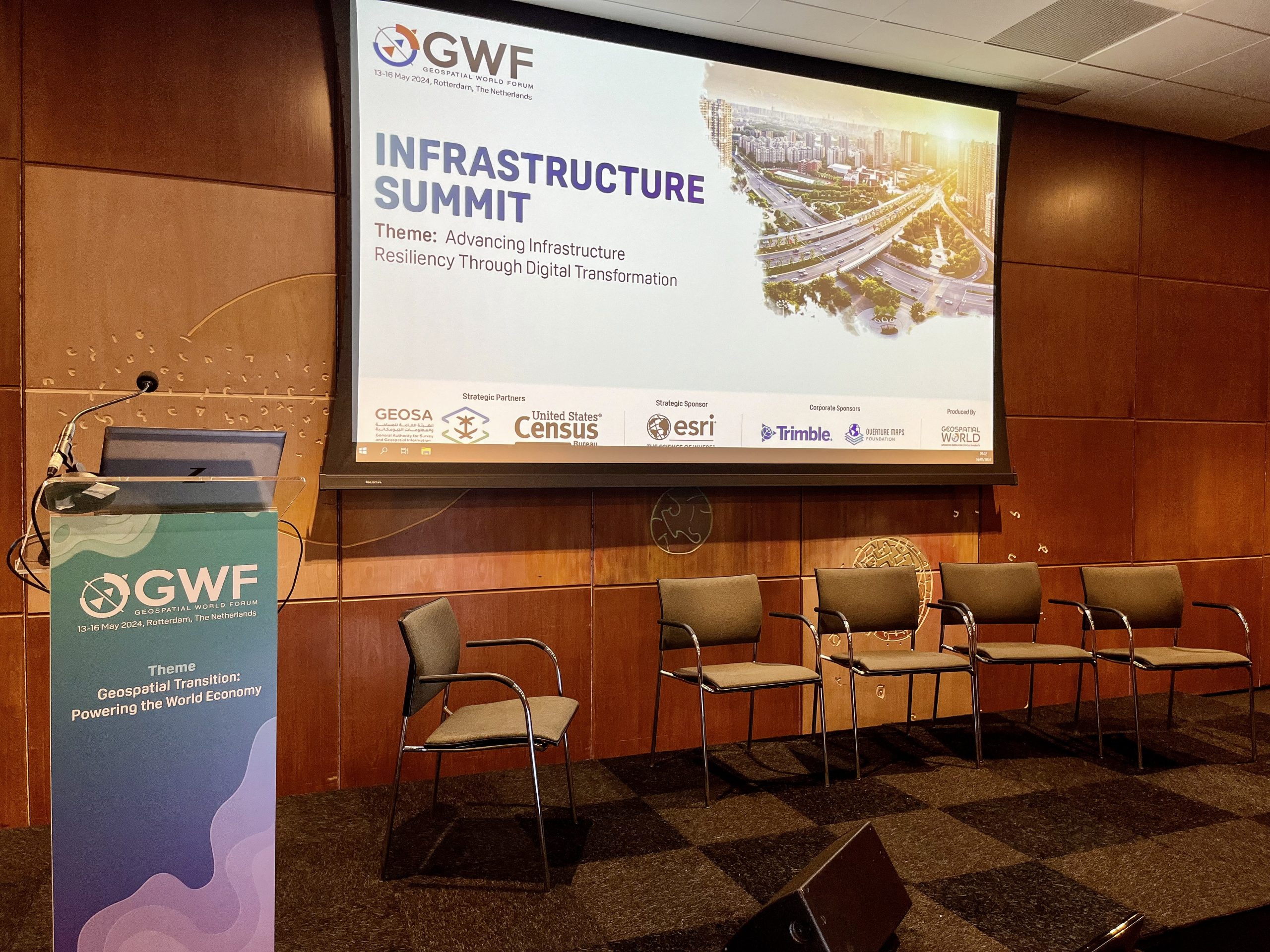
From May 13th to 16th, 2024, the Dutch Cycling Embassy attended the Geospatial World Forum (GWF) at the Postillion Hotel & Convention Centre at the WTC Rotterdam. GWF is an annual gathering of geospatial professionals and leaders representing the entire ecosystem of public policies, national mapping agencies, private sector enterprises, multilateral and development organizations, scientific and academic institutions, and large end-users from government businesses and citizen services.

International Relations Manager Chris Bruntlett was asked to moderate a session as part of the event program entitled “Next-Gen Technologies Shaping Smart Sustainable Mobility and Modelling”. It featured contributions from Jan Egbertsen, Manager Innovation from the Port of Amsterdam, Josette Vallentgoed-Udo, Team leader zero emission mobility at Gemeente Amsterdam, Stefan Wierda – CIO at AI–Infrasolutions, Dmitri Garbuzenko, BIM and AIM Coordinator at Rail Baltica, and Shravan Shah, Advisor at EMERGI BV.

We’d like to thank the experts for providing their perspectives, the many attendees who joined the sessions, and the organizers of GWF for giving us this stage.

Related posts

Atlanta delegation explores Dutch cycling expertise in Utrecht and Delft

A diverse delegation from Atlanta, Georgia (USA) visited the Netherlands last week for a Sustainable Urban Development tour, focused on…

Read More

Montreuil now has a Dutch-inspired cycle path, the result of a ThinkBike Workshop in 2019

In 2022, the Dutch Cycling Embassy’s Margot Daris and experts Lennart Nout (Mobycon) and Roel Lenoir (3PM) travelled to Tirana,…

Read More

Palm Beach MPO Webinar: The Dutch Cycling Transformation

On Thursday, November 20th, 2025, the Dutch Cycling Embassy joined the Palm Beach Metropolitan Planning Organization (MPO) for a webinar…

Read More

On May 16, 2024, the Dutch Cycling Embassy (DCE) made a significant presentation at the VCÖ conference focused on enhancing accessibility to Austria’s bus stops and railway stations for pedestrians and cyclists.

In Austria, four in ten rail passengers walk or cycle to the station, with this figure rising to half of all passengers in Salzburg, Tyrol, and Vorarlberg. The VCÖ’s international virtual conference aimed to explore strategies to further increase these numbers.

Emma Stubbe of the Dutch Cycling Embassy presented a case study on the Netherlands, where 68 percent of rail passengers walk or cycle to the station. She attributed this success to the attractive bike parking facilities at Dutch railway stations. Emma covered the design and implementation principles established by ProRail for creating high-quality bike parking facilities.

After she then provided a virtual tour, featuring input from DCE network participant Studio Bereikbaar, showcasing various bike parking facilities at train stations across the Netherlands. These examples ranged from small to large, urban to rural, and modern to historic, illustrating how ProRail’s principles were applied in diverse contexts.

The presentation sparked a candid and engaging discussion among Austrian, Dutch, and Danish participants, with numerous follow-up questions after the webinar, indicating a strong interest in adopting similar practices in Austria.

Related posts

Atlanta delegation explores Dutch cycling expertise in Utrecht and Delft

A diverse delegation from Atlanta, Georgia (USA) visited the Netherlands last week for a Sustainable Urban Development tour, focused on…

Read More

Montreuil now has a Dutch-inspired cycle path, the result of a ThinkBike Workshop in 2019

In 2022, the Dutch Cycling Embassy’s Margot Daris and experts Lennart Nout (Mobycon) and Roel Lenoir (3PM) travelled to Tirana,…

Read More

Palm Beach MPO Webinar: The Dutch Cycling Transformation

On Thursday, November 20th, 2025, the Dutch Cycling Embassy joined the Palm Beach Metropolitan Planning Organization (MPO) for a webinar…

Read More