×

On June 9th, 2026 the Dutch Cycling Embassy once again had the pleasure of welcoming a group of PhD and Master’s students from the Institute of Transport Studies of the University of Leeds, UK, for a presentation on Dutch cycling. Welcomed by Wiel Wijnen, (Project Coordinator) and Yari Msika (Intern), the students were invited to think together and discuss the similarities and differences between cycling between the UK and The Netherlands. Following on this discussion, Wiel and Yari gave a presentation highlighting the history of cycling in The Netherlands, the integrated Dutch approach of software, hardware and orgware as well as a discussion of the benefits of cycling. Afterwards, the group, led by Wiel, walked back towards Utrecht Central station where he pointed out some Dutch cycling design principles along the Kanaalstraat. The group was also lucky to catch rush hour at the busy Vredenburg cycling crossing and observe some Dutch cycling in action. We thank the group for their keen engagement, questions and willingness to contribute and exchange knowledge.

The DCE looks forward to continuing their annual collaboration with the University of Leeds in upcoming years.

Would you like to experience Dutch cycling culture first-hand?
Get in touch with us to organise your own study visit. We’d be delighted to welcome you.

Related posts

Velo-City 2021 Conference in Lisbon

The Dutch Cycling Embassy leads delegation of Dutch experts to the 2021 Velo-City Conference in Lisbon. From September 6th to…

Read More

TH Wildau visits DCE

On the afternoon of Monday, 10 November 2025, the Dutch Cycling Embassy welcomed a group of students from TH Wildau,…

Read More

Dutch Cycling Embassy Sponsorship for Velo-city 2025 

The Velo-city Conference draws over 1.600 advocates, cities, decision- and policymakers, researchers, and industry leaders from over 60+ countries. As…

Read More

A guest blog post by John Snelsire from Charlotte, North Carolina, USA.

From the moment I arrived in the Netherlands, I was greeted with a calmness and peace I didn’t realize I needed. This feeling resonated throughout my five-day experience and left me wanting more. Everywhere I went, I noticed how intentionally the Dutch design around the human scale. The meticulous attention to detail and the engineering required to pull it off are truly astounding.

My name is John Snelsire, and I am from Charlotte, North Carolina, in the United States. I have a degree in Geography and Urban Planning from UNC Charlotte, though my professional career primarily wound through the financial services sector. After retiring last summer, I wanted to reconnect with my Geography and Urban Planning roots through the Geography of Cities class at UNC Charlotte. This class required a comprehensive research paper, and I chose to write about cycling infrastructure.

My passion for cycling reignited during the pandemic, and I now ride approximately 2,000 –3,000 kilometers per year.
My Dutch cycling experience began in Amsterdam. After arriving at Amsterdam Central Station, I immediately went to the Stationsplein Bicycle Parking facility. It was amazing to see such a large and carefully designed bike parking area while watching a constant stream of people move in and out of the station. I was awestruck by the engineering required to build this facility, but even more by how normal it seemed in daily life.

That became a recurring theme throughout my visit. The cycling infrastructure was impressive, yet it did not feel like a special feature. It felt like part of the everyday rhythm of the city.

To say that I felt like a kid on Christmas morning would be an understatement. I experienced pure joy riding the protected bike network. Often, I had no set itinerary. I would simply ride for several kilometers to find a place for lunch.

On one casual ride, I suddenly found myself pedaling through the iconic Rijksmuseum bicycle passage, admiring the museum’s architecture before exiting directly into a large park. On another adventure, I rode a single-speed bike through the countryside to Monnickendam for lunch. From there, I went to Marken and enjoyed seeing the sun sparkle off the water while I rode. When my smartphone navigation suggested a repetitive return path, I put it away and intuitively navigated a different route back to the ferry at Central Station.

My journey continued to Utrecht for a meeting with Skadi Tirpak, Director of the Dutch Cycling Embassy. Skadi provided invaluable perspectives for my research paper, sharing insights into how the Dutch Cycling Embassy works with cities and partners around the world to exchange expertise and support cycling infrastructure projects.

The experience deeply inspired me to walk and cycle for errands much more now that I am back in Charlotte. My meeting in Utrecht felt especially relevant considering the ThinkBike Workshop held in Charlotte in May 2025, which focused on Central Avenue and South Boulevard. Although I did not take part in the workshop myself, my visit to the Netherlands gave me a clearer sense of what safe and connected cycling infrastructure can mean in everyday life.

Following our meeting, it was time for another bike adventure. I rode to Houten and arrived as school was letting out. It was beautiful to see students of all ages riding home in groups or individually, completely free of parental supervision.
As an urban planning enthusiast, I concluded my trip by visiting the Dafne Schippersbrug project in Utrecht. This project exemplifies the highest standards of integrated urban planning. It is amazing how the bridge, school, and bike path seamlessly merge to connect two sections of Utrecht. I felt so much satisfaction seeing that project, and I had a huge smile on my face riding back to Utrecht Central Station.

The Netherlands provided the most seamless cycling and transportation experience I have ever witnessed. Extensive care is taken to design an environment where people can experience daily life in a healthy and enjoyable manner. The cohesive mobility network of trains, trams, ferries, bike paths, and walking paths proves how easy and fulfilling life can be without a car.

In fact, the infrastructure left such an impression on me that I cancelled an upcoming two-week cycling vacation in two American cities. Instead, I am returning to the Netherlands for the EuroVelo Conference, with five additional days for cycling exploration. The comprehensive transportation network and human-centered design made this decision effortless.

See you this fall.

Related posts

Velo-City 2021 Conference in Lisbon

The Dutch Cycling Embassy leads delegation of Dutch experts to the 2021 Velo-City Conference in Lisbon. From September 6th to…

Read More

TH Wildau visits DCE

On the afternoon of Monday, 10 November 2025, the Dutch Cycling Embassy welcomed a group of students from TH Wildau,…

Read More

Dutch Cycling Embassy Sponsorship for Velo-city 2025 

The Velo-city Conference draws over 1.600 advocates, cities, decision- and policymakers, researchers, and industry leaders from over 60+ countries. As…

Read More

Skadi Tirpak, Director of the Dutch Cycling Embassy, attended the 2026 ITF Summit in Leipzig to exchange ideas, strengthen international connections and explore how cycling can contribute to more resilient transport systems.

The Summit focused on funding resilient transport. Across the sessions, resilience was discussed broadly: not only as stronger infrastructure, but also as flexibility, governance, digital reliability, accessibility and quality of life.

One reflection that stood out was the difference in lifespan between physical infrastructure and digital systems. Roads, bridges and railways can last for generations, while digital systems can change within weeks. This raised an important question for transport planning: are our systems not only strong enough, but also flexible enough to adapt when conditions change?

Several sessions underlined the need to move beyond a narrow view of transport. Accessibility, proximity and well-being were recurring themes. Transport can help create an “active society by default”, supporting both physical and mental health, particularly in ageing societies. Carlos Moreno captured this clearly during the closing plenary: proximity is resilience.

The UN Decade of Sustainable Transport 2026–2035 was also introduced as an important framework for the years ahead. From a Dutch perspective, and presented by the Netherlands Ministry of Infrastructure and Water Management at the Summit – the integrated approach remains highly relevant. Mobility cannot be separated from spatial planning, housing, health, climate and public services. Access should be the central goal.

The Summit ended with a bicycle tour through Leipzig, offering a practical view of the city’s green structure, floodplain landscape, waterways and cycling routes. It was a fitting reminder that resilient transport is not only about finance and infrastructure. It is also about public space, everyday accessibility, green networks and the quality of urban life.

It also reinforced a simple but important closing message: cycling is not a side topic in resilient transport systems. It is part of how cities and regions can become more accessible, healthier and better prepared for the future.

Related posts

Velo-City 2021 Conference in Lisbon

The Dutch Cycling Embassy leads delegation of Dutch experts to the 2021 Velo-City Conference in Lisbon. From September 6th to…

Read More

TH Wildau visits DCE

On the afternoon of Monday, 10 November 2025, the Dutch Cycling Embassy welcomed a group of students from TH Wildau,…

Read More

Dutch Cycling Embassy Sponsorship for Velo-city 2025 

The Velo-city Conference draws over 1.600 advocates, cities, decision- and policymakers, researchers, and industry leaders from over 60+ countries. As…

Read More

When the master plan for the brand new District of Tongzhou was being developed, the directive from the Beijing Mayor—who had just returned from a trip to the Netherlands—was clear: it must put cycling front and centre. At its spine: a 2.7 km corridor connecting its commercial and residential hubs.

In order to fulfil this vision of a world-class sustainable infrastructure project, they went to the Dutch Cycling Embassy; selecting the engineers at Haskoning (including Jasper Homrighausen and Wim van der Wijk) for their extensive experience with regional doorfiets (“non-stop cycling”) routes, to partner with a Beijing-based consultant.

Designed using best practice and principles straight out of the CROW Manual for Bicycle Traffic, the route features a five-metre width for safety, underpasses for directness, shade trees for comfort, and a series of bespoke light fixtures (inscribed with the words “all roads are connected”) for attractiveness.

We spoke to He Wang, Senior Designer at China Sustainable Transportation Center (CSTC) to learn more about the project and how it was inspired by Dutch practices and infrastructure.|We understand the seeds of this project were sown during a visit by the Beijing Mayor to The Hague several years ago. Can you tell us more?

In late 2019, during a study tour of non-motorised transport (NMT) systems in the Netherlands, Beijing’s decision-makers and urban planners proposed that the Beijing Municipal Administrative Center (Tongzhou) should draw on Dutch experience to select and develop a pilot project for a cycling and pedestrian system.

Beijing is the first—and currently the only—city in China to explicitly include the vision of “building a pedestrian- and bicycle-friendly city” in its urban master plan. Currently, Beijing is making every effort to advance its NMT infrastructure, striving to create a safe and comfortable environment for walking and cycling. Concurrently, the city is strengthening cooperation with international organizations to learn from global best practices and continuously optimize its NMT networks.

Against this backdrop, the city’s first dedicated bicycle highway—spanning 6.5 kilometers and connecting Huilongguan in Changping District to the Shangdi Software Park in Haidian District—was built and opened in 2019. As of June 2024, it has seen over 9.35 million rides. For the Tongzhou pilot, which serves as the city’s second cycling pilot project, a Dutch design team was directly invited to participate in the conceptual design.|How does this cycling route fit into the broader development of the Tongzhou neighbourhood and the municipal offices now located there?

The pilot is located in Tongzhou District, which is also the location of the Beijing Municipal Government. In recent years, Tongzhou has formulated and issued a series of policies promoting NMT systems. For instance, the Tongzhou NMT systems set a target for the office areas to achieve a total of 1,500 kilometers of pedestrian and cycling paths by 2025. Furthermore, the district’s comprehensive transportation plan emphasizes the construction of pilot, alongside the refined management of e-bike traffic and charging facilities.

First, within Beijing’s regulatory planning, Tongzhou is set to build a systematic cycling network. This network will complement the Sixth Ring Road Park (created by moving the former expressway underground to free up surface space for parkland). The construction of this pilot further enhances the service level of the Tongzhou’s north-south NMT network and connects to the Green Heart Park to the south.

Second, regarding the office area specifically, the pilot establishes a highly efficient corridor between the office area and residential area. It significantly shortens the cycling commute from 6 kilometers down to 3 kilometers. Before this route existed, driving between these two points took up to 40 minutes; now, the commute takes just over 10 minutes by bike, with vastly improved safety.

Can you tell us more about the decision to engage with Dutch Cycling Embassy and work with a consultant (Haskoning) from our network?

Before the design and construction of the pilot began, numerous local teams had already conducted extensive preliminary research on NMT and cycling in Tongzhou. Following the 2019 study tour in the Netherlands, there was a strong push to further advance Tongzhou’s infrastructure in this area. The goal was to bring international teams into Tongzhou’s future NMT and cycling projects to better learn from and adapt world-class concepts—such as those from the Netherlands—while simultaneously building the capacity of local planning and design teams.|What specific insights and best practices did Haskoning bring to the table? How are these reflected in the final design of the cycling route?

The concept of “low-impact design” was the most critical takeaway from the Dutch experience. Specifically, this meant minimizing disruptions to both the cycling experience and the functional integrity of key nodes when the route crossed highways, railways, rivers, and heritage parks. It also applied to controlling the gradient of the main path to prevent steep inclines and declines from hindering cyclists; the conceptual design aimed for a gentle 2% maximum gradient.

Although the final implementation phase saw some practical optimization of the conceptual design, the “low-impact” principle remained central, especially when crossing major infrastructure and waterways. For example, existing culverts were utilized for safe passage. Additionally, at junctions where the route connects with municipal road networks, the design fully accommodated the need for parking and resting by strategically placing eight service pavilions along the way.

Now that the route has been opened for nearly one year, how is it being used and received by residents and staff working at the municipality?

Residents and staff generally agree that the pilot has brought immense benefits for daily recreation, exercise, and commuting. In fact, it has quickly become the preferred mode of transport for many.

Alongside the 5-meter-wide, two-way cycling lane, the route features 2-meter-wide pedestrian paths on both sides. It seamlessly interconnects with multiple park systems within Tongzhou. Notably, it links up with the heritage park, utilizing 530 meters of its existing park roads to form a shared, two-way cycling path. This allows people to immerse themselves in history while riding, blending profound cultural heritage with modern transport convenience to create a universally friendly, green mobility ecosystem.

Furthermore, viewing platforms were added to the cross-river bridges. As night falls, the interplay between the bridge’s lighting and the water’s ripples transforms the area into a popular, must-visit destination in the Administrative Center.

Since its opening on June 30, 2025, the pilot has seen an average daily traffic volume exceeding 7,000 trips, which includes an average of 5,693 daily cycling trips and 1,428 daily pedestrian trips.|How does this project fit into China’s recent moves to prioritise cycling as a mode of transport, after decades of car-first urban development?

In recent years, national and local governments have increasingly recognized the vital role of NMT in building green, low-carbon, and livable cities. Beijing has consistently been at the forefront of this transition nationwide. As mentioned, it is the first and only city in China to explicitly outline a vision for a “pedestrian- and bicycle-friendly city” in its master plan. The Tongzhou cycling pilot translates this vision into a tangible engineering reality, creating a perceptible and replicable model that offers a case study—from planning vision to implementation pathway—for both Beijing and the rest of China.

The project serves as a model for blending international expertise with local practice. By thoroughly learning from the Dutch “low-impact” approach regarding how to cross and connect with highways, railways, rivers, and parks, it provides an effective blueprint for Chinese cities to absorb advanced NMT practices. This includes route organization, node management, and the provision of cycling service facilities.

The success of this pilot has made cycling the most efficient, convenient, and safe commuting choice for the area, while also serving multifunctional purposes like recreation and relaxation. It is a direct response to the practical needs of local residents and staffs.

Ultimately, the Tongzhou demonstration project perfectly encapsulates the ongoing shift in Chinese urban transportation toward a greener, more people-centric mobility system.

Related posts

Velo-City 2021 Conference in Lisbon

The Dutch Cycling Embassy leads delegation of Dutch experts to the 2021 Velo-City Conference in Lisbon. From September 6th to…

Read More

TH Wildau visits DCE

On the afternoon of Monday, 10 November 2025, the Dutch Cycling Embassy welcomed a group of students from TH Wildau,…

Read More

Dutch Cycling Embassy Sponsorship for Velo-city 2025 

The Velo-city Conference draws over 1.600 advocates, cities, decision- and policymakers, researchers, and industry leaders from over 60+ countries. As…

Read More

We are pleased to present our 2025 Annual Report, highlighting our key achievements over the past year. The report provides an overview of our activities in 2025, together with statistics on our social media channels and incoming requests.

Real progress rarely announces itself loudly, more often, it becomes visible in the way conversations mature and ambitions grow. This past year, we have seen exactly that. The global conversation around cycling continues to evolve, and with it, the role of the Dutch Cycling Embassy. For many cities and regions, cycling is no longer viewed as an interesting alternative, but increasingly as a logical foundation for healthy, accessible, and liveable environments. As this understanding grows, so too does the recognition of the Netherlands’ expertise and experience – creating meaningful opportunities for collaboration, innovation, and economic value, both internationally and at home.

Download our 2025 Annual Report below:

Related posts

Velo-City 2021 Conference in Lisbon

The Dutch Cycling Embassy leads delegation of Dutch experts to the 2021 Velo-City Conference in Lisbon. From September 6th to…

Read More

TH Wildau visits DCE

On the afternoon of Monday, 10 November 2025, the Dutch Cycling Embassy welcomed a group of students from TH Wildau,…

Read More

Dutch Cycling Embassy Sponsorship for Velo-city 2025 

The Velo-city Conference draws over 1.600 advocates, cities, decision- and policymakers, researchers, and industry leaders from over 60+ countries. As…

Read More

Generously hosted by our network-partner TU Delft, the DCE network came together on March 5th for the first quarterly meeting of our 15th anniversary year. The meeting took place at The Green Village, a cutting-edge innovation living-lab at the heart of the university’s campus, where researchers experiment and envision a more sustainable future through data collection and experimentation. In this open and welcoming backdrop, members of the network were welcomed on-site by mild spring weather and the DCE team who had prepared the location for the gathering.

During the pre-programme, divided into small groups, attendees got to participate in a few demos across several locations on campus given by researchers active at TU Delft. From VR-headset experiments in the realm of AV reactions to cyclist traffic, to self-stabilising e-bikes, innovation provided the continuous thread throughout the event and provided fruitful space for knowledge exchange between researchers and members of the network.

Following this, once everyone was gathered back at the Green Village, Nicole Lolkema opened the quarterly meeting. The DCE team presented the yearly report, highlighting some of the DCE’s activities, our social media reach as well as some highlights from ACTIVE missions, the Germany strategy and Lisa Haenitsch-Saxe (RVO) presented on the Poland mission. We also extended a warm welcome to our newer members in the network, namely Movida Transport Solutions, ParkMyBike, BIKEBAZE and Transforming Mobility, the latter of which unfortunately was not present. Looking forward, we reminded attending parties on the upcoming Velo-city conference happening in Rimini in June. We also opened our jubileumjaar, which will be celebrated at the end of the year in The Hague with the Ministry of Infrastructure and Water Management. 2026 marks 15-years of DCE’s existence and successful partnership.

Importantly, we got to hear from The Transport & Mobility Institute (TMI) team from Maaike Swarte, Manager Department of Transport and Planning, and the entire team working on the topic. They presented their work on mobility that culminated in a document outlining four future scenarios for mobility futures in the Netherlands. They talked about the public-transport and bike combination, the Active Mode Lab Research and about Bike Safety, all of which incredibly important research at the forefront of innovation in cycling mobility planning. In this light, we look forward to even more productive collaborations with them and to see what they’ve got in store in the upcoming years.

The day was wrapped up at the end with a borrel and plenty of opportunity to mingle, connect, and reconnect. We thank everyone who made this day possible and extend our thanks specifically out to the team at the TU Delft department of Transport & Planning who made it possible.

We hope to see you soon,  and make sure to save the date for the upcoming quarterly meeting on May 28th, 2026!

Related posts

Velo-City 2021 Conference in Lisbon

The Dutch Cycling Embassy leads delegation of Dutch experts to the 2021 Velo-City Conference in Lisbon. From September 6th to…

Read More

TH Wildau visits DCE

On the afternoon of Monday, 10 November 2025, the Dutch Cycling Embassy welcomed a group of students from TH Wildau,…

Read More

Dutch Cycling Embassy Sponsorship for Velo-city 2025 

The Velo-city Conference draws over 1.600 advocates, cities, decision- and policymakers, researchers, and industry leaders from over 60+ countries. As…

Read More

Agreed upon in 2015, the Sustainable Development Goals (SDGs) as a set of 17 interconnected global goals were adopted by the UN to address a wide range of challenges and themes such as poverty, health, climate change, and (urban) development just to name a few. Following current practices, countries are not on track to meeting the SDGs by 2030, making the next five years crucial for accelerating efforts and implementation towards their – at least partial – achievement.

From the 6th until the 8th of October 2025, the Dutch Cycling Embassy (DCE) participated in the “Future of Sustainable Development” workshop at the University of Groningen (RUG). Organised by the RUG Rudolf Agricola School for Sustainable Development, IREES, Utrecht University, and the Stakeholder Forum, the three-day workshop aimed to grasp the needed interplays between science, civil society, private sector, and policy for accelerating progress on the SDGs until 2030 and beyond.

As an organisation that already links the various pillars in its everyday activities, the DCE is actively integrating various perspectives from the public/policy, private, and scientific perspectives toward positive change – albeit not always in a way that explicitly acknowledges alignment with the SDG Agenda. Hence, the aim of this analysis is to dissect how the local activities of DCE support global scale SDG acceleration by making these connections apparent, as well as identifying SDG related gaps that DCE may be overlooking.

Read the report here:

Related posts

Velo-City 2021 Conference in Lisbon

The Dutch Cycling Embassy leads delegation of Dutch experts to the 2021 Velo-City Conference in Lisbon. From September 6th to…

Read More

TH Wildau visits DCE

On the afternoon of Monday, 10 November 2025, the Dutch Cycling Embassy welcomed a group of students from TH Wildau,…

Read More

Dutch Cycling Embassy Sponsorship for Velo-city 2025 

The Velo-city Conference draws over 1.600 advocates, cities, decision- and policymakers, researchers, and industry leaders from over 60+ countries. As…

Read More

On behalf of the ACTIVE initiative, launched by the Dutch Ministry of Infrastructure and Water Management and led by the Dutch Enterprise Agency, the Dutch Cycling Embassy (DCE) co-organized a two-day ACTIVE workshop in Bandung, Indonesia. The ACTIVE initiative aims to train 10.000 professionals in the field of active mobility over 10 years, through international capacity building sessions. 

The event was organized in close collaboration and made possible by the World Bank Indonesia, as well as the Embassy of the Netherlands in Jakarta, Indonesia.   

The workshop was opened with welcoming remarks from Amilia Aldian (Transport Specialist, World Bank (WB) Indonesia) and Marise Meijer (ACTIVE coordinator, Asia). Followed by a full program of lectures, group activities and a field visit. In Bandung, DCE experts Dirk de Jager (Sustainable Solutions) and Rob van der Bijl (RVDB Urban Planning) led a series of interactive modules focusing on the interaction and integration of active mobility, in particular cycling and public transport, specifically focusing on Bus Rapid Transport.  

Participants joined a walking or cycling tour led by the Transport Agency of Bandung visiting our case study of the workshop, the Alun Alun bus stop, in the heart of the city. The Alun Alun stop was later discussed and reflected on during a practical assignment.  

The training concluded with final group presentations covering their assignments, followed by a certificate ceremony celebrating the participants’ efforts and insights gained through the two days.  

Representing the Dutch Cycling Embassy, Shelley Bontje (Knowledge & Partnership manager) facilitated the workshop alongside the ACTIVE coordinator, the WB and DCE’s experts. Reinforcing the Embassy’s commitment to support cities worldwide in developing safer, mor sustainable and more livable places.  

Related posts

Velo-City 2021 Conference in Lisbon

The Dutch Cycling Embassy leads delegation of Dutch experts to the 2021 Velo-City Conference in Lisbon. From September 6th to…

Read More

TH Wildau visits DCE

On the afternoon of Monday, 10 November 2025, the Dutch Cycling Embassy welcomed a group of students from TH Wildau,…

Read More

Dutch Cycling Embassy Sponsorship for Velo-city 2025 

The Velo-city Conference draws over 1.600 advocates, cities, decision- and policymakers, researchers, and industry leaders from over 60+ countries. As…

Read More

Immer mehr Gemeinden wagen den Schritt, eine Gebietserschließungsstraße (in den Niederlanden abgekürzt als GOW30) mit einer Höchstgeschwindigkeit von 30 km/h einzurichten. Die Maßnahme verspricht mehr Verkehrssicherheit, weniger Verletzte und ein angenehmeres Wohn- und Aufenthaltsumfeld. Doch wie wirkt sich das in der Praxis aus? Erste Erfahrungen zeigen, dass GOW30-Straßen tatsächlich zu niedrigeren Geschwindigkeiten und zufriedenen Verkehrsteilnehmenden führen – auch wenn Entwurfsentscheidungen und Platzmangel weiterhin herausfordernd sind. DTV und Goudappel untersuchen gemeinsam mit Gemeinden die Effekte dieser neuen Straßenkategorie, um zu verstehen, was funktioniert – und was nicht. In diesem Artikel schauen wir auf die ersten Erfahrungen.

Die Einführung von GOW30

Dass eine niedrigere Geschwindigkeit zu weniger Unfällen und weniger schwerem Verletzungsausmaß führt, ist allgemein bekannt. Um die Verkehrssicherheit auf sogenannten „grauen Straßen“ zu verbessern, wurde vor einigen Jahren daher GOW30 eingeführt.

GOW30 ist eine Straße, bei der die Verkehrsfunktion am wichtigsten ist (aufgrund hoher Kfz-Verkehrsmengen, einer Buslinie oder der Bedeutung für Einsatz- und Rettungsdienste), auf der aber 50 km/hnicht sicher genug sind. Das liegt daran, dass 50 km/h nicht zur Aufenthaltsfunktion passt, die die Straße ebenfalls hat, und/oder weil zu wenig Raum vorhanden ist, um motorisierten Verkehr und Radverkehr getrennt zu führen.

Was bringt also der Umbau einer „grauen Straße“ zu einer GOW30 wirklich? Womit haben Straßenbaulastträger in der Praxis zu kämpfen? Und können wir bereits etwas über Wirkung bzw. Erfolg der vorläufigen Gestaltungsmerkmale sagen, die in der Handreichung von CROW (niederländisches Institut für Empfehlungen im Straßenverkehr) aufgenommen hat?

Eine GOW30 ist per Definition ein Kompromiss

Bereits 2020 kam die SWOV (Institut für Verkehrssicherheit in den Niederlanden) zu dem Schluss, dass es wünschenswert ist, eine neue Straßenkategorie einzuführen: GOW30. Auf Gebietserschließungsstraßen ohne baulich getrennte Radwege ist 50 km/h häufig unsicher.

Im „Abwägungsrahmen 30 km/h“ wird erläutert, in welchen Situationen eine GOW30 eine geeignete Maßnahme ist. Dort wird auch deutlich, dass aus Sicht der Verkehrssicherheit Monofunktionalitätvorzuziehen ist: also entweder eine Aufenthaltsfunktion (ETW30) oder eine Verkehrs-/Durchgangsfunktion (GOW50).

Eine GOW30 ist damit nicht die sicherste Lösung; sie ist aus Sicht der Verkehrssicherheit eine Kompromisslösung: Die Geschwindigkeit soll reduziert werden, während gleichzeitig hohe Kfz-Intensitäten sowie häufig Bus- und Schwerverkehr und auch Einsatz- und Rettungsdienste „mitgeführt“ werden müssen. Trotzdem ist das besser als die alte Situation, in der gar keine klare Entscheidung getroffen wurde.

Richtlinien geben Halt – lassen aber viel Spielraum

Gemeinden, die auf Basis des Abwägungsrahmens 30 km/h bestimmte Straßen in GOW30umkategorisieren, können die Handreichung „Vorläufige Gestaltungsmerkmale GOW30“ für die Planung nutzen.

Die wichtigsten Gestaltungsmerkmale sind laut dieser Publikation:

  • Einsatz von (ggf. teilweise) Pflaster/Klinkern
  • keine physische Fahrtrichtungs-Trennung und keine Mittel-/Achslinie
  • Radverkehrsanlagen als breite rote Radfahrstreifen oder als baulich getrennter Radweg

Für eine glaubwürdige Geschwindigkeitsbegrenzung auf 30 km/h sind vertikale Geschwindigkeitsdämpfer(Schwellen oder Plateaus) wünschenswert – an Übergängen (60–30 und 50–30) sowie an Kreuzungen und Querungsstellen.

In der Handreichung werden drei mögliche Querschnittsprofile dargestellt:

  1. Schmales Profil mit breiten Radfahrstreifen
  2. Breites Profil mit breiten Radfahrstreifen
  3. Profil mit baulich getrennten Radwegen

Die Wahl zwischen schmalem oder breitem Profil wird durch die Verkehrsstärke bestimmt. In Kombination mit verschiedenen Oberflächenformen entstehen viele mögliche Erscheinungsformen – und damit viel Freiheit für Planerinnen und Planer.

Sowohl im Abwägungsrahmen als auch in der Handreichung wird klar beschrieben und begründet, dass GOW30 nur angewendet werden sollte, um bestehende Probleme zu lösen. Dennoch zeigt sich, dass Planende die GOW30 auch in Neusituationen „entdeckt“ haben.

Dilemmata bei der praktischen Gestaltung von GOW30

Straßenbaulastträger geraten bei der gewünschten Gestaltung von GOW30 häufig in schwierige Diskussionen. Mitunter entsteht die paradoxe Situation, dass die Polizei negativ berät, wenn die Geschwindigkeit mit Schwellen zu stark gebremst wird („das geht zulasten der Einsatzzeiten“), aber auch negativ berät, wenn zu wenige Schwellen vorgesehen sind („dann ist 30 km/h nicht glaubwürdig“).

Zu wenig Raum, um eine GOW30 so breit auszubauen, wie es zu den Verkehrsbelastungen passen würde, führt manchmal zum merkwürdigen Plädoyer, alles beim Alten (50 km/h) zu lassen – „weil die Straße nicht nach neuer Richtlinie gestaltet werden kann“. Dabei ist der Platzmangel gerade ein zusätzliches Argument, die Höchstgeschwindigkeit möglichst schnell zu senken.

Viele der bisher realisierten GOW30-Straßen bestehen – entgegen den vorläufigen CROW-Empfehlungen – vollständig aus Asphalt. Straßenbaulastträger sind zurückhaltend mit Pflaster, weil Vibrationen, Lärmbelästigung oder Setzungen durch hohe (Schwer-)Verkehrsbelastungen befürchtet werden. Auch Streetprint wird selten angewendet, vor allem wegen höherer Kosten und der Sorge, dass der „Pflastereffekt“ bei hohen Belastungen schnell abnutzt.

Auch bei Schwellen und Plateaus ist man häufig zurückhaltend, um Anforderungen und Wünsche von ÖPNV-Betreibern sowie von Einsatz- und Rettungsdiensten zu berücksichtigen. Die Geschwindigkeitsdämpfer, die umgesetzt werden, lassen sich in vielen Fällen problemlos mit 40 oder 50 km/h befahren.

Gleichzeitig sieht man nahezu überall, dass breite Radfahrstreifen (deutlich breiter als früher) umgesetzt werden oder dass der baulich getrennte Radweg erhalten bleibt. Radfahrende scheinen in den meisten Fällen zu profitieren.

Während viele Baulastträger – etwa in Utrecht und Gouda – Straße für Straße von 50 auf 30 umstellen und dabei die Infrastruktur anpassen, haben Amsterdam und ganz aktuell auch Haarlem entschieden, auf vielen Straßen in einem Schritt die Höchstgeschwindigkeit zu senken, ohne die Gestaltung anzupassen. Die Höchstgeschwindigkeit wird dort mit Verkehrszeichen und Markierung angezeigt.

Die ersten Effekte von GOW30

Da es in verschiedenen Gemeinden noch Zurückhaltung gibt und kurzfristig keine endgültigen Richtlinien zur Gestaltung von GOW30 zu erwarten sind, ist es wichtig, erste Erfahrungen zu sammeln und daraus zu lernen. Deshalb untersuchen DTV und Goudappel gemeinsam die Effekte von GOW30. Für belastbare Schlussfolgerungen ist es noch zu früh; auf vielen Straßen steht die Nachmessung noch aus. Dennoch ergeben erste Ergebnisse zusammen mit Informationen aus anderen Projekten ein erstes Bild.

Niedrigere Fahrgeschwindigkeiten – aber weiterhin über 30 km/h

Auf allen Straßen, zu denen bereits Informationen vorliegen, sind die gefahrenen Geschwindigkeiten nach der Umgestaltung niedriger als zuvor. Ohne Ausnahme liegen jedoch sowohl die Durchschnittsgeschwindigkeit als auch die V85 (die Geschwindigkeit, die von 85 % der Fahrerinnen und Fahrer nicht überschritten wird) noch deutlich über 30 km/h. Die eher „schlichte“ Gestaltung mit meist Asphalt und wenigen Geschwindigkeitsdämpfern trägt dazu bei.

Die Geschwindigkeitsabnahme liegt derzeit oft in der Größenordnung von 10 %. Das klingt enttäuschend, aber eine relativ kleine Abnahme hat große Auswirkungen auf die Verkehrssicherheit. Näherungsweise und im Durchschnitt gilt laut SWOV: Wenn die mittlere Geschwindigkeit auf einer Straße um 10 % sinkt, sinkt die Zahl der Unfälle mit leichten Verletzungen um 20 %, mit schweren Verletzungen um 30 % und tödliche Unfälle um 40 %. Das ist ein erhebliches Potenzial. Mit einer „glaubwürdigeren“ Gestaltung (Pflaster, stärkere Dämpfer) wird erwartet, dass die Geschwindigkeit weiter sinkt und der Sicherheitsgewinn steigt.

Untersuchungen in Amsterdam zeigten, dass die Durchschnittsgeschwindigkeit nach Einführung von „30 km/h in der Stadt“ (mit kaum baulichen Änderungen außer Markierung) um 5 % gesunken ist.

Weniger Unfälle

Für harte Aussagen zur Unfallzahl nach der Umgestaltung gibt es bisher zu wenig Daten. Auf Basis der sinkenden Geschwindigkeit ist jedoch ein signifikanter Effekt zu erwarten. Die Gemeinde Amsterdam berichtet von 11 % weniger Unfällen auf Straßen, die von 50 auf 30 umgestellt wurden, bei einer Abnahme der Durchschnittsgeschwindigkeit um 5 %. Dabei ist zu beachten, dass Netzwerkeffekte nicht berücksichtigt wurden.

Radfahrende, Zufußgehende und Anwohnende sind zufrieden

In den (bisher begrenzten) Nachmessungen sind Radfahrende, Zufußgehende und Anwohnende in den meisten Fällen positiv: Sie bewerten die Situation nach dem Umbau im Mittel mit einer klaren „guten Note“ und stimmen mehrheitlich zu, dass die neue Situation besser ist als zuvor.

Neben mehr Raum für Rad- und Fußverkehr bietet das GOW30-Profil teils auch Chancen für Begrünung. Dadurch verbessern sich auch Lebensqualität und Aufenthaltsqualität. Die Amsterdamer Untersuchung zeigte zudem, dass der Verkehrslärm im Mittel um 1,5 dB zurückging und es keinen Effekt auf die Luftqualität gab. In Gouda blieb die gemessene Lärmbelästigung gleich, als Streetprint statt glattem Asphalt eingesetzt und von 50 auf 30 km/h reduziert wurde.

Negative Effekte für ÖPNV und Einsatzdienste scheinen begrenzt

Es gibt noch zu wenig Überblick über Effekte der Geschwindigkeitsreduzierung auf ÖPNV-Fahrzeiten und Einsatzzeiten von Rettungsdiensten. Verschiedene Untersuchungen prognostizieren, dass die zusätzliche Reisezeit begrenzt ist, weil 50 km/h oft auch vorher nicht erreicht wurden. Amsterdam berichtet, dass Busfahrgäste nach Einführung von 30 km/h im Mittel 13 Sekunden länger unterwegs sind und keine zusätzliche Fahrzeit für Einsatz- und Rettungsdienste gemessen wurde.

Es ist zu erwarten, dass die Effekte anderswo bei schlichter Gestaltung nicht wesentlich abweichen. Je mehr Maßnahmen umgesetzt werden, um 30 km/h „glaubwürdig“ zu machen (z. B. starke Schwellen), desto größer werden die negativen Effekte an der jeweiligen Stelle für ÖPNV und Einsatzdienste.

Machen Sie beim Forschungsprojekt zu GOW30-Erfahrungen mit

Hat Ihre Gemeinde konkrete Pläne, eine oder mehrere Straßen zu einer GOW30 umzugestalten? Dann machen Sie beim Forschungsvorhaben von DTV und Goudappel mit!

Gesucht werden Straßen, auf denen eine Vormessung und nach dem Umbau eine Nachmessung erfolgen kann – überall auf dieselbe Weise. Erfasst werden alle Straßen- und Umfeldmerkmale vor und nach dem Umbau; untersucht werden vor und nach dem Umbau Fahrgeschwindigkeit, Verkehrsmenge sowie die Zufriedenheit von Radfahrenden und Zufußgehenden.

Teilnehmende Gemeinden erhalten einen Bericht über das Funktionieren ihrer Straße sowie einen Evaluationsbericht mit übergreifenden Ergebnissen aller untersuchten Straßen. Dabei werden Zusammenhänge zwischen (Gestaltungs-)Merkmalen und Messdaten hergestellt: Was sorgt dafür, dass die eine GOW30 besser funktioniert als die andere? Teilnehmende werden außerdem zu mehreren Wissenssessions eingeladen.

Beteiligte Gemeinden sind u. a.: Alphen aan den Rijn, Hoorn, Utrecht, Velsen, Westervoort, Hoeksche Waard, Winterswijk, Edam-Volendam.

Interesse / Anmeldung / mehr Informationen: hetnieuwe30@dtv.nl

Fazit: positive erste Erfahrungen – aber mehr Daten nötig

Die ersten Erfahrungen mit GOW30 sind eindeutig positiv. Die Begrenzung auf 30 km/h ist eine wirksame Maßnahme, um die Verkehrssicherheit zu erhöhen, und zugleich ein Impuls für Lebensqualität und Aufenthaltsqualität. Gemeinden sollten daher mit der Senkung von 50 auf 30 km/h fortfahren, wenn die Situation dies erfordert.

Gleichzeitig werden noch viele Daten benötigt, um festzustellen, welche Gestaltungsmerkmale von GOW30-Straßen den größten Einfluss auf die gefahrene Geschwindigkeit und die (wahrgenommene) Verkehrssicherheit haben. Gemeinden mit GOW30-Plänen werden daher ausdrücklich eingeladen, am Projekt teilzunehmen: Je mehr unterschiedliche Situationen, desto mehr interessante Daten – und desto besser lassen sich Wirkungen der Gestaltung vorhersagen. So können die vorläufigen CROW-Empfehlungen bei Bedarf überarbeitet und in endgültige Richtlinien übersetzt werden. Und: Warten Sie mit der Teilnahme nicht bis zum Baustart – jede Untersuchung beginnt mit einer guten Vormessung.

Autor: Rico Andriesse, Verkehrsplaner bei Goudappel (randriesse@goudappel.nl)

Kontaktperson für Fragen: Nils Steinhäuser (nsteinhauser@goudappel.nl)

Artikel im Original: Eerste ervaringen met GOW30 – Verkeerskunde

Quelle: Verkeerkunde.nl

Related posts

Velo-City 2021 Conference in Lisbon

The Dutch Cycling Embassy leads delegation of Dutch experts to the 2021 Velo-City Conference in Lisbon. From September 6th to…

Read More

TH Wildau visits DCE

On the afternoon of Monday, 10 November 2025, the Dutch Cycling Embassy welcomed a group of students from TH Wildau,…

Read More

Dutch Cycling Embassy Sponsorship for Velo-city 2025 

The Velo-city Conference draws over 1.600 advocates, cities, decision- and policymakers, researchers, and industry leaders from over 60+ countries. As…

Read More

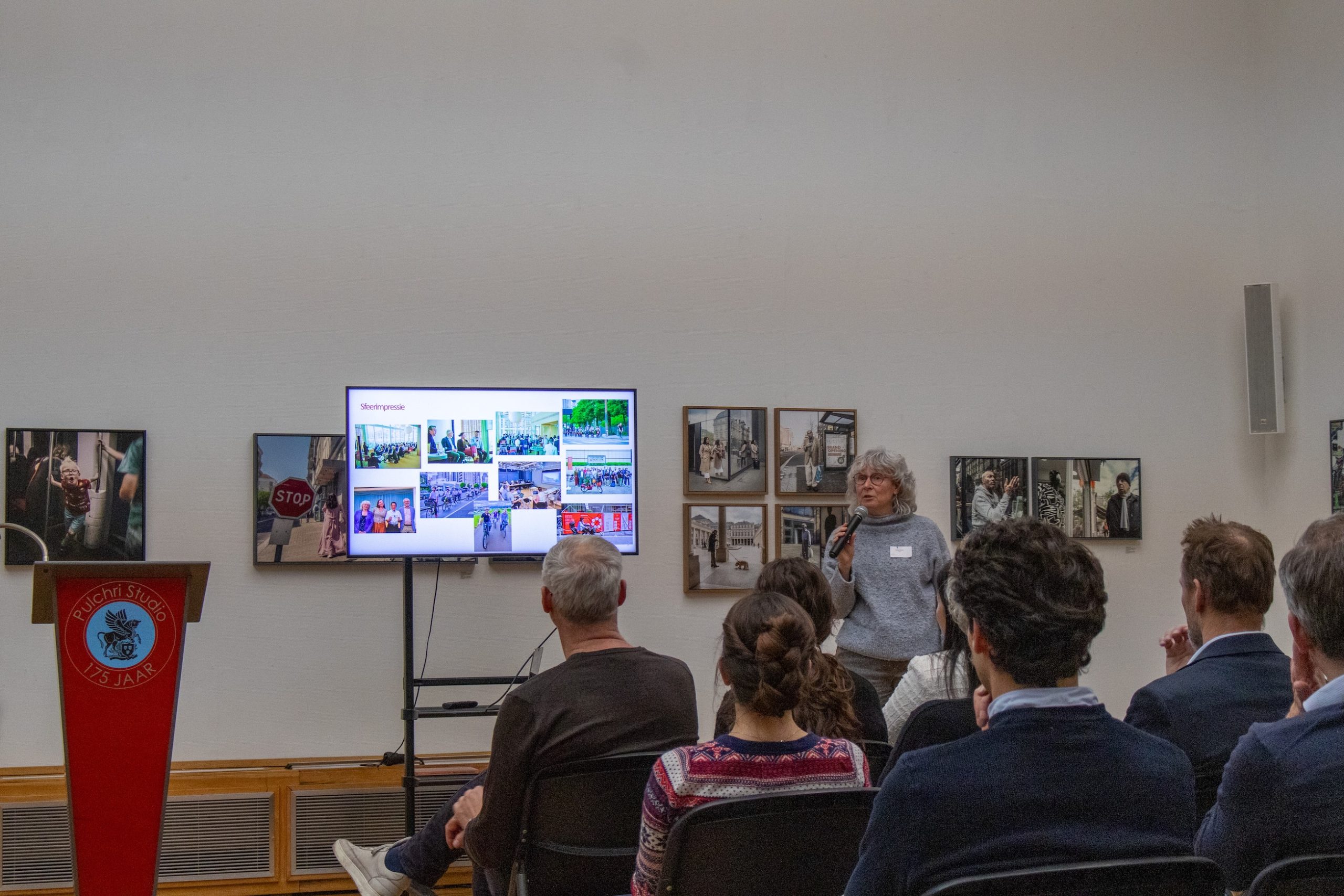
Our recent participants’ meeting was jointly organised with RVO and took place at the beautiful location of the artists’ association Pulchri Studio, situated on Lange Voorhout in The Hague. Surrounded by impressive works of art by local artists, the venue provided an inspiring setting for the day.

We welcomed around 90 participants from both networks, RVO and DCE. The programme started with a presentation on China, followed by the main session featuring updates on current and upcoming activities from RVO and DCE. The organisation of this meeting was made possible with the support of RVO.

After the meeting, participants enjoyed a relaxed networking reception. Across the street, the annual Christmas market added to the festive atmosphere. A number of attendees then gathered to wave off the cyclists of the fifth edition of the Bicycle Lights Parade, led by The Hague’s Bicycle Mayor Remco de Rijk. This inspiring event highlights the importance of safe, well-lit cycling during the darker months, while also showing that cycling can be enjoyable and relaxing.

As our final Q meeting of the year, this gathering was a festive and inspiring way to close the year together. We look forward to many more Q meetings in the year ahead and warmly hope to welcome everyone again soon.
Our Q meetings are exclusively for members of our public-private network. Would you like to be part of this inspiring community and join us at future Q meetings? Please visit our website for more information.

Related posts

Velo-City 2021 Conference in Lisbon

The Dutch Cycling Embassy leads delegation of Dutch experts to the 2021 Velo-City Conference in Lisbon. From September 6th to…

Read More

TH Wildau visits DCE

On the afternoon of Monday, 10 November 2025, the Dutch Cycling Embassy welcomed a group of students from TH Wildau,…

Read More

Dutch Cycling Embassy Sponsorship for Velo-city 2025 

The Velo-city Conference draws over 1.600 advocates, cities, decision- and policymakers, researchers, and industry leaders from over 60+ countries. As…

Read More