×

This week, Dutch Cycling Embassy International Relations Manager Chris Bruntlett welcomed two groups of high-performing sales representatives, regional dealers, and local retailers from Gazelle North America to Amsterdam for an immersive introduction to the infrastructure, policies, and culture that make Dutch cycling so successful.

Travelling from across the United States and Canada, the delegates were invited by Gazelle to experience firsthand the conditions that have enabled cycling to become an everyday mode of transport for people of all ages and abilities. Through presentations, guided rides, and site visits, participants gained valuable insight into how Dutch cities have created environments where cycling is safe, convenient, and attractive.

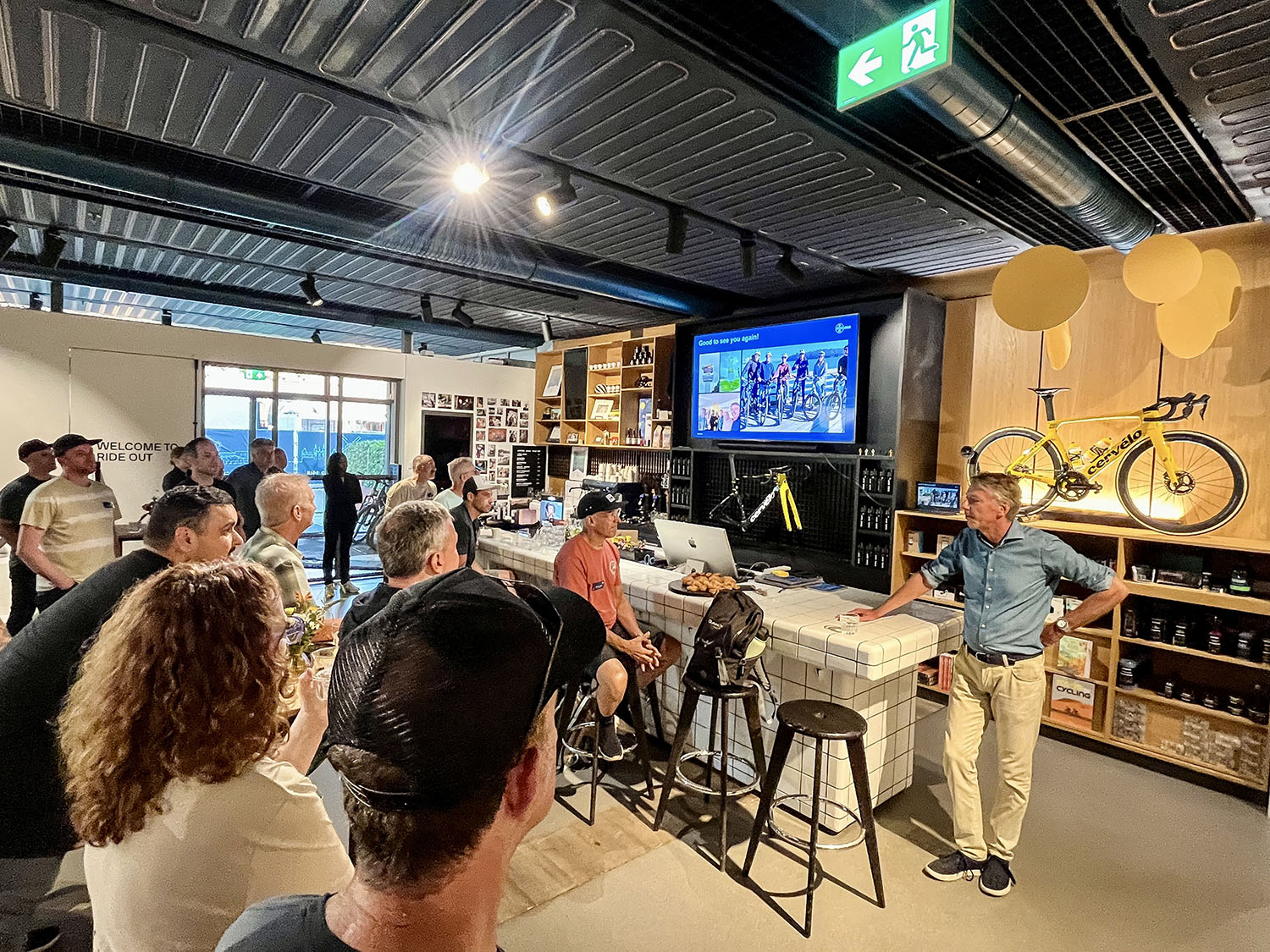
The program began at Ride Out, where Bruntlett delivered a presentation exploring the evolution of Dutch cycling policy, the role of infrastructure in shaping travel behaviour, and the broader societal benefits of designing cities around people rather than automobiles. A lively question-and-answer session followed, allowing participants to connect Amsterdam’s cycling story to the challenges and opportunities they encounter in North American communities.

Following the presentation, the delegation continued to Urban Arrow for a series of presentations, interactive sessions, and bicycle demonstrations. The afternoon featured a guided cycling tour through Amsterdam, providing participants with an opportunity to experience the city’s connected network of protected cycling infrastructure from the perspective of everyday users.

The multi-day program also included visits to cultural landmarks such as the Rijksmuseum and Amsterdam’s historic canals, offering guests a broader understanding of the urban qualities that contribute to the Dutch quality of life.

By connecting North American cycling professionals with real-world Dutch examples, the visit supported Gazelle’s efforts to promote cycling as a practical, inclusive, and enjoyable mode of transportation. It also aligned closely with the Dutch Cycling Embassy’s mission to share Dutch expertise and inspire sustainable mobility solutions around the world.

As interest in cycling continues to grow across North America, exchanges such as these demonstrate the value of experiencing successful cycling environments firsthand—transforming abstract concepts into tangible lessons that participants can bring back to their own cities and communities.

Related posts

Velo-City 2021 Conference in Lisbon

The Dutch Cycling Embassy leads delegation of Dutch experts to the 2021 Velo-City Conference in Lisbon. From September 6th to…

Read More

TH Wildau visits DCE

On the afternoon of Monday, 10 November 2025, the Dutch Cycling Embassy welcomed a group of students from TH Wildau,…

Read More

Dutch Cycling Embassy Sponsorship for Velo-city 2025 

The Velo-city Conference draws over 1.600 advocates, cities, decision- and policymakers, researchers, and industry leaders from over 60+ countries. As…

Read More

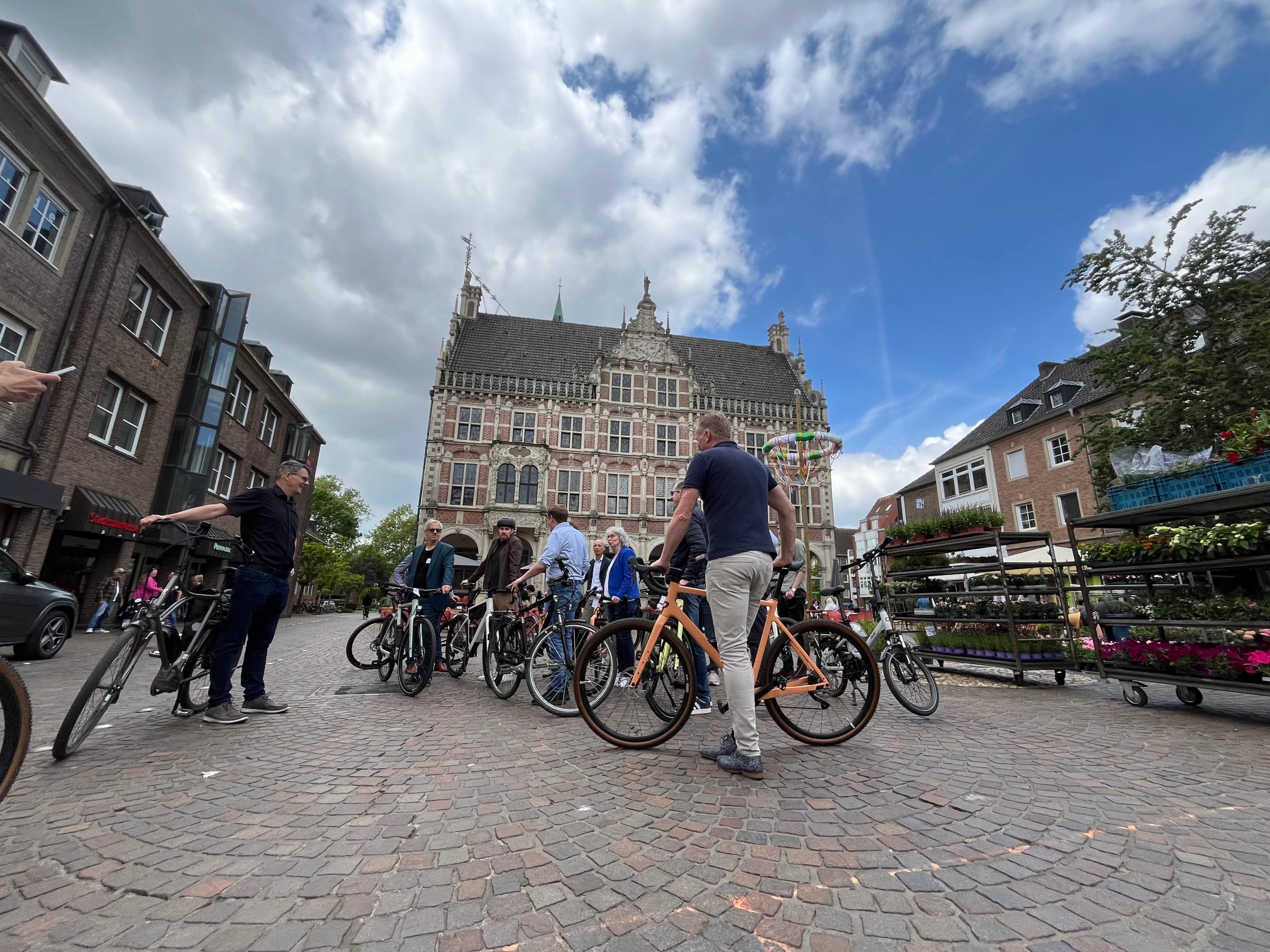
The Dutch Cycling Embassy recently led a three-day fietsmissie to North Rhine-Westphalia (NRW), bringing together Dutch mobility experts, consultants, public authorities and companies to exchange knowledge with German partners on cycling policy, infrastructure and active mobility. The programme included visits to Münster, Düsseldorf and Bocholt, as well as participation in the AGFS Congress, creating valuable opportunities to strengthen cross-border cooperation and explore future collaborations.

Representatives from organisations including Mobycon, Arcadis, Goudappel, vanRaam, Fietshangar, Roelofs, VConsyst, Abelleisure, Loendersloot Mobility Consultancy and Cooperatie Centroide joined the delegation, alongside colleagues from the Netherlands Enterprise Agency (RVO), the Consulate General in Düsseldorf and the Dutch Cycling Embassy.

Münster: learning from Germany’s cycling capital

The mission started in Münster, widely recognised as Germany’s cycling capital. During an exchange with the city’s Bicycle Office, mobility planners presented the ambitious Masterplan Mobility Münster 2035+, which aims to create a climate-neutral, safe and liveable city while further strengthening cycling throughout the municipality. One of the most impressive ambitions is the continued expansion of the city’s Cycling Network 2.0, including approximately 100 kilometres of upgraded cycling infrastructure and around 60 kilometres of new bicycle streets.

During the cycling tour through Münster, participants experienced these developments first-hand. Besides the extensive network of bicycle streets, discussions also focused on the German regulatory framework surrounding cycling infrastructure. Topics such as the Pollererlass NRW, which provides guidance on the placement of bollards, illustrated how German regulations can differ significantly from the more pragmatic Dutch approach while pursuing similar safety objectives.

The evening concluded with a networking dinner in Düsseldorf, where the delegation met representatives from municipalities across NRW, the state ministry, AGFS NRW, JobRad and other organisations involved in cycling policy and implementation. Alongside productive discussions about future cooperation, participants were also introduced to some typical Düsseldorf cuisine.

|

Düsseldorf: exchanging policy and practical experience

The second day focused on cycling policy at both municipal and state level. Despite persistent rain, the walking tour through Düsseldorf highlighted how the city has transformed many of its streets to prioritise pedestrians and cyclists. One particularly interesting example was the redesign of Schadowstraße, where public space has shifted away from cars towards walking, cycling and urban quality.

The delegation then visited the Ministry for Environment, Nature Conservation and Transport of North Rhine-Westphalia before participating in the AGFS Congress. Discussions with ministry officials and Members of the State Parliament provided valuable insight into NRW’s current cycling ambitions and funding programmes. During this meeting, Sonja Munnix (RVO) presented the Dutch approach to cycling policy and development, which sparked lively discussions between the Ministry for Environment, Nature Conservation and Transport, political representatives from North Rhine-Westphalia and our delegation participants.

One recurring theme throughout the exchanges was that NRW has made substantial financial resources available for cycling, but faces challenges in delivering projects due to a shortage of qualified professionals (Fachkräfte). In addition, the German administrative landscape—with many different authorities responsible for approving projects—can make implementation more complex. Comparing experiences highlighted one notable difference between both countries: while the Netherlands often adopts a pragmatic approach to implementation, German processes generally involve more institutional layers and regulations.

The AGFS Congress provided an excellent platform for expanding professional networks and exchanging practical experiences as representatives from most cities and towns in North Rhine-Westphalia were gathered in one location.

|

Bocholt: connecting cities, industry and cycling

The final day brought the delegation to Bocholt, Germany’s most bicycle-friendly medium-sized city, located close to the Dutch border. The visit clearly demonstrated how closely connected Dutch and German cycling ambitions have become.

The visit concluded at ROSE Bikes’ BIKE TOWN headquarters in Bocholt, where the company generously hosted the delegation and provided the perfect setting for an exchange between the Dutch delegation, ROSE and the City of Bocholt. Participants also had the opportunity to explore the city by bicycle using ROSE bikes, experiencing Bocholt’s cycling infrastructure first-hand.

What made the visit particularly interesting was seeing how one of Germany’s largest bicycle manufacturers works hand in hand with their city. Rather than operating independently, ROSE actively collaborates with the municipality to strengthen Bocholt’s cycling culture and improve the local cycling environment. The discussions highlighted how the bicycle industry can contribute far beyond manufacturing bikes—by supporting local cycling initiatives, sharing expertise and helping create a city where cycling is part of everyday life.

During the joint discussions, the City of Bocholt also presented several ambitious projects currently under development, including the redevelopment of the central station, improvements to public transport frequencies and plans to create more intuitive connections between the station and the city centre for pedestrians and cyclists. Similar to discussions earlier in the week, city officials explained that while funding is available, a shortage of specialised staff (Fachkräfte) remains one of the biggest challenges to delivering these projects. Along the cycling tour, the delegation also discovered innovative interventions, such as modular playgrounds replacing former parking spaces, demonstrating how public space can be reimagined to create more attractive neighbourhoods.

|

Looking ahead

The fietsmissie once again demonstrated the value of cross-border knowledge exchange. While the Netherlands and North Rhine-Westphalia each face their own challenges, both regions share the ambition to create safer, healthier and more attractive cities through cycling.

For me personally, one of the most valuable outcomes was seeing how these exchanges continue to strengthen the relationships between Dutch and German partners. By bringing together governments, municipalities, knowledge institutes and businesses, the mission created new opportunities for future collaboration and reinforced our shared commitment to accelerating the transition towards more sustainable mobility.

Related posts

Velo-City 2021 Conference in Lisbon

The Dutch Cycling Embassy leads delegation of Dutch experts to the 2021 Velo-City Conference in Lisbon. From September 6th to…

Read More

TH Wildau visits DCE

On the afternoon of Monday, 10 November 2025, the Dutch Cycling Embassy welcomed a group of students from TH Wildau,…

Read More

Dutch Cycling Embassy Sponsorship for Velo-city 2025 

The Velo-city Conference draws over 1.600 advocates, cities, decision- and policymakers, researchers, and industry leaders from over 60+ countries. As…

Read More

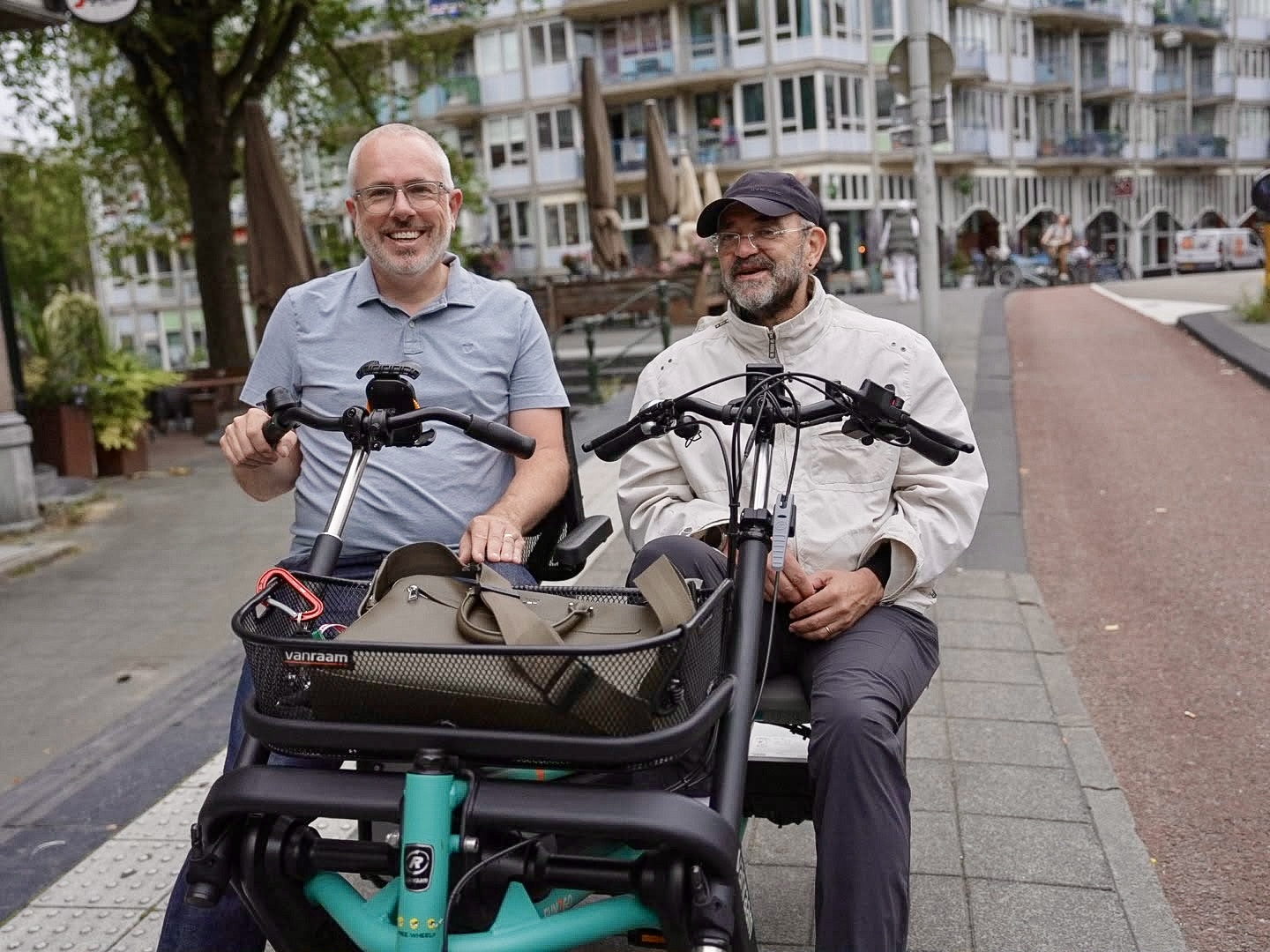
On Thursday, July 2nd, 2026, Dutch Cycling Embassy International Relations Manager Chris Bruntlett had the pleasure of leading a cycling tour of Amsterdam for Luis Álvarez-Icaza Longoria, a senior UNAM engineering figure with longstanding institutional ties to President Claudia Sheinbaum’s UNAM and Mexico City policy environment.

Travelling side-by-side on a VanRaam duofiets, the pair explored how Amsterdam’s streets have been transformed over the past half-century through deliberate choices that prioritize people over cars. The unique bicycle allowed for continuous conversation while experiencing the city’s cycling infrastructure firsthand.

The tour began beneath Amsterdam Centraal Station at the underwater bicycle parking facility in Stationsplein, before tracing a route through several locations that illustrate the Dutch capital’s evolution. At Jodenbreestraat, they reflected on the historic citizen-led campaigns that successfully challenged plans for urban freeways in the 1970s. Nearby, Mr. Visserplein demonstrated how streets once dominated by traffic have been redesigned to better serve people walking and cycling.

Continuing east, they visited Plantage Middenlaan, Alexanderplein, and Sarphatistraat, examining a variety of cycling infrastructure treatments and discussing how network design, traffic calming, and public space improvements work together to make cycling a safe, comfortable, and attractive option for people of all ages and abilities.

The tour concluded at the Rijksmuseum, where one of Amsterdam’s most iconic public spaces serves as a powerful reminder that world-class cultural destinations can successfully prioritise active mobility while remaining vibrant, accessible, and welcoming.

Throughout the morning, discussions focused not only on the physical infrastructure, but also on the governance, public engagement, and long-term political commitment required to create successful cycling cities. As many cities around the world, including those in Mexico, seek to expand opportunities for active mobility, exchanges like these help demonstrate that Amsterdam’s success is the result of sustained investment and policy choices that can inspire adaptation in different local contexts.

Related posts

Velo-City 2021 Conference in Lisbon

The Dutch Cycling Embassy leads delegation of Dutch experts to the 2021 Velo-City Conference in Lisbon. From September 6th to…

Read More

TH Wildau visits DCE

On the afternoon of Monday, 10 November 2025, the Dutch Cycling Embassy welcomed a group of students from TH Wildau,…

Read More

Dutch Cycling Embassy Sponsorship for Velo-city 2025 

The Velo-city Conference draws over 1.600 advocates, cities, decision- and policymakers, researchers, and industry leaders from over 60+ countries. As…

Read More

On Wednesday, July 1st, 2026, 18 participants from the United States gained a deeper understanding of the Dutch approach to cycling during a special knowledge session hosted by the Dutch Cycling Embassy in Gouda as part of the Climate Ride: Netherlands to Bruges event.

Delivered by International Relations Manager Chris Bruntlett, the hour-long presentation introduced the fundamentals of the Dutch cycling model, exploring how decades of coordinated investment in infrastructure, policy, planning, and culture have made cycling an attractive and accessible mode of transport for people of all ages and abilities.

The participants—travelling across the Netherlands and Belgium by bicycle as part of Climate Ride’s immersive cycling experience—were particularly interested in understanding not only what makes the Dutch system successful, but how those lessons can be applied in communities across the United States.

Following the presentation, an engaging question-and-answer session covered topics including protected cycling infrastructure, traffic safety, governance, funding, public support, and the opportunities and challenges of adapting Dutch best practices to North American cities. Discussions emphasized that while every place has its own unique context, the principles behind the Dutch approach—safe design, connected networks, and people-centred planning—can be successfully tailored to local conditions.

The session formed part of Climate Ride’s Netherlands to Bruges tour, which combines multi-day cycling adventures with participant-led fundraising, turning personal challenges into financial support for climate action, conservation, and active transportation organizations. By providing fully supported experiences, fundraising coaching, and educational programming, the nonprofit builds a community of engaged environmental advocates while directing millions of dollars in grants to organisations working to protect the planet.

Related posts

Velo-City 2021 Conference in Lisbon

The Dutch Cycling Embassy leads delegation of Dutch experts to the 2021 Velo-City Conference in Lisbon. From September 6th to…

Read More

TH Wildau visits DCE

On the afternoon of Monday, 10 November 2025, the Dutch Cycling Embassy welcomed a group of students from TH Wildau,…

Read More

Dutch Cycling Embassy Sponsorship for Velo-city 2025 

The Velo-city Conference draws over 1.600 advocates, cities, decision- and policymakers, researchers, and industry leaders from over 60+ countries. As…

Read More

From June 23rd until June 26th, 2026, the Dutch Cycling Embassy (DCE) had the pleasure of organising the first ACTIVE Mobility Mission for a delegation from Colombia, Chile and Brazil. The programme was part of the Memorandum of Understanding (MoU) on Sustainable Mobility between the Netherlands and Colombia and was made possible through collaboration with the Netherlands Enterprise Agency (RVO), the Embassy of the Kingdom of the Netherlands in Colombia and the Dutch Ministry of Infrastructure and Water Management. Across The Hague, Rotterdam and Utrecht, the delegation exchanged knowledge and experiences on active mobility, cycling policy, infrastructure, communication and governance in practice.

The delegation included participants connected to The World Bank Group, Cundinamarca, Metro Bogotá and other Colombian partners involved in the ACTIVE Capacity Building training programme. From Brazil, participants joined from Niterói de Bicicleta, the municipality of Niterói and Cycling Union Brazil. From Chile, a delegate connected to the Chilean Sustainability Agency joined the group.

Day 1: The Hague

On the first day, the delegation met each other and shared the context of their own localities, including the projects they are currently working on and the challenges they face. Arlette van Gilst, Director of Cycling and Walking Policy at the Dutch Ministry of Infrastructure and Water Management, welcomed the delegates to the Netherlands with a short presentation. This was followed by a presentation from Paula Godoy of ARUP, who introduced the Hardware, Software and Orgware approach to cycling in the Netherlands. Afterwards, the group went outside for a cycling tour through The Hague, guided by Paula, to connect the examples from her presentation to practice on the street.

Day 2: Rotterdam

The following day, the delegation travelled to Rotterdam to discover a city with different characteristics compared to other cities in the Netherlands, and with infrastructural challenges that are similar to those in Latin American cities. The day started with a cycling tour by Mirjam Borsboom of Movida, who also works for the municipality of Rotterdam. She shared the current projects Rotterdam is working on and how the city is in constant change, growing towards a more cycling-friendly environment.

After the tour, the group visited the office of Humankind for a presentation by director Lior Steinberg on how trials and small-scale experiments can transform places from brick and asphalt environments into green oases in the city. He shared examples such as the transformation of parking spaces into green hangout spots for people. Afterwards, Melissa Bruntlett of Modacity Creative, shared how to effectively communicate the cycling narrative to different stakeholders and how to tell a story successfully to inspire people to cycle.

Day 3: Utrecht

On Day 3, the delegation explored Utrecht, starting off with a tour of Utrecht Central Station by Hugo Bustamante and Alejandro Montes from Goudappel/Iganga, who shared insights on the multi-modality of the station and the mix of functions it houses. Of course, the world’s biggest bicycle parking garage was also visited to showcase what effective cycling policies over longer periods can bring. Afterwards, the delegation cycled to the DCE office. There, Hugo and Alejandro gave a deep-dive presentation on the multi-modal numbers and transport systems the Netherlands has built, how steps were taken to increase cycling levels, and the role multi-modal hubs play in this transition.

Ruben Loendersloot of Loendersloot International, then took over and taught the delegation about the technical measures behind successful bicycle infrastructure, showcasing Dutch examples. Afterwards, the group got back on their bicycles for a tour to see these technical measures in the real world, visiting projects where the bicycle has been given a central role, such as the Daphne Schippersbrug and the Willem-Alexanderpark on top of the A2 highway.

Day 4: The Hague

On the last day of this hot weather week, the group held its final sessions at New Babylon in The Hague, zooming in on the political and governance differences between the Netherlands and the countries represented in the Latin American delegation. Isabela Ledo, who is connected to Rotterdam University of Applied Sciences and formerly worked for the municipality of Niterói in Brazil, teamed up with Dirk de Jager of Sustainable Solutions, who has experience as mobility deputy mayor of the South-East city district of Amsterdam, to facilitate a session exploring these political differences per country.

Lastly, the group played the serious game “Bikonomics,” with Lucas Harms of Transforming Mobility and Kees van Ommeren of Decisio. In this game, delegates learned about the financial benefits of cycling on a micro, meso and macro level in society. Afterwards, a town hall meeting was replicated: delegates each played their role and tried to fulfil their goals.

Looking ahead

The ACTIVE Mobility Mission showed that knowledge exchange goes both ways. While the Dutch approach to active mobility was showcased through presentations, site visits and cycling tours, it was equally valuable to learn from the experiences, innovations and perspectives of the delegates from Colombia, Chile and Brazil. These international exchanges help partners move forward together towards safer, healthier and more sustainable mobility for everyone.
This mission was made possible through close collaboration between the ACTIVE programme of the Netherlands Enterprise Agency, the Embassy of the Kingdom of the Netherlands in Colombia, the Dutch Ministry of Infrastructure and Water Management and the Dutch Cycling Embassy. DCE looks forward to continuing this collaboration and strengthening active mobility across continents.

A warm thank you to all delegates, partners and experts who made this inspiring week possible.

Related posts

Velo-City 2021 Conference in Lisbon

The Dutch Cycling Embassy leads delegation of Dutch experts to the 2021 Velo-City Conference in Lisbon. From September 6th to…

Read More

TH Wildau visits DCE

On the afternoon of Monday, 10 November 2025, the Dutch Cycling Embassy welcomed a group of students from TH Wildau,…

Read More

Dutch Cycling Embassy Sponsorship for Velo-city 2025 

The Velo-city Conference draws over 1.600 advocates, cities, decision- and policymakers, researchers, and industry leaders from over 60+ countries. As…

Read More

In May 2026, the Dutch Cycling Embassy was invited to contribute to the Smart City Congress in Stockholm, Sweden. The yearly conference brings together urban innovators and policymakers focused on the transition towards a smarter urban future. Project coordinator at the Dutch Cycling Embassy, Wiel Wijnen and Johan Diepens, founder of Mobycon, were present to share information on cycling and the positive impact it can have on cities. Johan and Wiel hosted two panels at the congress. The first panel was with Henrik Söderström from the municipality of Stockholm.  Together with the crowd, they discussed how to make room for cyclists and the current steps needed to facilitate change in the city.

The second panel with Agnes Landefjord, cycling strategist for the Stockholm Region, looked at the bike-train combination. In order to create a good balance, the modes should be co-designed with different users in mind. They explored different shared bike models, such as Swapfiets and OV-Fiets, which provide a great first and last mile solution for train travellers. Further, they discussed if cyclists should be encouraged to bring their bikes on the train.On the second day of the congress, the DCEwas invited by the founder of the Swedish 2030-Secretariat, Mattias Goldmann to speak in a debate on how political parties should approach the sustainability goals of the city. The conclusion of the debate was that alongside steps to electrify vehicles, attention should be brought to creating an active, green and pleasant environment for people. 

Later that week, we met with Lars Strömgren, Stockholm’s Deputy Mayor for Transport, to discuss the evolving challenges the city faces as it grows and transforms. The conversations throughout the congress laid the groundwork for promising connections between Dutch and Swedish expertise in cycling and urban mobility.

All in all, the Dutch Cycling Embassy was a welcomed guest and offered a fresh perspective on the road to Stockholm’s sustainability and innovation goals.

Related posts

Velo-City 2021 Conference in Lisbon

The Dutch Cycling Embassy leads delegation of Dutch experts to the 2021 Velo-City Conference in Lisbon. From September 6th to…

Read More

TH Wildau visits DCE

On the afternoon of Monday, 10 November 2025, the Dutch Cycling Embassy welcomed a group of students from TH Wildau,…

Read More

Dutch Cycling Embassy Sponsorship for Velo-city 2025 

The Velo-city Conference draws over 1.600 advocates, cities, decision- and policymakers, researchers, and industry leaders from over 60+ countries. As…

Read More

The following article, written by Pinar Pinzuti, was originally published in Italian by BikeItalia. It has been translated into English and republished with their permission.

When it comes to widening roads or building highways , no one questions the billions allocated; when it comes to building a cycle path, every single euro must be justified down to the last cent.

Why?

Because in Italy we are still trapped in an old misunderstanding: considering cycling as an “emotional” or political investment.

The Dutch Public Sector Approach

|The Netherlands has outgrown this approach for decades. Thanks to the analysis and dissemination work of the Dutch Cycling Embassy , ​​a network that brings together public institutions and private companies, we now know that cycling is not a “poor” form of transport, but an infrastructure with extremely high economic returns.

From June 16th to 19th, Velo-city 2026, the global cycling summit, took place in Rimini. It brought together administrators, politicians, technicians, representatives of public and private companies, industry professionals, and associations from around the world.

“Cities must learn to equip themselves with real business plans: they need an entrepreneurial vision applied to the public sector, capable of translating ideas and objectives into concrete, fundable projects. Everyone knows that European funding is available every seven years. Instead of starting with funding and then creating a project to finance, we need to do the opposite: start with a long-term plan and find the right call for proposals to finance the works. This way, we will be able to justify good ideas with data, clear strategies, and a long-term vision for managing available resources,” explains Paolo Ruffino, consultant at Haskoning, one of Europe’s oldest and most prestigious consulting and engineering firms.

The Great Mistake of the Mobility Economy

“The main problem lies in the way ministries calculate the return on investment. Traditional valuation systems are excellent at calculating the costs of building car infrastructure, but fail miserably at quantifying the long-term social benefits and avoided costs,” explained Chris Bruntlett, International Relations Manager at the Dutch Cycling Embassy.|When investing in cycling, the benefits aren’t confined to the transportation sector, but cascade across healthcare, the environment, the economy, and urban planning. The Dutch Social Cost-Benefit Analysis maps what politicians often overlook, such as a reduction in sedentary-related diseases (such as diabetes) and savings for the healthcare system, as well as a reduction in the need for car parking and costly road expansions (bridges, overpasses), which would cost billions.

When Bike Parking Saves Public Transport

To understand the impact of bikenomics, one need only look at the infrastructure projects that have defied critics’ initial skepticism.|When Utrecht spent €30 million to build an underground parking lot for 12,500 bicycles at its central station, many called it madness. A subsequent cost-benefit analysis reversed the narrative: maintaining the facility costs “only” about 1 euro per day per user.

If those same users had to reach the station by bus or tram, the cost to the public coffers (in subsidies for local transport) would have been 3 euros per day per user.

Promoting bike-train intermodality saves millions of euros in public money every year.

What Happens if We Bet on Active Mobility?

To visualise the economic potential of the transition, the city of Rotterdam simulated a 2024 scenario based on highly ambitious mobility policies. The numerical results should give pause to any public policymaker in Italy:

+1 km/h speed . If the fluidity of the network allowed cyclists to pedal just one kilometer per hour faster on average, the city would gain €26 million a year in productivity.

Less diabetes, more savings . Increased physical activity through active mobility would save local healthcare systems €13 million a year on diabetes treatment alone.|Furthermore, the data demolishes the myth that retailers need cars in front of their windows: in Rotterdam, customers who go shopping on foot or by bicycle spend a total of 818 million euros a year in the city’s shops.

Bikenomics therefore requires a long-term vision, similar to that of a real urban business plan: clear objectives, data to support choices and a strategy capable of intercepting available resources.

The Three Rules of Change

The Dutch model shows that change starts from some fundamental rules.

The first is to measure the real benefits of cycling, moving beyond a focus on road traffic alone and including the effects on public health, the local economy, and quality of life in decision-making processes.

The second is to stop thinking in terms of isolated interventions: a bike lane alone has limited value, while a continuous, safe, and interconnected network is what allows cycling to become a true mobility system.

The third is to focus on the missing links: often a single strategic intervention, a bridge, a crossing, a connection between two existing routes because it can change the habits of thousands of people.

Related posts

Velo-City 2021 Conference in Lisbon

The Dutch Cycling Embassy leads delegation of Dutch experts to the 2021 Velo-City Conference in Lisbon. From September 6th to…

Read More

TH Wildau visits DCE

On the afternoon of Monday, 10 November 2025, the Dutch Cycling Embassy welcomed a group of students from TH Wildau,…

Read More

Dutch Cycling Embassy Sponsorship for Velo-city 2025 

The Velo-city Conference draws over 1.600 advocates, cities, decision- and policymakers, researchers, and industry leaders from over 60+ countries. As…

Read More

On 25 June 2026, Dutch Cycling Embassy International Relations Manager Chris Bruntlett participated in Human Mobility Code: Building Future Multimodal Ecosystem, a multidisciplinary event hosted at the Aula Congress Centre of the Delft University of Technology (TU Delft). The gathering brought together researchers, mobility professionals, authors, artists, and policymakers to explore new approaches to creating more sustainable, people-centred mobility systems.

Organised around the launch of the Shifting Mobility book series by mobility expert Dewan Masud Karim, the event examined how cities can respond to climate change, resource constraints, and rapid urbanisation through integrated and human-scaled transportation networks. The programme featured contributions from TU Delft academics, mobility practitioners, and artists, all united by a shared interest in rethinking how people move through cities.

Representing the Dutch Cycling Embassy, Chris Bruntlett opened the programme with reflections on the critical role of cycling within a broader multimodal ecosystem. Drawing on examples from the Netherlands, he highlighted how high-quality cycling infrastructure, supportive public policy, and seamless integration with public transport have enabled Dutch cities to reduce car dependency while improving accessibility, public health, and quality of life.

His presentation underscored a key message that has become central to the Dutch Cycling Embassy’s international work: cycling is not simply a mode of transport, but an essential component of a resilient mobility system. When combined with walking, public transport, and emerging shared mobility services, cycling can help cities deliver greater freedom of movement while using less space, energy, and resources.

The event also provided an opportunity to engage with researchers and students from TU Delft, one of the world’s leading institutions in transportation and urban mobility. Discussions throughout the afternoon explored how cities can move beyond automobile-centric planning and develop mobility ecosystems that prioritise people, place, and sustainability.

As cities around the world search for practical solutions to climate, congestion, and public health challenges, the Dutch Cycling Embassy remains committed to sharing Dutch expertise and facilitating international dialogue on the future of human-centred mobility. Events such as this demonstrate the growing global interest in cycling not as a niche mode of transport, but as a foundational element of thriving multimodal cities.

Related posts

Velo-City 2021 Conference in Lisbon

The Dutch Cycling Embassy leads delegation of Dutch experts to the 2021 Velo-City Conference in Lisbon. From September 6th to…

Read More

TH Wildau visits DCE

On the afternoon of Monday, 10 November 2025, the Dutch Cycling Embassy welcomed a group of students from TH Wildau,…

Read More

Dutch Cycling Embassy Sponsorship for Velo-city 2025 

The Velo-city Conference draws over 1.600 advocates, cities, decision- and policymakers, researchers, and industry leaders from over 60+ countries. As…

Read More

On Wednesday, June 25th, the Dutch Cycling Embassy joined representatives from the Klaten Regency Government in Central Java, Indonesia, for an online knowledge exchange focused on cycling development and international cooperation.

During the session, International Relations Manager Chris Bruntlett shared Dutch experiences in developing connected cycling networks, integrating cycling into broader transportation systems, and establishing the institutional frameworks needed to support long-term investment. Participants also explored opportunities for future collaboration, including knowledge exchange around governance, cycling master planning, infrastructure design, and community engagement.

The discussion centred on Klaten’s ambitious vision to become “The World’s Tropical Cycling Laboratory”—a living laboratory dedicated to understanding how cycling can be normalized in hot, humid climates and scaled across tropical regions around the world. Home to more than 1.3 million residents and located between Yogyakarta and Surakarta, Klaten sees cycling as a strategic opportunity to improve mobility, strengthen tourism, and enhance quality of life. According to the Regency’s recently published Cycling City Profile, the area combines flat terrain, strong political commitment, active cycling communities, and significant tourism assets, creating favourable conditions for a shift toward daily cycling.

A key topic was the proposed Klaten Tropical Cycling Lab (KTCL), which would serve as a platform for research, pilot projects, and international partnerships. By combining Dutch expertise with Klaten’s unique tropical conditions, the initiative aims to generate new knowledge that can help cities across Southeast Asia, South Asia, Africa, and other tropical regions unlock the benefits of cycling.

The meeting marked an important first step in what both parties hope will become a long-term partnership. As cities around the world search for sustainable mobility solutions, Klaten’s willingness to experiment and innovate offers an exciting opportunity to expand the global conversation on cycling beyond the temperate climates where most current best practices have been developed.

Related posts

Velo-City 2021 Conference in Lisbon

The Dutch Cycling Embassy leads delegation of Dutch experts to the 2021 Velo-City Conference in Lisbon. From September 6th to…

Read More

TH Wildau visits DCE

On the afternoon of Monday, 10 November 2025, the Dutch Cycling Embassy welcomed a group of students from TH Wildau,…

Read More

Dutch Cycling Embassy Sponsorship for Velo-city 2025 

The Velo-city Conference draws over 1.600 advocates, cities, decision- and policymakers, researchers, and industry leaders from over 60+ countries. As…

Read More

On Tuesday, 23 June 2026, the Dutch Cycling Embassy welcomed a delegation of eight politicians and planners from Taoyuan City, Taiwan, led by Deputy Mayor Su Jun-bin, to its headquarters in Utrecht.

The visit formed part of a broader study tour focused on sustainable mobility and urban development, providing an opportunity for the delegation to learn firsthand about the policies, infrastructure, and governance that have made cycling an integral part of everyday life in the Netherlands.

Hosted by International Relations Manager Chris Bruntlett, the group received a presentation exploring the Dutch approach to cycling, including the evolution of the country’s cycling culture, the role of national and local governments, and the design principles that underpin safe, comfortable, and connected cycling networks. Particular attention was given to the importance of creating complete mobility systems that prioritize people over private vehicles and enable cycling as a practical transportation choice for residents of all ages and abilities.

Following the presentation, delegates engaged in an in-depth discussion on topics ranging from network planning and road safety to public engagement and political leadership. The lively question-and-answer session highlighted Taoyuan City’s growing interest in expanding active mobility options and creating more sustainable, liveable urban environments.

We thank Deputy Mayor Su Jun-bin and the entire delegation for their visit and look forward to following Taoyuan City’s continued progress towards a more cycling-friendly future.

Related posts

Velo-City 2021 Conference in Lisbon

The Dutch Cycling Embassy leads delegation of Dutch experts to the 2021 Velo-City Conference in Lisbon. From September 6th to…

Read More

TH Wildau visits DCE

On the afternoon of Monday, 10 November 2025, the Dutch Cycling Embassy welcomed a group of students from TH Wildau,…

Read More

Dutch Cycling Embassy Sponsorship for Velo-city 2025 

The Velo-city Conference draws over 1.600 advocates, cities, decision- and policymakers, researchers, and industry leaders from over 60+ countries. As…

Read More