×

On June 20th and 21st, 2026, the Dutch Cycling Embassy travelled to Bucharest, Romania to participate in the annual New Urban Habits (nUH) Festival.

Taking place at the Mihai Eminescu Amphitheatre, nUH brought together communities, experts, creators, institutions and families in an open format built around the questions that shape urban life. The 2026 edition consisted of UrbanTalks, roundtables, hands-on workshops, exhibitions, film screenings and artistic interventions.

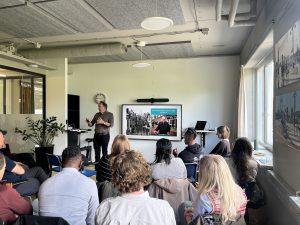
Over the weekend, International Relations Manager Chris Bruntlett had the privilege of sharing some lessons on urban transformation through a talk titled ‘The Dutch Blueprint for Urban Vitality’ and a mobile workshop, ‘Rethinking Bucharest Streets Through Dutch Design Principles.’

Along with planners, advocates, students and residents, they explored the city by bike, examining how network thinking, safer intersections, traffic circulation, speed management, and bike-train integration can create a mobility system that works for everyone.

A special thank you to the incredible organising team: Gratian Mihailescu, Oana Onciu, Paula Drangoi, and Ecaterina Maftei for creating such an engaging platform for dialogue and learning.

Thank you also to fellow speakers Bjarne Uldal, Alina Rizescu, Lotte Bech, Christiane Feuerstein, and Xavier Matilla, whose perspectives enriched the debate and reinforced the importance of exchanging ideas across borders.

Finally, sincere thanks to Janette Verrijzer and the Embassy of the Kingdom of the Netherlands in Romania for their support, which helped make this visit possible.

Related posts

Atlanta delegation explores Dutch cycling expertise in Utrecht and Delft

A diverse delegation from Atlanta, Georgia (USA) visited the Netherlands last week for a Sustainable Urban Development tour, focused on…

Read More

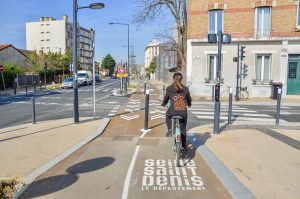
Montreuil now has a Dutch-inspired cycle path, the result of a ThinkBike Workshop in 2019

In 2022, the Dutch Cycling Embassy’s Margot Daris and experts Lennart Nout (Mobycon) and Roel Lenoir (3PM) travelled to Tirana,…

Read More

Palm Beach MPO Webinar: The Dutch Cycling Transformation

On Thursday, November 20th, 2025, the Dutch Cycling Embassy joined the Palm Beach Metropolitan Planning Organization (MPO) for a webinar…

Read More

On June 9th, 2026 the Dutch Cycling Embassy once again had the pleasure of welcoming a group of PhD and Master’s students from the Institute of Transport Studies of the University of Leeds, UK, for a presentation on Dutch cycling. Welcomed by Wiel Wijnen, (Project Coordinator) and Yari Msika (Intern), the students were invited to think together and discuss the similarities and differences between cycling between the UK and The Netherlands. Following on this discussion, Wiel and Yari gave a presentation highlighting the history of cycling in The Netherlands, the integrated Dutch approach of software, hardware and orgware as well as a discussion of the benefits of cycling. Afterwards, the group, led by Wiel, walked back towards Utrecht Central station where he pointed out some Dutch cycling design principles along the Kanaalstraat. The group was also lucky to catch rush hour at the busy Vredenburg cycling crossing and observe some Dutch cycling in action. We thank the group for their keen engagement, questions and willingness to contribute and exchange knowledge.

The DCE looks forward to continuing their annual collaboration with the University of Leeds in upcoming years.

Would you like to experience Dutch cycling culture first-hand?
Get in touch with us to organise your own study visit. We’d be delighted to welcome you.

Related posts

Atlanta delegation explores Dutch cycling expertise in Utrecht and Delft

A diverse delegation from Atlanta, Georgia (USA) visited the Netherlands last week for a Sustainable Urban Development tour, focused on…

Read More

Montreuil now has a Dutch-inspired cycle path, the result of a ThinkBike Workshop in 2019

In 2022, the Dutch Cycling Embassy’s Margot Daris and experts Lennart Nout (Mobycon) and Roel Lenoir (3PM) travelled to Tirana,…

Read More

Palm Beach MPO Webinar: The Dutch Cycling Transformation

On Thursday, November 20th, 2025, the Dutch Cycling Embassy joined the Palm Beach Metropolitan Planning Organization (MPO) for a webinar…

Read More

The Dutch Cycling Embassy (DCE) is once again delighted to represent our public-private network of organisations and experts at this year’s edition of Velo-city in Rimini. Come stop by our pavilion at booth #26 to speak with our cycling experts and connect with the best of Dutch cycling expertise.

Want to know more? Explore this brochure to discover how we work together with partners to bring cycling to everyone, everywhere.

Related posts

Atlanta delegation explores Dutch cycling expertise in Utrecht and Delft

A diverse delegation from Atlanta, Georgia (USA) visited the Netherlands last week for a Sustainable Urban Development tour, focused on…

Read More

Montreuil now has a Dutch-inspired cycle path, the result of a ThinkBike Workshop in 2019

In 2022, the Dutch Cycling Embassy’s Margot Daris and experts Lennart Nout (Mobycon) and Roel Lenoir (3PM) travelled to Tirana,…

Read More

Palm Beach MPO Webinar: The Dutch Cycling Transformation

On Thursday, November 20th, 2025, the Dutch Cycling Embassy joined the Palm Beach Metropolitan Planning Organization (MPO) for a webinar…

Read More

The Dutch Cycling Embassy recently welcomed a delegation from the South Tyrol region in Italy for a two-day study visit focused on cycling infrastructure, spatial planning, recreational cycling and sustainable mobility. Among the participants from different South Tyrollean cities and towns was Daniel Alfreider, Deputy Governor of South Tyrol and Regional Minister for Ladin Education and Culture, Infrastructure, and Mobility.

The first day started with several presentations from Dutch experts. Ben Schaipp, Fietsmeister opened the program by sharing practical examples of cycling infrastructure design and implementation in the Netherlands. This was followed by a presentation from Wim van Tilburg, Mobycon on bicycle-friendly spatial planning, the important relationship between urban development and active mobility as well as how dutch cycling infrastructure changed throughout the decades.

After the presentations, the delegation joined a cycling tour through Utrecht led by mobility experts Elke Schimmel, november:city and Shelley Bontje, Dutch Cycling Embassy. During the ride, participants explored several examples of Dutch cycling infrastructure and discussed the planning principles behind them. Particular attention was given to bicycle parking solutions at Utrecht Leidsche Rijn Station and the impressive bicycle parking facilities at Utrecht Central Station.

To conclude the day, the group traveled by train to Maastricht for a joint dinner and informal discussions. There, the delegation was joined by Haskoning experts Sjors van Duren and Paolo Ruffino, as well as Nero Odour from the Province of Limburg and Limburg Deputy Elianne Demollin-Schneiders. The evening provided an excellent opportunity to exchange experiences and discuss mobility challenges and opportunities in both regions. During the discussions, it became clear that South Tyrol and Limburg share many similarities, from their strong regional identities to their commitment to sustainable mobility and tourism.

The second day began with a welcome session and an engaging presentation in the town hall of Maastricht on attractive public transport and tourism, delivered by Dana Deliever and Angèl Willems. This was followed by presentations from Paolo Ruffino and Sjors van Duren. Paolo highlighted the economic significance of cycling and demonstrated how a data-driven approach can support mobility policy and investment decisions. Sjors discussed strategies for finding and creating space for cycling infrastructure, particularly in environments where competing demands on public space are common.

Following the morning sessions, the delegation embarked on a cycling tour through the Limburg region towards the southern border of the Netherlands. After a pleasant lunch accompanied by insightful discussions, the group continued their ride through the rolling hills of Limburg. Along the route, participants experienced examples of rural cycling infrastructure and discussed the integration of agricultural traffic with cycling networks in countryside settings.

The study visit concluded at the Town Hall of Valkenburg, where the delegation was welcomed by Deborah Bekkers, Head of Public Space at the Municipality of Valkenburg. The visit ended in true Limburg fashion with coffee and traditional Limburgse vlaai.

We would like to thank all speakers, experts, and participants for their valuable contributions to this inspiring study visit. We look forward to seeing how the lessons and ideas exchanged during these two days will contribute to the future of cycling and sustainable mobility in South Tyrol.

Related posts

Atlanta delegation explores Dutch cycling expertise in Utrecht and Delft

A diverse delegation from Atlanta, Georgia (USA) visited the Netherlands last week for a Sustainable Urban Development tour, focused on…

Read More

Montreuil now has a Dutch-inspired cycle path, the result of a ThinkBike Workshop in 2019

In 2022, the Dutch Cycling Embassy’s Margot Daris and experts Lennart Nout (Mobycon) and Roel Lenoir (3PM) travelled to Tirana,…

Read More

Palm Beach MPO Webinar: The Dutch Cycling Transformation

On Thursday, November 20th, 2025, the Dutch Cycling Embassy joined the Palm Beach Metropolitan Planning Organization (MPO) for a webinar…

Read More

A guest blog post by John Snelsire from Charlotte, North Carolina, USA.

From the moment I arrived in the Netherlands, I was greeted with a calmness and peace I didn’t realize I needed. This feeling resonated throughout my five-day experience and left me wanting more. Everywhere I went, I noticed how intentionally the Dutch design around the human scale. The meticulous attention to detail and the engineering required to pull it off are truly astounding.

My name is John Snelsire, and I am from Charlotte, North Carolina, in the United States. I have a degree in Geography and Urban Planning from UNC Charlotte, though my professional career primarily wound through the financial services sector. After retiring last summer, I wanted to reconnect with my Geography and Urban Planning roots through the Geography of Cities class at UNC Charlotte. This class required a comprehensive research paper, and I chose to write about cycling infrastructure.

My passion for cycling reignited during the pandemic, and I now ride approximately 2,000 –3,000 kilometers per year.
My Dutch cycling experience began in Amsterdam. After arriving at Amsterdam Central Station, I immediately went to the Stationsplein Bicycle Parking facility. It was amazing to see such a large and carefully designed bike parking area while watching a constant stream of people move in and out of the station. I was awestruck by the engineering required to build this facility, but even more by how normal it seemed in daily life.

That became a recurring theme throughout my visit. The cycling infrastructure was impressive, yet it did not feel like a special feature. It felt like part of the everyday rhythm of the city.

To say that I felt like a kid on Christmas morning would be an understatement. I experienced pure joy riding the protected bike network. Often, I had no set itinerary. I would simply ride for several kilometers to find a place for lunch.

On one casual ride, I suddenly found myself pedaling through the iconic Rijksmuseum bicycle passage, admiring the museum’s architecture before exiting directly into a large park. On another adventure, I rode a single-speed bike through the countryside to Monnickendam for lunch. From there, I went to Marken and enjoyed seeing the sun sparkle off the water while I rode. When my smartphone navigation suggested a repetitive return path, I put it away and intuitively navigated a different route back to the ferry at Central Station.

My journey continued to Utrecht for a meeting with Skadi Tirpak, Director of the Dutch Cycling Embassy. Skadi provided invaluable perspectives for my research paper, sharing insights into how the Dutch Cycling Embassy works with cities and partners around the world to exchange expertise and support cycling infrastructure projects.

The experience deeply inspired me to walk and cycle for errands much more now that I am back in Charlotte. My meeting in Utrecht felt especially relevant considering the ThinkBike Workshop held in Charlotte in May 2025, which focused on Central Avenue and South Boulevard. Although I did not take part in the workshop myself, my visit to the Netherlands gave me a clearer sense of what safe and connected cycling infrastructure can mean in everyday life.

Following our meeting, it was time for another bike adventure. I rode to Houten and arrived as school was letting out. It was beautiful to see students of all ages riding home in groups or individually, completely free of parental supervision.
As an urban planning enthusiast, I concluded my trip by visiting the Dafne Schippersbrug project in Utrecht. This project exemplifies the highest standards of integrated urban planning. It is amazing how the bridge, school, and bike path seamlessly merge to connect two sections of Utrecht. I felt so much satisfaction seeing that project, and I had a huge smile on my face riding back to Utrecht Central Station.

The Netherlands provided the most seamless cycling and transportation experience I have ever witnessed. Extensive care is taken to design an environment where people can experience daily life in a healthy and enjoyable manner. The cohesive mobility network of trains, trams, ferries, bike paths, and walking paths proves how easy and fulfilling life can be without a car.

In fact, the infrastructure left such an impression on me that I cancelled an upcoming two-week cycling vacation in two American cities. Instead, I am returning to the Netherlands for the EuroVelo Conference, with five additional days for cycling exploration. The comprehensive transportation network and human-centered design made this decision effortless.

See you this fall.

Related posts

Atlanta delegation explores Dutch cycling expertise in Utrecht and Delft

A diverse delegation from Atlanta, Georgia (USA) visited the Netherlands last week for a Sustainable Urban Development tour, focused on…

Read More

Montreuil now has a Dutch-inspired cycle path, the result of a ThinkBike Workshop in 2019

In 2022, the Dutch Cycling Embassy’s Margot Daris and experts Lennart Nout (Mobycon) and Roel Lenoir (3PM) travelled to Tirana,…

Read More

Palm Beach MPO Webinar: The Dutch Cycling Transformation

On Thursday, November 20th, 2025, the Dutch Cycling Embassy joined the Palm Beach Metropolitan Planning Organization (MPO) for a webinar…

Read More

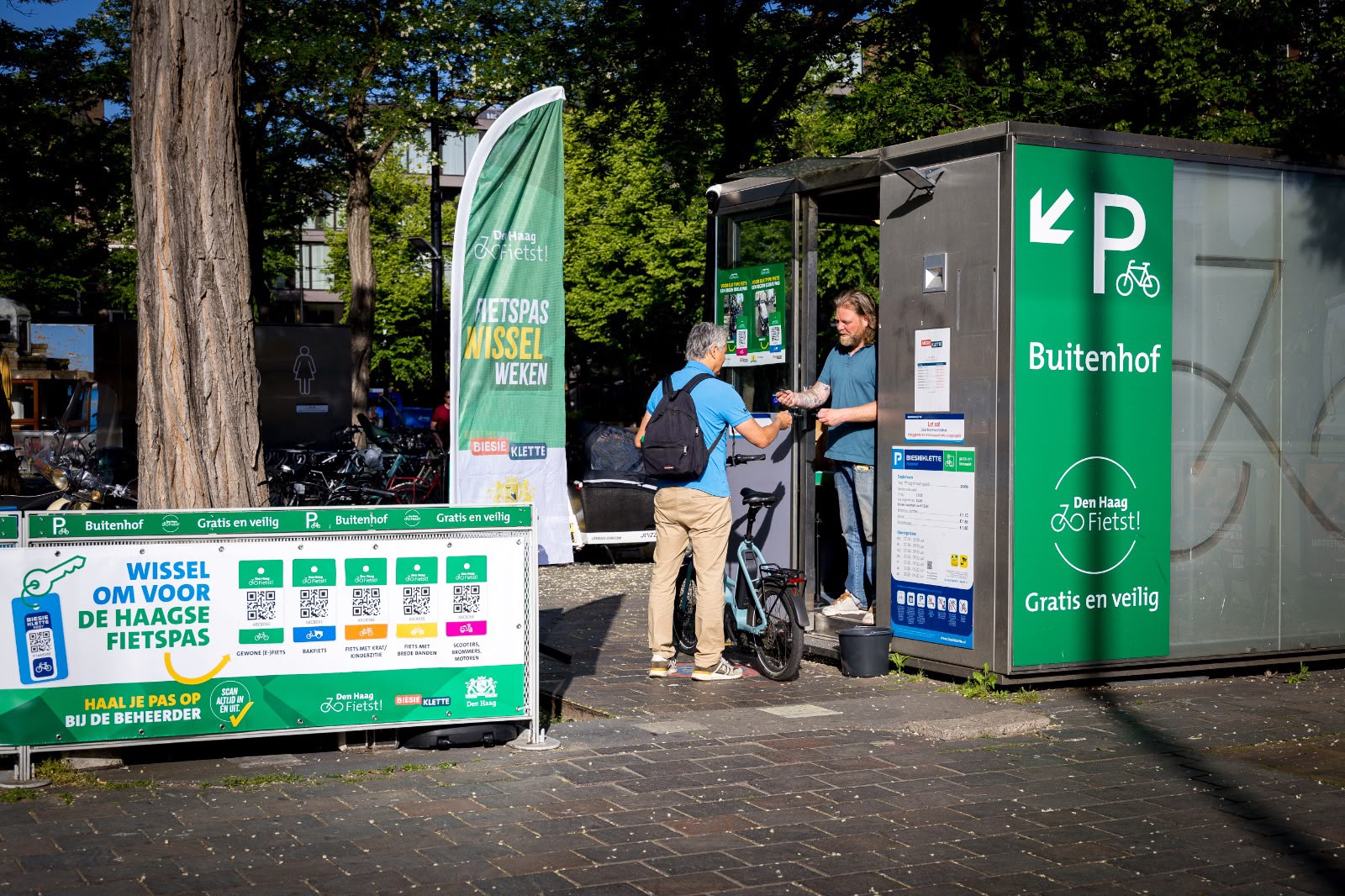
From 26 May, The Hague City Council is introducing the Fietspas (“Bike Pass”): the new access pass for all bicycle parking facilities in the city. The Fietspas replaces the familiar blue keychain. Cyclists will be able to collect their new pass from the parking facilities from that date. With this move, the council is working towards a recognisable and forward-looking system for bicycle parking.

Alderman Arjen Kapteijns (Mobility): ‘More and more residents of The Hague are taking to their bikes. We’re seeing this in our cycle parking facilities too: they’re getting busier and we’re seeing an increasing variety of bikes. The new bike pass will help us keep better track of things and use the space more efficiently. This will ensure that it remains easy for everyone to park their bikes safely, both now and in the future.’

Exchange Weeks: Switching is Easy

The Fietspas replaces the blue keychain. From Tuesday, users can collect their new pass from the bike parking facilities managed by Biesieklette. During the ‘switchover weeks’ (from 26 May to 8 June), extra support will be available to make the switch as easy as possible. Even after this period, the fietspas will remain available to anyone visiting a bike parking facility.

Five Colours for Different Types of Bikes

The number of bicycles and different types of bicycles in the city is growing rapidly. That is why five different bike passes are being introduced, each with its own colour. The colour indicates the type of bicycle or vehicle the pass is intended for. This helps to keep the cycle racks organised and to allocate the available space fairly. The process of scanning in and out remains the same. Scanning remains anonymous and parking in the cycle racks remains free for the first 24 hours. The five colours will also feature in the signage in the parking facilities by the end of this year. This will make it easy for visitors to see which type of bicycle can be parked there.

Ready for the Future

With the Fietspas, The Hague is taking a step towards a modern and flexible system. During a pilot year, the council is testing various applications of the Fietspas. For example, it is investigating whether positive behaviour among cycle park users can be encouraged through a reward scheme in collaboration with local businesses and sports clubs. The council aims to use this to encourage people to make more use of cycle parks rather than parking on the street. In addition, the council is exploring the possibility of communicating anonymously with bike pass users. This could, for example, be used to share practical information or provide tips on (cycling) road safety.

More information (in Dutch):

Photo Credit: Valerie Kuypers

Related posts

Atlanta delegation explores Dutch cycling expertise in Utrecht and Delft

A diverse delegation from Atlanta, Georgia (USA) visited the Netherlands last week for a Sustainable Urban Development tour, focused on…

Read More

Montreuil now has a Dutch-inspired cycle path, the result of a ThinkBike Workshop in 2019

In 2022, the Dutch Cycling Embassy’s Margot Daris and experts Lennart Nout (Mobycon) and Roel Lenoir (3PM) travelled to Tirana,…

Read More

Palm Beach MPO Webinar: The Dutch Cycling Transformation

On Thursday, November 20th, 2025, the Dutch Cycling Embassy joined the Palm Beach Metropolitan Planning Organization (MPO) for a webinar…

Read More

The Dutch Cycling Embassy welcomed a group of German exchange students visiting St. Bonifatiuscollege in Utrecht today for an introduction to the Dutch approach to cycling.

As part of the school’s longstanding exchange activities with partner schools in Germany, the students attended a half-hour guest lecture delivered by International Relations Manager Chris Bruntlett. The presentation explored the history of cycling in the Netherlands, the policy decisions that shaped today’s extensive bicycle network, and the many social, economic, and environmental benefits of active mobility.

Following the presentation, the students set off on a self-guided cycling tour through Utrecht curated by the Dutch Cycling Embassy. The route highlighted key examples of the city’s cycling infrastructure and public space transformations, allowing the students to experience firsthand why Utrecht is widely regarded as one of the world’s leading cycling cities.

The visit formed part of St. Bonifatiuscollege’s active German exchange programme, which has connected students across borders for many years through cultural and educational activities.

Located in Utrecht, St. Bonifatiuscollege is a UNESCO-affiliated secondary school known for its international outlook and emphasis on intercultural learning and global citizenship.

Related posts

Atlanta delegation explores Dutch cycling expertise in Utrecht and Delft

A diverse delegation from Atlanta, Georgia (USA) visited the Netherlands last week for a Sustainable Urban Development tour, focused on…

Read More

Montreuil now has a Dutch-inspired cycle path, the result of a ThinkBike Workshop in 2019

In 2022, the Dutch Cycling Embassy’s Margot Daris and experts Lennart Nout (Mobycon) and Roel Lenoir (3PM) travelled to Tirana,…

Read More

Palm Beach MPO Webinar: The Dutch Cycling Transformation

On Thursday, November 20th, 2025, the Dutch Cycling Embassy joined the Palm Beach Metropolitan Planning Organization (MPO) for a webinar…

Read More

A diverse delegation from Atlanta, Georgia (USA) visited the Netherlands last week for a Sustainable Urban Development tour, focused on cycling, micromobility and urban mobility. The visit was organised by Micromobility Atlanta and brought together a mixed group of participants, including staff from the Mayor’s Office, city council members, regional directors, and representatives from companies active in the micromobility sector.

The purpose of the visit was to gain inspiration and knowledge from Dutch cycling practice, while also exploring opportunities for collaboration and identifying potential approaches to support cycling development in Atlanta and the wider state of Georgia.

The programme was hosted by the Dutch Cycling Embassy and included a self-guided study tour in Utrecht, presentations at the Dutch Cycling Embassy office, and an informal cycling tour in Delft.

The knowledge programme featured presentations by Jeska de Ruiter (Dutch Cycling Embassy), who introduced the Netherlands as a cycling country and outlined its historical development and key policy frameworks; Johan Diepens (Mobycon), who presented on the Dutch CROW bicycle traffic design manual and the role of national design standards in ensuring safe and high-quality cycling infrastructure; and Karlijn Bruijs (Municipality of Utrecht), who shared insights into Utrecht’s approach to shared bicycle systems and their integration within the city’s wider mobility strategy. The sessions were characterised by active exchange and engagement, with particular interest in different forms of cycling infrastructure, including cargo bikes.

Related posts

German Exchange Students Discover Utrecht by Bike

The Dutch Cycling Embassy welcomed a group of German exchange students visiting St. Bonifatiuscollege in Utrecht today for an introduction to…

Read More

Montreuil now has a Dutch-inspired cycle path, the result of a ThinkBike Workshop in 2019

In 2022, the Dutch Cycling Embassy’s Margot Daris and experts Lennart Nout (Mobycon) and Roel Lenoir (3PM) travelled to Tirana,…

Read More

Palm Beach MPO Webinar: The Dutch Cycling Transformation

On Thursday, November 20th, 2025, the Dutch Cycling Embassy joined the Palm Beach Metropolitan Planning Organization (MPO) for a webinar…

Read More

The Dutch Cycling Embassy was honoured to welcome a group from the Chartered Institution of Highways and Transportation of Northern Ireland for a Study Visit to Utrecht on May 13th. As well as an informal exchange, focusses on the Netherlands cycling paradise as well as waterland, on the afternoon of the 12th, supported by Rick Lindeman of Rijkswaterstaat.

On the 13th, joined by expert Erik Tetteroo, founder of HOD works, the group spent the morning learning from his extensive expertise. Through his presentation on cycling in the Netherlands with a special focus on the transit-bike combination and an interactive quiz on cycling, there was plenty of space for interaction and exchange.

In good DCE fashion, the presentation continued with a cycling tour of Utrecht led by Erik after a delicious lunch at The Greenhouse. In a couple hours the delegation got the chance to see several parts of the city and experience Dutch cycling culture firsthand. Highlights from the tour included visiting the Stationsplein bicycle parking facility whose capacity reaches 12,500 bikes, the busy Vredenburg cycling junction, the Maliebaan and the Oosterspoorbaan cycling path. We thank everyone for their participation and keen engagement and look forward to more fruitful exchanges!

Would you like to experience Dutch cycling culture first-hand?
Get in touch with us to organise your own study visit. We would be delighted to welcome you.

Related posts

German Exchange Students Discover Utrecht by Bike

The Dutch Cycling Embassy welcomed a group of German exchange students visiting St. Bonifatiuscollege in Utrecht today for an introduction to…

Read More

Montreuil now has a Dutch-inspired cycle path, the result of a ThinkBike Workshop in 2019

In 2022, the Dutch Cycling Embassy’s Margot Daris and experts Lennart Nout (Mobycon) and Roel Lenoir (3PM) travelled to Tirana,…

Read More

Palm Beach MPO Webinar: The Dutch Cycling Transformation

On Thursday, November 20th, 2025, the Dutch Cycling Embassy joined the Palm Beach Metropolitan Planning Organization (MPO) for a webinar…

Read More

The PolyMonde program from Polytechnique Montréal visited Utrecht this week for an immersive study visit hosted by Dutch Cycling Embassy, giving 25 students and staff firsthand insight into the Dutch approach to sustainable urban mobility.

PolyMonde is a long-running student-led industrial mission that brings together future engineers to study international best practices across key sectors. The 2026 mission focuses on resilient territories and cities, industrial automation, and advanced chemistry and innovative materials, with Belgium and the Netherlands selected for their global leadership in sustainable urban development and mobility innovation.

The Utrecht program began with a guided cycling tour through the city centre, where participants experienced the Dutch cycling network from the saddle. Led by International Relations Manager Chris Bruntlett, the tour highlighted how Utrecht has integrated high-quality cycling infrastructure with public transport, compact urban planning, and people-centred street design to create a safe and accessible mobility system for all ages and abilities.

Following the tour, the group gathered for lunch at the Dutch Cycling Embassy, creating an opportunity for informal discussion and exchange between the visiting delegation.

The afternoon continued with a series of presentations exploring the policies, planning principles, and long-term investments that have shaped the Netherlands into a global leader in cycling. Discussions covered topics such as network design, governance, traffic safety, behaviour change, and the economic and social benefits of active mobility.

For many participants, the visit provided a valuable opportunity to connect engineering, urbanism, and sustainability in a real-world context. By experiencing Utrecht’s cycling culture firsthand, the PolyMonde delegation gained practical insights into how resilient and liveable cities can be designed around people rather than cars.

Related posts

German Exchange Students Discover Utrecht by Bike

The Dutch Cycling Embassy welcomed a group of German exchange students visiting St. Bonifatiuscollege in Utrecht today for an introduction to…

Read More

Montreuil now has a Dutch-inspired cycle path, the result of a ThinkBike Workshop in 2019

In 2022, the Dutch Cycling Embassy’s Margot Daris and experts Lennart Nout (Mobycon) and Roel Lenoir (3PM) travelled to Tirana,…

Read More

Palm Beach MPO Webinar: The Dutch Cycling Transformation

On Thursday, November 20th, 2025, the Dutch Cycling Embassy joined the Palm Beach Metropolitan Planning Organization (MPO) for a webinar…

Read More